Journey stopped by a fault
Breakdown recovery
Report whether the vehicle starts, moves, rolls and steers; agree a receiving destination.

Arrange the help your vehicle actually needs. Compare our recovery and roadside services, tell us what has happened, and get the proposed collection, destination and price confirmed before dispatch.
Need recovery now? Call or WhatsApp us.
The dispatch line is available 24/7. Share your exact location and vehicle details for a live availability check.
Start with the problem, then compare what needs confirming. You do not need to diagnose the fault or choose recovery equipment yourself.
Journey stopped by a fault
Report whether the vehicle starts, moves, rolls and steers; agree a receiving destination.
Vehicle damaged in a collision
Explain damage and scene control; confirm authority to move it and destination acceptance.
Help requested at the vehicle
Describe the symptom and working location; ask what attendance includes if transport is later needed.
Suspected battery-related non-start
Give the exact model and symptoms; mention earlier attempts and repeated starting problems.
Fuel mistake at or after refuelling
State what fuel was added and whether the engine ran; ask about the appropriate next step.
Collection between two addresses
Provide both handover contacts, vehicle condition, release requirements and delivery window.
Urgent or out-of-hours movement
Confirm current availability and somewhere suitable to deliver the vehicle at the proposed time.
Make, model, current fault, keys and wheel movement.
Exact position, entrance, restrictions and release contact.
Accepted address, opening time and receiving contact.
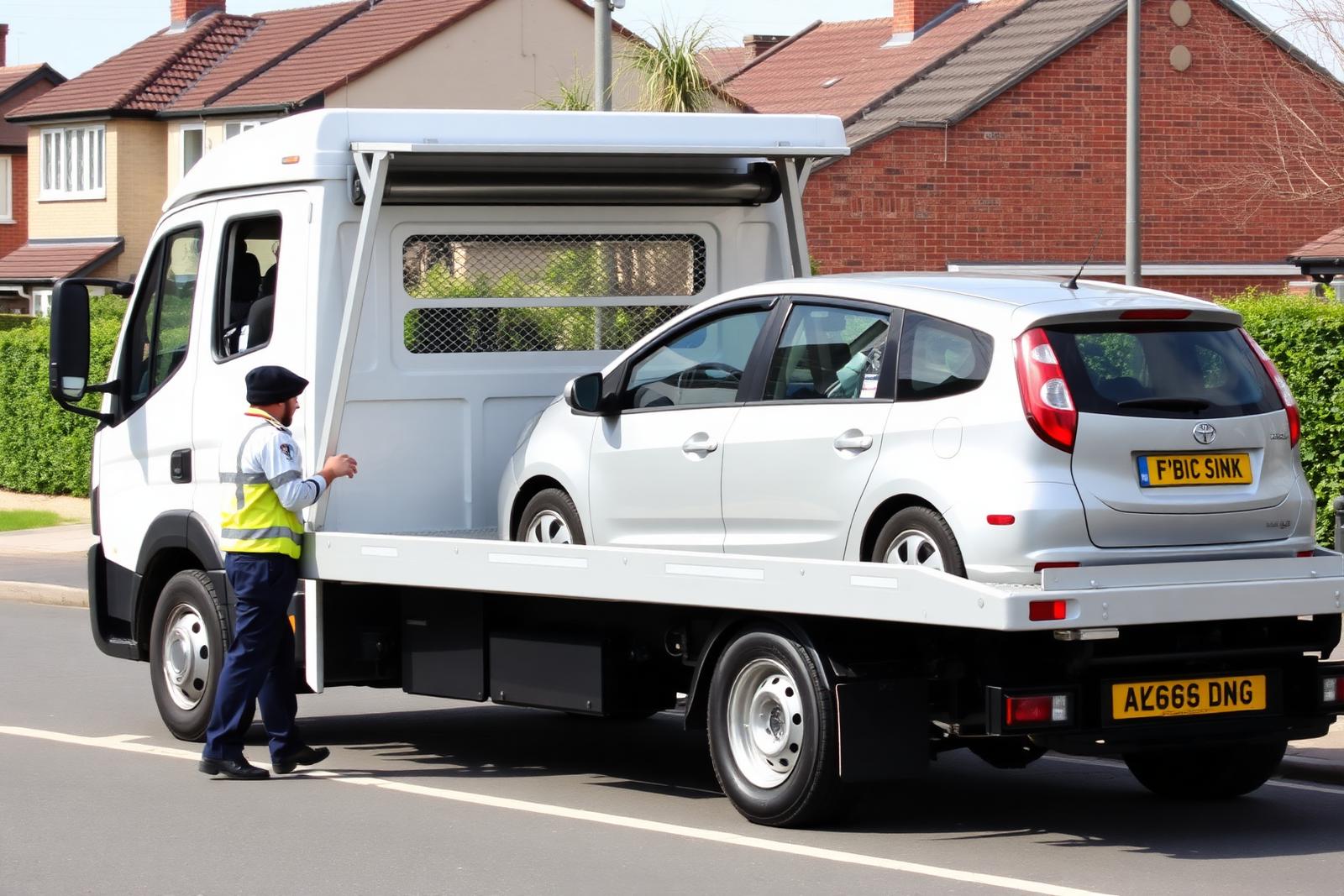
Plan your recovery
You do not need to diagnose a fault before contacting SYA Rescue. Start with the practical problem: the engine will not start, the vehicle cannot move, there has been a collision, or a collection is needed between two addresses. These situations lead to different decisions about attendance, loading and delivery. A booking based only on “tow my car” can miss a locked wheel, a low entrance or a garage that has already closed.
Use breakdown recovery when a fault has interrupted a journey and onward movement is the main requirement. Use roadside assistance to discuss a problem that might be assessed where the vehicle stands. Choose long-distance transport when the task is an arranged movement rather than an unexpected stop. If the circumstances overlap, explain both; you should not have to place separate speculative bookings to identify the correct option.
The first conversation should establish the vehicle's current position, whether it can roll and steer, access to the keys, and where it should finish. Give the registration or exact model, and mention modifications, a load in a van, collision damage or a known electrical problem. The team can then assess suitability and availability for that particular request. A service listed here is a starting point for that assessment, not a promise that every vehicle can be handled in every setting.
An out-of-hours recovery has two separate requirements: collecting the vehicle and having somewhere appropriate to deliver it. A garage that accepts daytime bookings may not permit a vehicle to be left outside overnight. A residential destination may have a narrow entrance or no suitable place for unloading. Discuss the complete movement when using our 24/7 vehicle recovery service, even if your immediate concern is getting the car away from its current position.
Tell us if the driver is waiting with the vehicle, if the vehicle is already secure, and whether a site closing time creates a deadline. Those details distinguish an urgent attendance request from a collection that can be scheduled. Availability, the required equipment and current road conditions still need checking; the time of day does not establish an arrival guarantee.
If you are arranging help for somebody else, provide one reachable contact at the vehicle and one person authorised to agree the work. Mixed instructions from several callers can leave the destination or payment unclear. Agree who will approve any material change and how the keys will be handed over. Keep the accepted details available on your phone so the actual collection can be checked against the arrangement without restarting the conversation.
A breakdown does not always mean a car with a completely dead engine. A vehicle may start but refuse to select a gear, move only a short distance, or display a warning that makes the driver stop. Describe the sequence of events and the current behaviour. Saying “it starts but the front wheels will not turn” gives more useful loading information than guessing that a battery is responsible.
With breakdown recovery, the key commercial decision is where the vehicle needs to be taken for the next stage. You may already have a garage appointment, prefer delivery home, or need to check who can receive it. A recovery movement does not automatically include diagnosis, replacement parts or a repair at the destination. Confirm the scope of each service separately so that a transport quote is not mistaken for a complete repair price.
Do not attempt to improve access by forcing the transmission, releasing components you do not understand, or moving a vehicle that may be unsafe. Report the limitation and let the operator assess it. Where a vehicle has broken down at a workshop or other managed site, ask the person on site to describe its position and release requirements. That often identifies access restrictions before a recovery vehicle is dispatched.
Collision damage can affect more than the visible body panels. A wheel may be displaced, steering may be restricted, a tyre may be trapped against bodywork, or loose parts may need attention before movement. For an accident recovery request, describe the vehicle's position as well as the damage. Photographs may help when they can be taken from a safe place, but do not walk into traffic or enter an unsafe scene to obtain them.
Personal safety and any instructions from emergency services or the road authority take priority over arranging private recovery. If another organisation is controlling the scene, explain that when calling. Do not assume an independently booked operator can enter the location or remove the vehicle before it has been released. Supply any contact or incident reference needed to establish the collection arrangements.
The destination also matters. A bodyshop, inspection facility, insurer-nominated location and home address serve different purposes. Confirm who has authorised the movement and whether the receiving party has accepted it. Ask the insurer directly about its own requirements if you intend to seek reimbursement; we cannot confirm an insurer's decision on its behalf. Keep the recovery record and the agreed destination, especially if a later second movement may be required.
Roadside assistance is an enquiry about a problem at the vehicle's present location. Recovery is a movement to another location. They can be connected, but they should not be confused. A driver requesting a jump start may instead have a fault that needs workshop diagnosis. A vehicle with a tyre problem may lack a usable spare or stand in a position where roadside work is unsuitable.
When asking about roadside assistance, explain the symptom, the vehicle model and the available working space. Mention whether you are in a driveway, a parking bay, a forecourt or beside a road. The location can change what is practical, even when the mechanical issue sounds straightforward. An assessment of suitability should come before a promise to complete a repair.
Ask what attendance includes and how an unsuccessful attempt would be handled. If transport becomes necessary, establish whether it is included in the accepted price or requires a revised quote. This avoids treating an initial callout price as an unlimited repair-and-recovery package. Where a fault recurs after an earlier visit, describe what was attempted and what changed rather than simply booking the same request again. That history helps the next assessment address the actual problem.
A flat battery is one possible reason for a non-starting vehicle, but the same phrase is often used for several different symptoms. Tell us whether the dashboard illuminates, whether there is a clicking sound, whether the engine turns, and whether the vehicle stopped while being driven. Mention any previous start attempt and whether the battery recently went flat again. These observations are more useful than a diagnosis made from one dashboard light.
Our jump start page is the appropriate starting point for a battery-related attendance enquiry. Give the exact model, including whether the vehicle is hybrid or electric, and identify where it is parked. Battery location, access and manufacturer instructions can matter. Do not assume the method used on another car is suitable for yours, and do not attempt electrical work just to prepare for attendance.
Confirm the proposed service and what happens if the vehicle does not restart or cannot continue reliably. Starting the engine once is not a complete diagnosis of the battery or charging system. If workshop attention is needed, transport and the receiving garage's work should be discussed explicitly. For a car in a garage or behind gates, arrange access to the vehicle itself rather than only providing the property's postal address.
If you suspect the wrong fuel has been added, stop the refuelling process and seek suitable assistance before trying to continue the journey. Explain the fuel intended, the fuel actually added if known, the approximate amount, and whether the engine has been started or the vehicle driven. A forecourt receipt or the pump details may help clarify what happened. Do not guess at quantities if you do not know them.
Use wrong fuel recovery to discuss the next step. The circumstances determine whether an appropriate specialist intervention can be arranged or whether onward transport needs assessing. Do not assume a fuel drain, diagnostic work or replacement components are automatically included in a recovery quote. Ask for the proposed work and its limitations to be stated before accepting it.
Tell the team whether the vehicle is still at a pump, in a parking bay, or already somewhere else. Speak to the forecourt staff about the vehicle's position and follow their site instructions. If the vehicle has been moved or work has already been attempted, provide that history. An accurate account is more helpful than restarting it to see whether the problem has cleared. Any later repair decision belongs with the appropriately qualified person inspecting the vehicle.
A longer vehicle movement succeeds when the collection and delivery arrangements fit together. Supply full addresses for both ends, not only the names of two cities. Give a collection contact, a receiving contact, relevant opening hours and any appointment or release reference. A vehicle that is ready to leave a seller's premises may still be unable to enter its destination after closing time.
When requesting long-distance transport, describe the vehicle as it stands today. A listing that says a car runs is not confirmation that it can be driven onto a transporter at collection. Ask the person releasing it about keys, steering, wheel movement and any new damage or warning messages. If information is uncertain, say so rather than booking on an assumption.
Agree how changes will be handled if the pickup is delayed, the vehicle condition differs or the receiving address changes. Ask about waiting, additional stops and any separate storage arrangement before committing. Do not infer passenger transport from the vehicle's journey. For a planned purchase or workshop transfer, a single clear handover record—vehicle, keys, accessories and destination—reduces disagreement about what was collected and where responsibility passes to the receiving party.
“Car recovery” does not fully describe every load. An estate car, a loaded commercial van, a motorcycle and an electric vehicle may need different capacity checks or securing arrangements. Give the exact model and explain modifications, unusual ground clearance, roof equipment, a trailer or cargo. Where you know the dimensions or weight, provide them; where you do not, avoid estimating with unwarranted precision.
For a van, make clear whether it is empty or carrying tools, stock or other materials. A quoted movement based on an empty vehicle may not describe the actual job. For a motorcycle, explain whether it stands upright, rolls and steers, and whether collision damage affects the wheels or frame. The operator should confirm the appropriate handling before attendance.
For hybrid and electric vehicles, identify the propulsion type and any relevant damage or manufacturer transport guidance. Recovery should be assessed for the specific vehicle rather than based on a blanket statement that one method suits every model. These questions do not require the driver to choose equipment. Their purpose is to let the recovery team decide whether the proposed movement can be accepted and what additional information is needed.
The shortest journey is not always the simplest collection. A car in a basement, a narrow driveway or a gated yard may present more difficulty than a longer movement from an open forecourt. Share the entrance location, any displayed height restriction, parking level, ramp, turning space and the vehicle's position relative to an exit. A photograph of the approach can help if it can be obtained safely and with the site's permission.
Differentiate a vehicle that will not start from one that cannot roll or steer. A non-runner near a clear entrance may need a different assessment from a car with locked wheels facing a wall. Do not move it into a more hazardous place simply to shorten the collection. Explain the constraint so that the proposed method can be checked first.
For managed premises, arrange access with the person controlling the gate, barrier or loading area. Give the correct entrance rather than a general reception address. Discuss permits, escorts, release paperwork and closing times before dispatch. The recovery operator's attendance does not itself give permission to enter private land or bypass a site's controls. If access cannot be confirmed, ask what information is still required before a collection can be accepted.
Compare quotations against the same job description. The vehicle's condition, pickup access, destination, timing and agreed work must match before two prices can be meaningfully compared. A price for attendance alone is different from a price including loading and transport. A straightforward running-vehicle transfer is different from a damaged vehicle with restricted movement.
Ask the team to identify the included movement and any relevant conditions. Discuss whether waiting, additional handling, a second collection point, route charges, storage or applicable taxes affect the total. Some items may not apply to your job; the purpose is to remove uncertainty, not to assume every possible charge will be added. If a quoted amount depends on the vehicle rolling or having keys, ensure that condition is correct.
Keep the accepted quotation or booking message. When information changes, request a revised agreement before additional work is undertaken. A different delivery address or a newly discovered loading restriction can change the original scope. Do not rely on an old price for a materially different movement. We do not publish a universal starting price here because a low headline figure cannot define all the access and handling conditions involved in a real recovery.
A collection needs more than an address. Establish who can release the vehicle, where the keys will be, and who can answer a question if the operator cannot find the entrance. If you are the owner but somebody else is attending, explain that arrangement. If the vehicle is at a garage, dealer or managed site, ask what authorisation or reference the releasing party requires.
Avoid leaving key instructions in public comments or visible notes on the vehicle. Share the necessary details directly through the agreed contact channel. Where an unattended arrangement is proposed, have it accepted in advance. Do not assume that an unlocked vehicle or a key held by reception is sufficient permission for collection.
Before a planned handover, identify loose accessories, spare keys and any items that the receiving party expects. Remove personal possessions only where safe and permitted. A record of the visible condition can be helpful, but it should not require you to enter an unsafe road position or disturb damaged parts. The final loading assessment remains the operator's task. Clear release arrangements reduce avoidable waiting and help prevent a failed visit caused by missing keys or an unreachable site contact.
The receiving address should be a place that has agreed to accept this vehicle in its actual condition. A workshop may require a booking or refuse a vehicle it cannot move into its premises. A residential street may have access restrictions or nowhere appropriate to unload. Confirm the entrance, the contact person and any timing limitation before collection.
If a garage recommends recovery, ask it where the vehicle should be left and who should receive the keys. Give the recovery team the workshop's full details rather than only its trading name. Where more than one branch exists, verify the address. A small ambiguity at booking can become a significant extra journey once the vehicle is already loaded.
If the first destination becomes unavailable, contact the team promptly. Alternative delivery, waiting, storage or a later second movement should be agreed rather than assumed. Keep mechanical work and transport arrangements separate: accepting a recovered vehicle does not mean a garage has agreed a repair price or completion date. For the recovery itself, the important outcome is an accepted, reachable destination with a clear handover and a person authorised to receive the vehicle.
You can start the discussion for another driver, but explain your role and identify the person who will approve the job. The person paying, the person with the vehicle and the vehicle owner may be different. A business booking may also need a purchase-order reference or an agreed invoice contact. Resolve those responsibilities before dispatch instead of leaving the operator to reconcile conflicting instructions at collection.
Give the driver a concise record of the accepted arrangements: who is attending, what is being collected, where it is going and whom to contact if anything changes. Tell the recovery team if the driver's phone battery is low or another contact must be used. For a workshop-to-workshop movement, the releasing technician and receiving contact may be more useful operational contacts than an accounts office.
Do not send unnecessary personal documents in an initial message. Ask what information is required to establish release authority and provide it through the agreed channel. If an insurer, leasing company or employer must authorise the movement, obtain their instructions first. An agreement to assess a recovery request does not settle reimbursement, employment arrangements or the ownership of the vehicle.
Business requests often have constraints that do not appear in the vehicle description. A delivery van may contain a customer's goods, a company car may be assigned to an employee, or a workshop may need a vehicle moved before a collection bay closes. Describe the operational deadline and the person authorised to make decisions. A specific deadline can be assessed; an assumed promise of immediate attendance cannot.
For repeat movements, maintain a consistent booking brief: vehicle identification, current condition, pickup and receiving contacts, access notes and billing reference. Update that brief for each movement. A route that worked previously may now involve a different vehicle, opening time or loading position. Previous attendance is not confirmation of today's availability or equipment requirements.
Ask what job documentation can be supplied for your records. Keep any repair instructions, goods handling arrangements or passenger travel separate from the accepted vehicle movement unless expressly included. Our contact page provides the direct telephone and WhatsApp routes for discussing a specific business request. We do not imply a contracted fleet response time or account facility simply because a business can contact us; those arrangements must be expressly agreed.
Choose the service that matches the problem, then identify the actual pickup area. The coverage directory connects the service discussion to location-specific pages. Our priority areas include East London, Kent, Essex, Hertfordshire, Slough, Staines-upon-Thames, Manchester and Bradford.
An area name is not a dispatch instruction. The collection may be on a motorway approach, inside a private site or in a nearby district with a similar name. Give a postcode or map pin, the entrance and any direction-of-travel information relevant to the location. If the journey crosses several areas, provide both ends at the start rather than requesting a local movement and adding the distant destination later.
The service and location pages have different purposes. A service page explains the type of movement or assistance; an area page helps describe the pickup context and related locations. You do not need to contact multiple pages or submit multiple requests for one job. Use one call or WhatsApp conversation, identify the whole requirement, and wait for the team to accept the arrangements.
A useful first message is short but complete: “Vehicle at this location; this is what happened; these wheels or controls are affected; keys are available here; delivery is required to this address.” Add a contact number and any access deadline. If you are uncertain about a detail, label it as uncertain. A truthful gap is easier to resolve than a confident but incorrect description.
Use photographs to clarify a damaged corner, the vehicle's parked position or a restricted entrance when it is safe to do so. A map pin helps distinguish a main entrance from a rear gate. Neither replaces an explanation of the vehicle's condition. Avoid sending unrelated identity, payment or personal documents before the team explains what is required.
Telephone contact is useful when the situation needs immediate discussion. WhatsApp is useful for location details and a written record of agreed arrangements. Sending a message does not confirm a booking or start dispatch automatically. Ask for acceptance, the proposed scope, the quotation and a current arrival estimate. If you cannot safely remain at the location, explain the situation and follow appropriate emergency or road-authority instructions before dealing with routine collection details.
Before treating the job as booked, confirm four outcomes: the vehicle can be collected as described, the access arrangements are accepted, the destination can receive it, and the quotation covers the agreed movement. These checks are more useful than an unqualified promise to “sort everything”. They also make it clear which decisions remain with a garage, insurer, site operator or vehicle owner.
If circumstances change while you wait, update the team. Examples include a garage closing, an owner taking away the keys, a road authority moving the vehicle, or additional damage becoming apparent. Do not let an operator travel to a superseded pickup point. Ask whether the original arrangement remains suitable and retain the updated instructions.
At delivery, make sure the receiving party knows where the keys and vehicle are being handed over. Keep the recovery record alongside any subsequent repair or insurance documents. The service ends according to the agreed scope; any onward transport or additional attendance should have its own clear arrangement. When you are ready, use Call or WhatsApp to discuss the actual vehicle and journey. There is no separate enquiry form to complete.
Clear answers before you book
Call or WhatsApp with the pickup, condition and destination. Confirm the proposed service and quote before dispatch.
These existing pages explain more specific situations. Equipment, capacity and the requested work must be confirmed for the actual job.
Discuss a battery-related non-start and the exact vehicle model.
Ask about transport when a starting problem cannot be resolved at the vehicle.
Check tyre requirements, vehicle position and whether suitable attendance is available.
Describe the affected wheel, spare-wheel availability and working space.
Explain the fuels involved and whether the vehicle has been started or driven.
Arrange a movement with wheel, steering and access conditions disclosed.
Identify the road position and follow road-authority instructions before collection.
Include the van's load, dimensions and known weight in the assessment.
Describe wheel movement, damage and the securing requirements to be assessed.
Plan collection and delivery with two agreed handovers.
Ask whether the reported fault and location are suitable for assistance.
Explain the starting symptoms and access to the parked vehicle at home.
Identify the electric model, condition and relevant manufacturer transport requirements.
Provide an authorised business contact and the complete vehicle movement brief.
Discuss vehicle condition and whether the requested type of movement can be accepted.
Confirm release references, collection slots, keys and the vehicle's actual condition.
Check acceptance and documentation requirements before agreeing any collection.
Explain the surface, position and access so extraction suitability can be assessed.
Give the level, entrance clearance, vehicle position and site permission.
Explain the vehicle, its condition and the requested movement so suitability can be checked.
Explain the vehicle, its condition and the requested movement so suitability can be checked.
Open a service group to browse its local pages. Give the exact vehicle position when calling; a directory entry does not confirm live availability.