Vehicle Recovery Enquiries in Sunderland — call +44 7830 881805
Sunderland · Tyne and Wear

Request Breakdown Recovery in Sunderland

Request breakdown recovery in Sunderland. Tell us where the vehicle stopped, whether it can be moved safely and whether your chosen garage can receive it. We will check the collection details and provide a job-specific quote.

+44 7830 881805
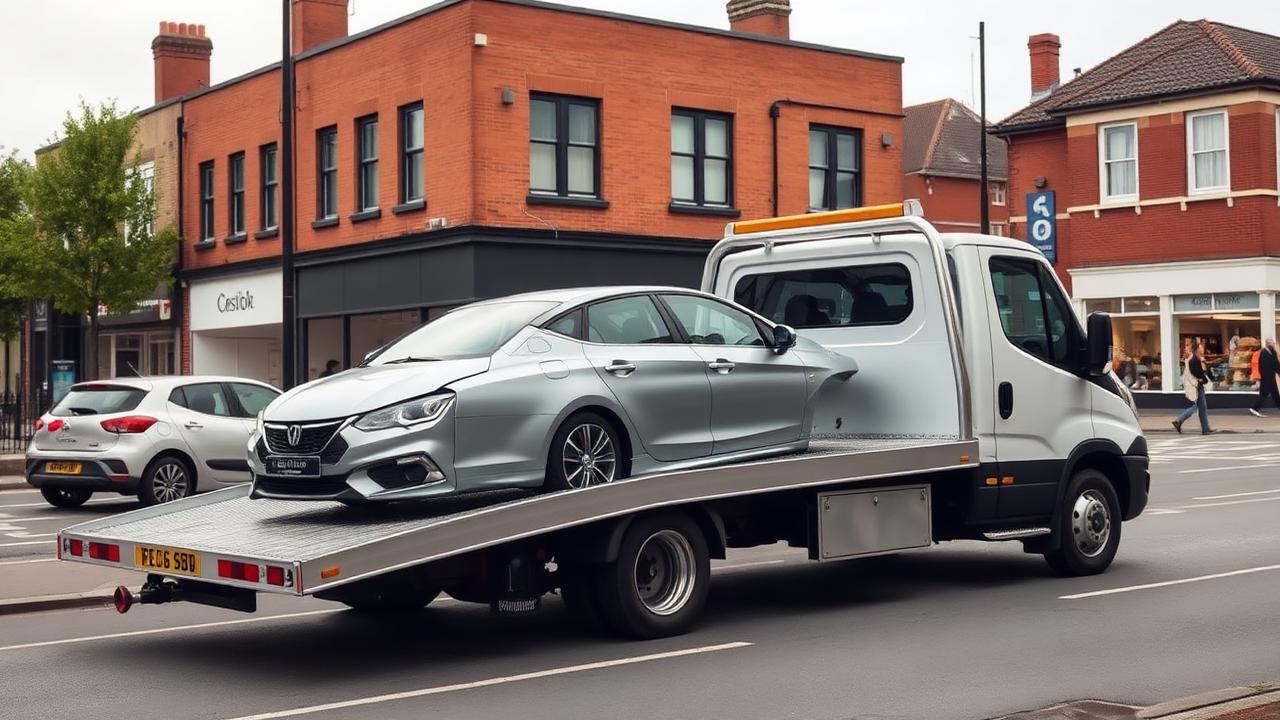
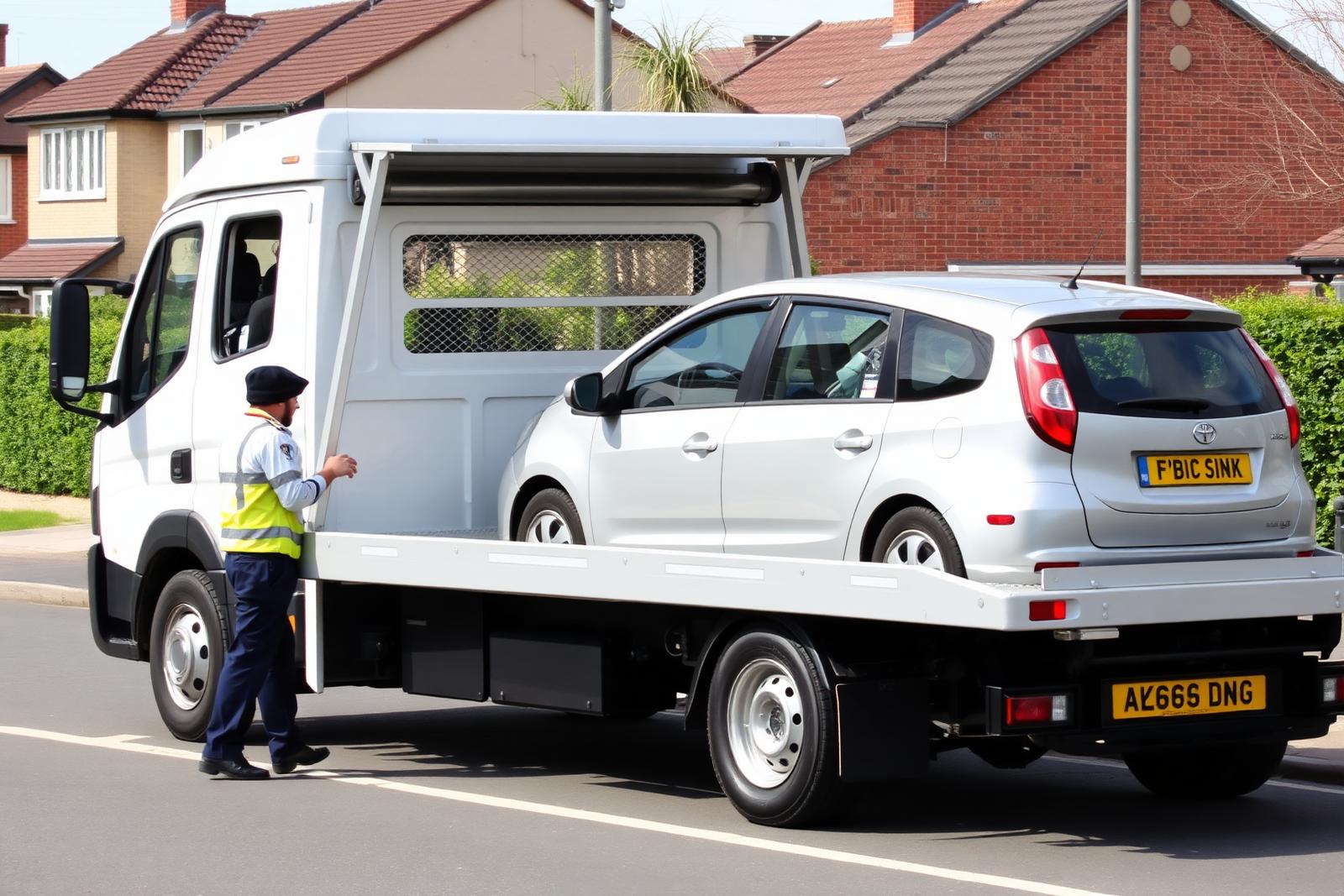
Representative breakdown recovery vehicle handling scene
Representative breakdown recovery image for enquiries in Sunderland. Availability and suitability are confirmed for each request.

Breakdown Recovery in Sunderland: What to Do Now

Request breakdown recovery in Sunderland when the vehicle cannot safely continue and needs moving to an agreed recipient. Tell dispatch where it stopped and what can be observed about its condition; collection and equipment depend on the actual job.

The first conversation with dispatch should not be used to guess a precise attendance time or promise equipment before the facts are known. Restricted car parks and gated sites can require access permission. Call with the location, registration, fault symptoms and whether the vehicle can steer, roll or start.

Pinpoint the collection in Sunderland

This enquiry is for Sunderland, Tyne and Wear. The existing area directory lists A19, A690, A1231 as surrounding route references. These identify a wider approach, not an exact pickup or a promised travel time. Give the actual road, direction and nearest identifiable junction, or the full address and entrance for a property. Do not select a motorway name simply because it is near your town.

For a location between Sunderland and Newcastle, South Shields, Washington, Seaham, send the actual pickup pin rather than choosing the closest page title. Tell the team whether you are on the road itself, in a service area or on a separate site reached from it. Any site barrier, signed clearance or closing time belongs in the first message.

Identify a garage, home or other authorised destination separately from the Sunderland pickup. Check that someone can receive the car in its current condition and within the proposed window before agreeing the movement.

Safety before arranging collection

If there is immediate danger or injury, contact emergency services and follow their instructions. Do not enter traffic to inspect the vehicle. Use the official breakdown guidance; for Northern Ireland use the nidirect guidance.

Do You Need Roadside Assistance or Full Recovery? — Sunderland

The service fits a Sunderland request when the central need is to recover the immobilised vehicle to a suitable garage, workshop, home or other authorised destination, rather than to obtain a different form of assistance. The service name matters less than the facts, so use the following decision guide.

Choose this service when: • A roadside attempt has not restored reliable mobility. • The clutch, gearbox, steering, suspension or braking system may be unsafe. • The vehicle has overheated or displayed a serious warning. • The vehicle is a non-runner that needs transport to a workshop. • The engine will not start or repeatedly cuts out. For the breakdown recovery assessment in Sunderland, record keys, passengers, destination and site contact details and say whether the presence of police-managed scenes and difficult access after incidents creates a different approach.

Choose another route or obtain further advice when: • A minor fault that can be safely assessed without towing may fit roadside assistance. • Collision damage belongs under accident recovery. • A pre-booked auction, dealership or private transfer may fit long-distance transport. • A live fire, medical emergency or immediate road danger requires police, fire or ambulance services first.

If your aim is to have an immobilised vehicle taken to a repairer, ask for a recovery quote. If you are unsure whether the fault can be assessed where the car stopped, explain that first. Immediate danger or injury takes priority over a commercial booking.

What the Sunderland Breakdown Recovery Service Covers

The request begins with the vehicle’s position, access and known movement restrictions. Dispatch can then check whether a suitable collection and onward transport can be arranged; the scope and price need confirmation for the specific job.

• Handling keys and handover information clearly. • Explaining timing and cost factors without making unsupported promises. • Confirming the symptoms and whether the vehicle can roll, steer and brake. • Identifying access, vehicle dimensions and driveline information needed for vehicle-movement planning. • Deciding whether roadside assessment remains reasonable or a full vehicle movement is safer. • Arranging transport to an agreed destination that can receive the vehicle.

These activities are connected. Accurate location and condition information influences the recovery method; the method influences safe loading area and timing; the destination influences route, access and handover. A request is therefore incomplete if it gives only the town and registration while omitting the condition of the vehicle or where it should be delivered.

The service does not automatically include mechanical repair, legal advice, insurer approval, storage, passenger transport, specialist extraction or a particular item of equipment. Those matters must be checked where relevant. The access and handover considerations—industrial estates, business parks and commercial-vehicle access and police-managed scenes and controlled entry after incidents—should be treated as questions to answer about the real job, not as assumptions.

To illustrate, a repeated starting fault after a temporary roadside attempt calls for a different assessment from an accessible vehicle that starts, steers and rolls normally. Describe the vehicle honestly and allow the attendance strategy to be matched to those facts.

Breakdown Recovery vs Roadside, Accident and Transport Services — Sunderland

Explain whether the vehicle has suffered a mechanical breakdown, collision damage or requires a planned transfer. Those situations can require different equipment and access arrangements, so the operator needs the event as well as the location.

• 24/7 Vehicle Recovery: use it when urgent out-of-hours dispatch and closed-destination planning are central. • Long-Distance Transport: use it when the movement is planned rather than caused by an immediate breakdown. • Roadside Assistance: use it when a minor fault may be assessed or safely resolved before towing. • Accident Recovery: use it when collision damage, deployed airbags or structural concerns are involved.

Breakdown recovery generally concerns moving an unsafe or immobilised vehicle to an agreed recipient. Roadside assistance focuses on an assessment at the vehicle, while a planned transfer is booked between addresses in advance.

Related guides include: Sunderland; Breakdown Recovery; 24/7 Vehicle Recovery Sunderland.

You do not need to select the loading method yourself. Describe the symptoms, where the vehicle stands and the intended destination; ask dispatch which service is appropriate and what its quote covers.

Preventing Further Damage While You Wait — Sunderland

Safety preparation for breakdown recovery in Sunderland should be proportionate to the actual risk. The caller is not expected to diagnose the vehicle or place themselves in danger to inspect it. The useful approach is to protect people, make the position clear and report what can be observed from a safe place.

Important safety principles: • Do not continue driving after a critical oil-pressure, brake, steering or overheating warning. • Avoid repeated starting attempts when there is smoke, heat, fuel smell or severe mechanical noise. • Never work beside live traffic when the location is unsafe. • On controlled or high-speed roads, follow official safety instructions and use emergency facilities where provided.

Prior to arrival, prepare the following without stepping into traffic or entering a restricted area: • Note warning lights, noises, smells and the last action the vehicle completed normally. • Move occupants away from live traffic when a safe route exists. • Stop in the safest available position and use hazard lights when the circumstances justify it.

Keep children, vulnerable passengers and animals under appropriate supervision. Remove only essential belongings that can be reached safely. Do not stand between the vehicle and moving traffic, beneath an unstable vehicle, near a spill, or in an area controlled by police or site staff.

From breakdown report to workshop handover

1. Address immediate danger before arranging a commercial collection. 2. Report the pickup position, symptoms, vehicle model and mobility. 3. Confirm whether assistance or transport is the accepted task. 4. Check that the chosen destination can receive the vehicle. 5. Agree equipment suitability, scope, price and the current arrival estimate. 6. Let the operator assess and carry out the accepted collection. 7. Keep the handover record and pass the fault description to the receiving workshop.

Mechanical, Electrical and Mobility Problems — Sunderland

A no-start, overheating warning or damaged wheel can lead to a recovery enquiry, but the loading condition may differ. Tell the operator whether keys are present and whether wheel or steering movement is known, without testing the car in danger.

**Overheating, coolant loss or warning-light concerns.** Report exact location and travel direction. The planning point is that some roadside locations are too dangerous for prolonged assessment. Never presume the same method used for an accessible, freely rolling car will suit this situation.
**Clutch, gearbox or transmission problems.** Report registration, make, model, fuel type and approximate size. The planning point is that heavy, unusually modified or severely immobilised vehicles may need specialist arrangements. Do not take it for granted that the same method used for an accessible, freely rolling car will suit this situation.

**Battery or charging-system symptoms that have not been safely resolved.** Report warning lights, noises, smells and recent symptoms. The planning point is that restricted car parks and gated sites can require access permission. Do not take it for granted that the same method used for an accessible, freely rolling car will suit this situation.

**Steering, suspension, tyre or wheel problems that prevent safe travel.** Report whether the vehicle starts, rolls, steers and brakes. The planning point is that recovery does not diagnose or repair the underlying fault. Do not treat it as automatic that the same method used for an accessible, freely rolling car will suit this situation.

**Loss of power, unusual noise or smoke.** Report transmission and driveline information where known. The planning point is that arrival and completion times depend on location, traffic, access and equipment. Avoid assuming the same method used for an accessible, freely rolling car will suit this situation.

**Vehicles stranded in car parks, residential streets, depots or business premises.** Report keys, passengers, destination and site contact details. The planning point is that some roadside locations are too dangerous for prolonged assessment. Do not treat it as automatic that the same method used for an accessible, freely rolling car will suit this situation.

**Non-runners awaiting workshop diagnosis.** Report exact location and travel direction. The planning point is that heavy, unusually modified or severely immobilised vehicles may need specialist arrangements. Do not treat it as automatic that the same method used for an accessible, freely rolling car will suit this situation.

**Non-starting vehicles and repeated starting faults.** Report registration, make, model, fuel type and approximate size. The planning point is that restricted car parks and gated sites can require access permission. Never presume the same method used for an accessible, freely rolling car will suit this situation.

Recovering Automatics, EVs, Vans and Non-Runners — Sunderland

Vehicle specification matters for breakdown recovery in Sunderland because transmission, driveline, weight, clearance, wheel condition and power system can affect how the vehicle is assessed and moved. Supply the exact make and model rather than relying on a broad description such as “car” or “van.”

Vehicle categories that may require different planning include: • Vans and light commercial vehicles within confirmed limits. • Classic, modified, low-clearance or performance vehicles. • Vehicles with locked transmission, steering or wheel movement. • Manual and automatic cars. • Front-, rear-, four- and all-wheel-drive vehicles. • Electric and hybrid vehicles.

For automatic, four-wheel-drive and all-wheel-drive vehicles, explain whether the transmission can be placed in neutral and whether the wheels turn freely; do not force controls or tow in a manner that conflicts with manufacturer requirements. For electric or hybrid vehicles, disclose battery warnings, underbody impact, unusual heat, smoke or charging-related circumstances. A recovery operator should not ask an unqualified person to touch exposed high-voltage components.

Modified, classic, prestige and low-clearance vehicles need accurate dimensions and photographs where safe. Vans and commercial vehicles need load, weight and height information. A vehicle that cannot roll or steer may require a different loading approach, so describe the condition ahead of attendance rather than after access has been attempted.

Sunderland Roads, Parking and Collection Access

Give the actual road direction or the entrance and bay where the car is held. A Sunderland postcode can cover more than one access point; a safe landmark, site contact or map pin can help identify the correct position.

Two local factors deserve particular attention: • Industrial estates, business parks and commercial-vehicle access. • Police-managed scenes and controlled entry after incidents.

Report the road or site condition you can actually observe. The operator will assess how it affects the job rather than assuming that every Sunderland collection has the same restrictions.

**High-speed and major-road positions.** A vehicle on a motorway, dual carriageway or fast road needs a safety-led response. Follow official signs and emergency instructions, do not walk in live lanes, and make the exact carriageway and direction clear. A broad reference such as “near Sunderland” is not enough when two carriageways, slip roads or junction approaches lead to different access points.

**Car parks and restricted premises.** In a multi-storey, underground, gated or permit-controlled location, provide the clearance, ramp, turning space and exit arrangements. An operator who can reach an open roadside may not be able to enter a low or tightly controlled structure. Where safe, photographs of the entrance and vehicle position can help the assessment.

**Residential and city-centre access.** Narrow streets, parked vehicles, loading restrictions, pedestrian areas and controlled times can affect the collection plan. Do not reserve or block space unlawfully; instead, tell dispatch what space exists and whether a responsible site or property contact can assist.

**Commercial, institutional and managed sites.** Depots, business parks, hospitals, stations, universities, dealerships and workshops may have security, induction or opening-hour rules. Obtain the receiving or access contact before the vehicle moves. If the site will be closed, agree a lawful alternative rather than assuming keys can be left. For the breakdown recovery assessment in Sunderland, record transmission and driveline information where known and say whether the presence of industrial estates, business parks and commercial-vehicle access creates a different approach.

**Weather, visibility and temporary change.** Darkness, flooding, ice, event traffic, diversions or roadworks may alter an otherwise straightforward route. Report the conditions you can actually observe; do not rely on old directions or an earlier access promise. Dispatch can then reassess timing and approach.

The example of a vehicle stranded when the preferred garage is closed is a useful test. Ask what the recovery professional needs to know before entering the area, where the vehicle can be handled safely, and how the destination will receive it. Those answers make the request more accurate without assuming a depot, route, response time or completed job.

Coverage in Sunderland and Nearby Areas

Coverage for breakdown recovery in Sunderland has to be checked against the exact collection point and live availability. Offering service in a location does not necessarily mean that SYA Rescue owns a depot, keeps a particular vehicle permanently stationed there, or can provide the same estimated arrival at every address. Each request is assessed using the vehicle position, access, condition and required destination.

If the car is between Sunderland and another town, give its real pickup pin and the destination address separately. A named town is not a substitute for the exact collection point or a confirmed coverage check.

Availability for an address outside Sunderland must be confirmed for that request. Give dispatch both ends of the journey and any collection or receiving deadline before relying on a proposed plan.

Related location or service guides include Sunderland; Breakdown Recovery; 24/7 Vehicle Recovery Sunderland. Use the guide that matches the event and required outcome.

The final coverage confirmation belongs to the live assessment. Call with the location, registration, fault symptoms and whether the vehicle can steer, roll or start.

What Determines a Breakdown Recovery Quote in Sunderland

A useful quotation needs the pickup, receiving address, vehicle and known access or loading restrictions. Ask what attendance, loading, mileage and delivery include and what could cause the price to change.

• Any specialist equipment or additional attendance confirmed before work. • Operator travel and total transport distance. • Vehicle class, size, weight and driveline. • Mobility, steering and braking condition. • Location access, height limits, gates and space to position the recovery vehicle. • Time of day, traffic and waiting. • Destination changes, storage or additional transfer.

To obtain an accurate figure, provide the exact collection point, vehicle information, condition, access and destination in one message where it can be done safely. Ask whether the quotation covers attendance, loading, mileage, waiting and handover, and whether storage, tolls, parking, additional labour or third-party site fees are separate. Do not rely on a starting price that does not describe the job.

A change in conditions can alter the quote. As an illustration, a repeated starting fault after a temporary roadside attempt may require different planning from a freely rolling vehicle at an open roadside. an unavailable destination, missing key, inaccessible car park or inaccurate vehicle dimensions can also create extra time or a second movement. For this pricing factors point on breakdown recovery in Sunderland, connect registration, make, model, fuel type and approximate size with the effect of industrial estates, business parks and commercial-vehicle access before the next step is agreed.

Price transparency works both ways. The person arranging the job should disclose the facts; the service provider should explain the basis of the amount and seek approval before carrying out materially different work, unless an immediate safety instruction from the authorities takes priority. Keep receipts or case identifiers where they are needed for a fleet, insurer or personal record.

Choosing a Garage, Home Address or Other Destination — Sunderland

Choose an authorised receiving address before dispatch where possible. A garage, home or other site must be able to accept the vehicle in its present condition; provide the contact and any booking reference.

• A dealership or specialist repairer. • The motorist's home or another private address when suitable. • A fleet depot or authorised business site. • An authorised secure holding location or an alternative handover point if the chosen receiving site is closed. • A garage or workshop that has agreed to inspect the fault.

A destination is suitable only when the address is correct, access is possible, the site is open or has an agreed out-of-hours handover process, and a person or documented method can accept the vehicle and keys. Give the authorised recipient the registration, expected reason for delivery and any reference they require.

If the preferred garage, bodyshop, dealer, depot or private address cannot receive the vehicle, agree a backup. That may mean another authorised address, an authorised secure holding location where available, or a later transfer. Never presume that a vehicle can be left outside a closed premises or that a neighbour, security guard or unattended key box is authorised to accept it.

At handover, record the destination, recipient, time, key arrangement and any visible condition information that is relevant and lawful to document. Where the presence of industrial estates, business parks and commercial-vehicle access and police-managed scenes and a constrained approach after incidents affects collection or delivery, confirm the relevant details at both ends rather than only after transport has begun.

Vehicle and Fault Details to Provide — Sunderland

Prepare the following information when requesting breakdown recovery in Sunderland:

• Whether the vehicle starts, rolls, steers and brakes. • Transmission and driveline information where known. • Keys, passengers, destination and site contact details. • Exact location and travel direction. • Registration, make, model, fuel type and approximate size. • Warning lights, noises, smells and recent symptoms.

Use observations rather than an unsupported diagnosis. “The engine turns but does not start,” “the front-left wheel is not straight,” or “the vehicle shows a battery warning” is more useful than naming a failed component without evidence. Update dispatch if the vehicle moves, the road is closed, the destination changes, or a police, insurer, fleet or on-site contact gives new instructions.

A single clear message reduces repeated calls and helps the assessment of timing, price and equipment. Call with the location, registration, fault symptoms and whether the vehicle can steer, roll or start.

Locked Wheels, Restricted Access and Other Difficult Recoveries — Sunderland

Tell dispatch about a low car-park entrance, locked gate, missing key or wheel that cannot move. The operator must check whether suitable equipment and access are available before confirming collection.

• Restricted car parks and gated sites can require access permission. • Recovery does not diagnose or repair the underlying fault. • Arrival and completion times depend on location, traffic, access and equipment. • Some roadside locations are too dangerous for prolonged assessment. • Heavy, unusually modified or severely immobilised vehicles may need specialist arrangements.

For restricted premises, provide the entrance, signed clearance and person who can grant access. Photographs can help if taken safely, but they do not replace the operator’s assessment of the vehicle and loading space.

The plan may be revised to use a different access point, destination, time, method or specialist provider. That is better than pretending a standard response fits every situation. Where the risk is immediate, contact relevant emergency authorities or the responsible authority first. Where the issue is outside confirmed capability, seek the correctly equipped service rather than attempting unsafe movement. For the breakdown recovery assessment in Sunderland, record transmission and driveline information where known and say whether the presence of industrial estates, business parks and commercial-vehicle access creates a different approach.

Transparent Support from SYA Rescue: Next Steps — Sunderland

Before confirming, check that the agreed quote records the Sunderland collection point, car condition, destination and scope. Ask how waiting, changed access or extra handling would be authorised and charged.

SYA Rescue should explain when appropriate emergency responders take priority, when a related service is a better fit, what information is missing, what may require revising the estimate, and what the person requesting help should do while waiting. The caller also has a role: provide reliable details, remain reachable and disclose changes promptly.

Keep the booking confirmation and receipt for the agreed movement. Give the receiving workshop the symptoms and any known wheel or steering restriction so it knows what is being delivered.

For a different vehicle situation, review the relevant service guide: Sunderland; Breakdown Recovery.

Call with the location, registration, fault symptoms and whether the vehicle can steer, roll or start. Explain the exact issue and location so the request can be assessed as breakdown recovery, not as a generic recovery enquiry.

Describe the fault without guessing the diagnosis

Describe what happened before the car stopped: for example, whether a warning appeared, the engine stopped or a gear would not engage. A suspected cause can be mentioned, but it should not replace the observations.

For example, “the dashboard lights come on but the engine does not turn” provides different information from “the vehicle starts but cannot select a gear”. These are illustrative descriptions, not a diagnosis or a record of a SYA Rescue job. Do not keep attempting to drive or restart a vehicle simply to gather more information. Follow the vehicle manufacturer’s warnings and obtain an appropriate assessment.

Separate the road fault from the loading condition

A mechanical diagnosis and the ability to load the car are separate. Tell dispatch whether the wheels roll, steering turns and the parking brake can be released if already known; do not force controls or enter traffic to check.

Keys, electronic controls and low battery power can also affect access to the vehicle. Explain if the key is absent or the vehicle is locked. Photographs taken from a safe place may clarify the position, but the operator still needs to assess the vehicle and loading method at collection.

When the intended workshop cannot receive the car

Contact the receiving garage before booking delivery. Confirm its entrance, opening hours, repair reference and who will accept the keys; an appointment for a later date does not automatically authorise an unattended drop-off.

If the workshop cannot take the car during the proposed window, agree another authorised address or a revised plan before collection. Check whether a later transfer or storage would be a separate charge.

Request Recovery in Sunderland

Call or send a WhatsApp message with your location and vehicle details. We will confirm current coverage, suitability, availability and the next step.

Customer Reviews

Read customer feedback on our Google Business Profile.

View reviews on Google

Clear answers before you book

Breakdown Recovery in Sunderland — FAQs

What should I do first when my vehicle breaks down in Sunderland?

If there is immediate danger or injury, contact emergency services and follow their instructions. Do not enter traffic to inspect the vehicle. Use the official breakdown guidance; for Northern Ireland use the nidirect guidance.

How do I know whether I need roadside assistance or full breakdown recovery in Sunderland?

Assistance is an assessment or possible limited repair at the vehicle; recovery moves it to an agreed destination. Describe the fault and location so suitability can be assessed. A safe place to work, available equipment and the actual fault determine whether an assistance attempt is practical.

Can you recover an automatic vehicle that will not start in Sunderland?

An automatic requires a model-specific handling assessment. Report whether the engine starts, neutral can be selected and the parking brake releases, if those facts are already known. Do not force the transmission or assume towing with wheels on the road is suitable. Confirm the proposed method with the operator.

Can a vehicle be recovered if it cannot steer, roll or release the parking brake in Sunderland?

Report each limitation before dispatch: locked wheel, steering lock, missing key, damaged suspension or parking brake that will not release. These can change the equipment and loading time. Do not drag the vehicle or attempt unfamiliar release procedures to prepare it for collection.

Where can my vehicle be taken if my usual garage is closed in Sunderland?

Agree a destination that can receive it, such as another authorised repairer or private address, or ask about a specific storage arrangement. Check access and the receiver’s hours. Storage and a later transfer are separate costs unless expressly included in the booking.

What fault information should I provide when requesting breakdown recovery in Sunderland?

Describe what happened immediately before the stop, whether the engine cranks or runs, dashboard warnings, unusual noises and whether the vehicle rolls or steers. Give observations, not a guessed diagnosis. Mention any previous repair or attempted restart that may affect the assessment.

Can breakdown recovery in Sunderland be arranged outside normal working hours?

Call to check current out-of-hours availability for the vehicle and pickup. Give the destination and its opening arrangements. A late-night collection may need a different receiving address or a separately agreed holding arrangement; do not assume every workshop can accept unattended delivery.

What factors determine the price of breakdown recovery in Sunderland?

Pickup and delivery distance, vehicle dimensions, mobility, loading method, access restrictions and timing affect the quotation. Ask about waiting, storage, additional labour and taxes where applicable. Confirm what would trigger a revised price if the condition or site differs from the description.

Can you guarantee how quickly a recovery vehicle will arrive in Sunderland?

No fixed arrival time can be established from the town name alone. Ask for the estimate for your accepted job, based on current availability and access. Keep the callback number and report changes in your position or vehicle condition while waiting.

Can you recover a vehicle from a motorway or busy A-road near Sunderland?

Give the road number, direction, junction or marker and whether you are in a service area, refuge, hard shoulder or live lane. Explain any police or road-authority instruction. Safe access and scene control must be established before a commercial collection can proceed.

Can electric and hybrid vehicles be recovered after a breakdown in Sunderland?

Identify the exact electric or hybrid model, remaining charge if known, warnings and any battery-area damage. Explain whether it rolls and whether keys are present. Handling and transport must be assessed for that model and condition; do not assume the method for a conventional car is suitable.

What happens if the vehicle starts again before recovery arrives in Sunderland?

Update the operator before changing the booking. A restart does not prove the original fault has gone or that it is safe to continue. Describe the current symptoms and ask about the next step and any cancellation or attendance charge already agreed.

Can a van or work vehicle be recovered in Sunderland?

A van needs assessment using its loaded size and weight, not only its registration. Describe goods, conversions, roof equipment and any trailer. Confirm the person authorising the charge and whether goods or tools need separate arrangements before the vehicle is collected.

Do I need to choose the destination before I call in Sunderland?

You can make the first call without a confirmed destination, but explain that it is undecided. Agree the receiving site, access and contact before transport is accepted wherever possible. This lets the team quote the actual journey and avoid arriving at a closed or unsuitable address.

What if the vehicle is inside a multi-storey or restricted-access car park in Sunderland?

Give the building entrance, floor, bay, signed clearance, ramps and turning restrictions. Ask the site manager about collection permission and barrier access. The operator must assess whether suitable equipment can reach the vehicle; a standard roadside approach may not fit.

Can a vehicle with a puncture or damaged wheel require full recovery in Sunderland?

Yes. A missing spare, damaged wheel, several affected tyres or an unsafe working position may make transport more appropriate than assistance. Say which wheel is affected and whether the vehicle rolls. Confirm whether a spare-wheel change, fitting or recovery is actually being offered.

What documents or payment information may be needed at handover in Sunderland?

Ask what authority or release evidence the operator and receiving site require. Keep the registration, keys, booking reference, agreed quotation and receiver’s contact available. Confirm payment method directly; do not send card details in an ordinary WhatsApp message.

What is the difference between breakdown recovery and long-distance vehicle transport in Sunderland?

Breakdown recovery responds to an immobilised or unsuitable-to-drive vehicle. Planned transport arranges a movement between addresses, often with scheduled release and receiving windows. The same vehicle can need either service depending on the circumstances; explain the fault and deadline when enquiring.

Does breakdown recovery include repairing the fault?

Recovery is transport, not a repair guarantee. If diagnosis or an assistance attempt is offered, confirm it separately and ask what the charge covers if the vehicle still needs moving. The receiving workshop handles any subsequent repair agreement.

What if a breakdown vehicle still starts but will not move?

Report that the engine runs but the vehicle does not move, and say what is known about gear selection, steering and the wheels. Do not keep trying to drive it to prepare for collection. The recovery method must account for the actual mobility restriction.

Need Breakdown Recovery in Sunderland?

Call to confirm current coverage, availability and the appropriate recovery option for Sunderland and Tyne and Wear.

24/7 Availability
Nationwide Coverage
Arrival estimate confirmed