Vehicle Recovery Enquiries in Nottingham — call +44 7830 881805
Nottingham · Nottinghamshire
Arrange Breakdown Recovery in Nottingham
Book a recovery enquiry for a car that cannot continue its journey in Nottingham. SYA Rescue can assess your request when you provide the present vehicle location, its condition and the garage or other address proposed for delivery. Call +44 7830 881805 to check whether the movement can be accepted and obtain a quote. For a car left at a tram park-and-ride, tell us the site and access restrictions at the beginning of the conversation.
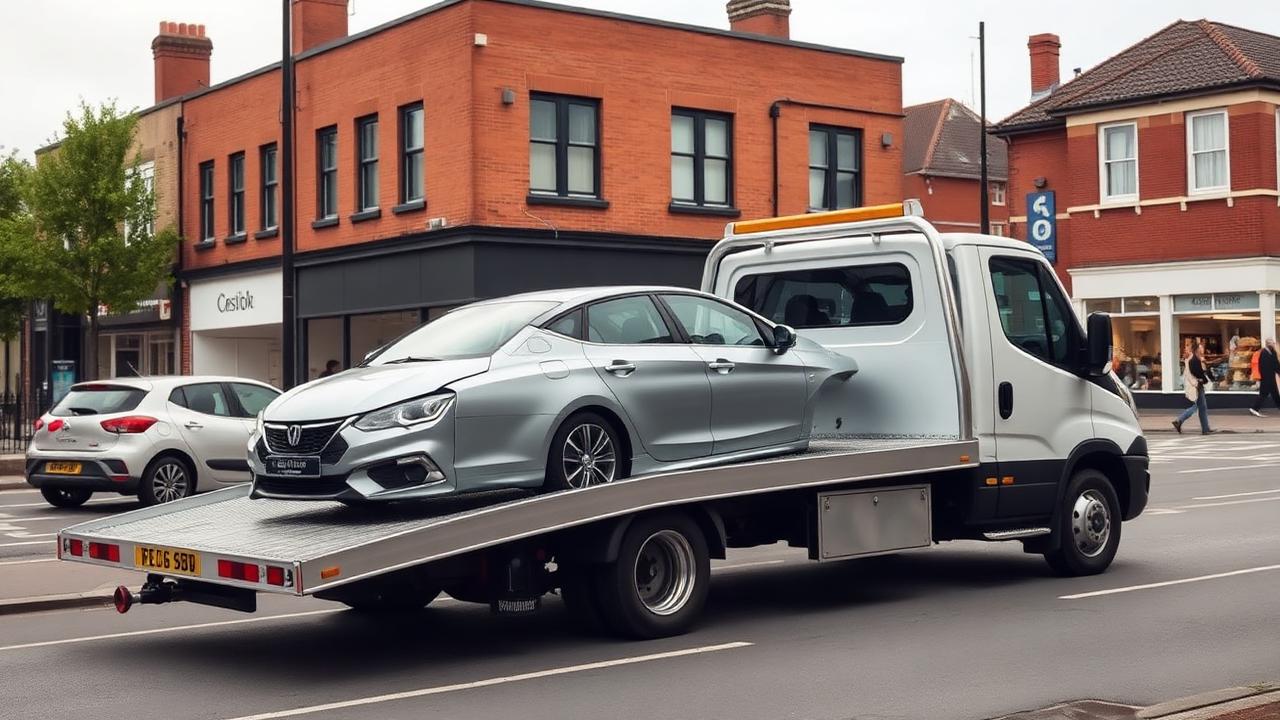
Representative breakdown recovery image for enquiries in Nottingham. Availability and suitability are confirmed for each request.
Match your Nottingham enquiry to the outcome you need
Transport to a workshop
If the car needs to leave its present location for diagnosis or repair, start by explaining that outcome. Say whether a mechanic has advised transport, whether an earlier roadside attempt was unsuccessful or whether you have simply found the vehicle will not start. The reason for requesting recovery helps distinguish a workshop delivery from an enquiry about a possible on-site repair.
This page concerns arranging the movement. The quotation should describe what happens to the vehicle, where it will be taken and the conditions attached to collection. It should not be interpreted as a diagnosis of the fault, acceptance of a warranty claim or a promise that a garage will repair it immediately. Those questions involve separate decisions and contacts.
Assistance before transport
Where you want to ask about assessment at the vehicle, consider the Nottingham roadside assistance service. Explain your intended outcome rather than selecting a service only because its name sounds urgent. For example, wanting a car assessed at home is different from a workshop already asking you to arrange delivery of a non-runner.
If the car has collision damage, include that fact even when it also has a starting problem. Use Nottingham accident recovery for an incident-led enquiry. The important point is to describe the full circumstances so an appropriate movement can be assessed, including any instructions from people already responsible for the scene or the vehicle.
Recover a non-starting car from a Nottingham tram park-and-ride
Identify the site before discussing equipment
NET lists height barriers of 2.2 metres at its park-and-ride sites. It also states that overnight parking requires prior permission. Check the current NET park-and-ride information and the site's instructions when arranging access. A car that fits through an entrance does not establish that a proposed recovery vehicle can use it.
Give the actual site name rather than saying “the tram car park.” NET identifies separate facilities including The Forest, Wilkinson Street and Phoenix Park. Record the bay or row if available and explain whether the car is close to an entrance or farther inside. The loading plan cannot be assessed from a tram stop name if the vehicle is parked somewhere else nearby.
Resolve access with the operator of the site
Tell SYA Rescue what the site has said about recovery access and who can answer further questions. Do not assume a height barrier will be opened on request. If an alternative entrance or collection arrangement is proposed, obtain confirmation from the responsible site contact before presenting it as available to the recovery driver.
A ticket or permission to park is a separate matter from permission for a particular recovery operation. If the vehicle may need to remain longer, ask the site about the situation directly. Keep the transport enquiry updated with the practical answer: whether the car can be reached, when access can be arranged and who will meet the operator if a site representative is required.
Locate the car accurately across the Nottingham area
Use the position of the vehicle, not your own location
When a driver has gone home after a breakdown, their phone location may no longer identify the car. Send the pickup address or pin deliberately and explain whether you will return to meet the operator. If someone else is attending, give their name and contact details through the agreed booking channel. The person discussing the job need not be beside the car, but that distinction must be clear.
Use a complete postcode with the site or street name. For a business address, add the unit and vehicle entrance. A postal delivery point may lead to an office while the car is behind a workshop or loading yard. If the location app places the pin on a neighbouring street, correct it before dispatch rather than expecting the driver to resolve it after arrival.
Distinguish the city from surrounding collection points
For an enquiry in Beeston, Bulwell, Mapperley or another nearby area, give the precise pickup rather than replacing it with “Nottingham.” The general area helps route the enquiry, while the actual entrance determines the collection. Explain whether the vehicle is in residential parking, at work or on a through road.
If the breakdown originally happened on a major route but the vehicle has since moved, use the new collection location. A job described as an M1 pickup may be assessed very differently from a car already released into a holding area. Update the address and explain the earlier movement so the operator does not plan for a roadside situation that has already ended.
Arrange delivery to a Nottingham garage before accepting transport
Ask the workshop a transport question
Tell the garage that the car will arrive on recovery and ask whether it can receive an immobilised vehicle. State the known movement restrictions, especially when it will not roll or steer normally. Ask where unloading should take place and who will acknowledge delivery. The answer needs to describe a workable handover, not merely confirm that the workshop repairs your make of car.
Find out whether the receiving time is fixed or whether there is a period within which delivery can be accepted. Share that information with SYA Rescue before agreeing collection. An appointment for diagnosis later in the week may not mean the workshop can store the car today. Let the garage decide whether earlier arrival is acceptable.
Avoid a receiver that exists only on a map
A workshop listing may provide an address, but it does not confirm the day's availability or an unloading position. Contact the receiver directly. If you cannot obtain a reply, describe the destination as unconfirmed and discuss the next step. A recovery driver should not be sent to find out whether a closed business will accept an unattended vehicle.
If the preferred garage declines, choose an alternative receiver before treating the transport booking as complete. Ask for a revised quote if the new address changes the journey. Keep the diagnosis decision separate from the delivery agreement: you can choose a garage for its expertise while still checking whether its entrance and available space suit the vehicle's present condition.
Coordinate a transfer between two repairers
Establish the release condition at the first garage
A car leaving one workshop for another may no longer be in the condition it was when first recovered. Ask whether components have been removed, whether the wheels are fitted and whether anything is disconnected. Explain those facts to SYA Rescue. “The garage is finished with it” does not answer whether the car can be moved or loaded in the expected way.
Obtain the name of the person releasing the car and the hours during which they can do so. Confirm that any release issue is settled with that workshop. The recovery booking cannot resolve a disagreement about repair authorisation, an outstanding instruction or access to premises. Arrange transport once the release position is clear enough for a driver to attend productively.
Transfer information with the vehicle
Ask what documentation or parts need to accompany the car to the next repairer. If removed parts are loose, describe their size and condition and ask how their carriage should be arranged. Do not assume everything can be placed unsecured in the cabin. The receiving workshop should know what is arriving and which work has already been undertaken.
The second garage may benefit from a symptom history, but the driver should not be expected to translate a technical dispute between repairers. Give written instructions to the receiver where appropriate and retain your own copy. The transport instruction itself should remain clear: collect the identified vehicle in the declared condition and deliver it to the accepted address.
Book collection after a failed roadside attempt
Report the result of the attempt
If somebody has already attended, explain what was attempted and what happened afterwards. A car that started and then stopped again is different from one that never responded. Share any written observation or recommendation you were given, without presenting it as a confirmed repair diagnosis unless the document actually says so. Avoid repeating a procedure just to demonstrate the problem over the phone.
Say whether the first attendance changed the car's position, removed a wheel or left any equipment or components with it. These details can affect the collection independently of the fault. If an earlier operator is still on site, coordinate the next instruction instead of arranging another vehicle without explaining the overlap.
Decide who is arranging the onward movement
Where an assistance provider, employer or insurer is involved, establish whether they are organising transport or whether you are making a separate booking. Ask the responsible party what they have authorised. Do not assume that a private recovery quote will be paid by another organisation simply because that organisation arranged the earlier attendance.
Once the responsibility is clear, give SYA Rescue the current location and receiving address. If you want to change from an assessment request to transport, confirm that change explicitly. A conversation about whether the car can restart should not leave either party unsure whether a vehicle collection has actually been requested and accepted.
Make a home-start failure into a practical collection plan
Explain the driveway arrangement
A car that will not start at home can be straightforward to locate but still difficult to reach. Describe whether it is inside a garage, at the end of a shared drive or facing a wall with limited space around it. Mention any other parked vehicles that would need to move. Arrange those vehicles with their owners before relying on a clear approach.
If the driveway slopes, report that without attempting to roll the disabled car. Do not release a brake or transmission lock to test movement for the booking. Tell the operator which aspects of the condition are known and which remain untested. They can assess what information is needed and whether the proposed collection can be undertaken.
Plan where the car will be after delivery
If the destination is another private address, describe that setting too. A car that cannot be driven after unloading needs an agreed place to remain. The person receiving it should understand that moving it later may require another arrangement. Avoid choosing a narrow shared entrance as a temporary destination without discussing the consequences with the occupier and operator.
For a garage delivery, make the receiver's name and vehicle entrance part of the enquiry. The fact that the car starts from a home address does not remove the need for a receiving plan. Once access, destination and suitability are established, ask for the quote and collection arrangement rather than assuming a residential postcode alone completes the booking.
Prepare a workplace or business-park recovery instruction
Identify the person who controls vehicle access
A workplace pickup can involve reception, facilities staff, a security contractor and the vehicle's driver. Find out which person can admit a recovery operator to the relevant parking area. Give that contact enough information to identify the booking. A visitor registration arranged with reception may not automatically cover the gate beside a warehouse or staff-only yard.
Explain if a work shift or site closure affects release. State who will remain available if the driver leaves work before collection. If keys must pass through security, agree that arrangement with the site and the recovery operator. Do not assume a guard can accept responsibility for releasing a vehicle without prior authorisation.
Clarify business approval before collection
For a company car, van or employee's vehicle being paid for by the business, say who approves the expense. Provide any required reference after checking the proposed payment arrangement. Ask whether the quotation covers the stated vehicle and its load; do not assume a service described for a car automatically fits a loaded commercial vehicle.
A fleet number can help a business identify a vehicle, but the recovery enquiry should also include its registration and model. If the driver reports the fault while a manager books the job, ensure they are describing the same destination and movement. The person at the vehicle should know what has been accepted and whom to contact if site access changes.
Understand what changes a Nottingham recovery quote
The complete job matters more than town-to-town distance
The journey between two postcodes is only one part of a collection. The vehicle's size, condition, starting position, loading access and receiving arrangements can all affect the work that needs assessment. Describe those facts before comparing prices. A quotation based on an accessible car should not be treated as covering a car trapped behind a barrier or missing wheels.
Ask what the total includes and which assumptions are attached to it. Make clear whether you require a same-day movement, a particular handover period or a separate collection of keys. Where waiting or a second journey might arise, ask how it would be handled. The useful comparison is between quotations for the same declared work.
Confirm how a change would be approved
Choose a contact who can discuss an altered destination, unexpected access problem or different vehicle condition. If that person is not the driver, give the operator the right number. A driver should not be left waiting while several people each assume somebody else has authority to agree the next step.
There is no single price on this page for every Nottingham breakdown. Request a quote for your collection and check its scope before accepting. If you have only part of the information, say which detail remains unresolved. A provisional assessment can be useful, but it should not be presented to a garage or family member as an unconditional booking.
Set timing around real collection and delivery constraints
Explain the deadline that affects the job
A workshop shutting its gates, a site representative finishing a shift and a customer's preferred time are different kinds of constraint. Describe which one applies. If the car cannot be released after a particular time, tell SYA Rescue at the start. If a later collection remains possible with a different contact, explain that option as well.
Ask about current availability for the actual vehicle and position. An estimated attendance time depends on the accepted job; a place name in the coverage directory is not an arrival commitment. When the estimate is important to a receiver, tell them it is an estimate and keep them updated rather than promising a time the operator has not guaranteed.
Avoid a collection with nowhere to finish
If the garage cannot accept a late arrival, discuss an alternative before the car leaves its pickup. Do not assume that a driver can hold it indefinitely or leave it outside. Any interim destination, storage or later redelivery would require its own agreed arrangement. The complete journey should be understood before transport begins.
For a request beyond normal workshop hours, the Nottingham 24/7 recovery page provides a separate route for the enquiry. Be explicit about the receiving plan and the availability of keys. Out-of-hours contact is useful only when the vehicle, access and destination can be matched to a movement that the operator accepts.
Keep an onward booking clear after a motorway breakdown
Describe what has already happened
If the car has broken down on or near the M1, distinguish an active roadside incident from a later transfer. If an authority or another provider has already arranged the first recovery, explain that before requesting further transport. Use the current address if the car is no longer on the motorway. A service-area car park, recovery compound and live roadside position are different collection circumstances.
For an immediate motorway hazard, safety takes priority. The Highway Code explains what to do after a breakdown. If you cannot reach relative safety or leave safely, remain belted with hazard lights on and call 999 for the police. Follow instructions from responders controlling the scene.
Keep the second movement tied to its own release
For onward collection, obtain the new site's reference, access contact and release time. Ask whether keys are with the site or with you. Tell SYA Rescue if the car has been placed in a particular position or if any handling issue was reported during the earlier movement. The second operator needs an accurate description of the car they will actually collect.
The M1 recovery page covers that route's enquiries, while this page remains focused on a Nottingham collection and receiving plan. Neither page confirms that a private operator can disregard an official instruction. Resolve the first movement and release position, then agree the onward job with a clearly accepted destination.
Arrange collection for somebody else without losing consent or detail
Keep the vehicle owner in the conversation
A relative, colleague or friend can help gather information, but the operator needs to understand who is authorising the movement. Explain your relationship to the vehicle and ask what confirmation is required. If the owner is unavailable, do not promise that the car can be released simply because you know its location. Establish an acceptable arrangement before dispatch.
When taking details from the driver, record their observations accurately. Avoid converting “I don't know if it rolls” into “it rolls” to finish a form. Ask them for the present position, the keys and the proposed garage, then pass on any unknowns. Those honest gaps guide the next conversation and help prevent an unsuitable collection instruction.
Use a single agreed version of the job
Decide who will receive updates and who can approve changes. If you remain the booking contact while another person meets the operator, make sure both have the same destination and collection details. A group conversation can help only if important decisions are clearly acknowledged; several separate messages with different addresses create uncertainty.
Tell the receiver who will collect repair updates after delivery. That may be the vehicle owner rather than the person who arranged transport. The recovery job can end at an accepted handover while the workshop continues dealing with somebody else. Keeping those roles separate makes the movement easier to trace without turning the driver into a go-between for every repair question.
Manage a vehicle collected without its usual driver present
Establish a workable release contact
For an unattended car at a safe site, ask whether collection can be arranged with an authorised representative. The representative needs to know the vehicle, have the agreed access and understand where it is going. Give the operator their available times. A person who can answer a phone may still be unable to open a gate or hand over keys.
If nobody can attend, discuss that limitation before accepting the booking. Do not leave the operator to discover that the car is locked and the keys are somewhere else. A photograph of the vehicle is useful identification but is not itself a release arrangement. Ask what information and authorisation the proposed collection would require.
Track the items that must accompany the car
Tell the operator about keys, wheel-lock information or documents that the receiver expects, without leaving private credentials on public messages. If a workshop has requested a particular item, agree how it will be handed over. Keep your own record of what was released with the vehicle so later questions can be directed to the correct person.
Where the car contains personal belongings, decide what needs to be removed before collection if that can be done safely. If an item must remain, explain any practical issue it creates for transport. Do not assume that recovery includes inventorying everything in the vehicle, storing separate belongings or returning them to another address.
Prepare for the workshop handover and the next repair decision
Tell the receiver what the driver observed
A useful symptom history is short and chronological: the last normal journey, what changed, whether the engine restarted and any advice already received. Pass that information to the workshop directly where possible. It helps the receiver understand why the vehicle arrived without requiring the recovery driver to diagnose the problem or repeat a long conversation from memory.
If the car has been moved several times, distinguish events at the original breakdown from changes at a later site. For example, a component may have been removed by a garage after the initial collection. Clear timing avoids confusion about the vehicle's condition at each handover. Keep any existing written observations with your own repair records.
Verify receipt before assuming the repair has begun
Ask the receiving business how it will acknowledge delivery and when it expects to discuss assessment with you. Delivery of the car does not by itself authorise every repair or establish a completion date. Confirm the next repair instruction with the workshop using its normal process. The transport booking and workshop job should each have a clear reference where one is supplied.
If you have a question about the recovery, retain the accepted addresses, contact details and the confirmation you received. If the question concerns a mechanical diagnosis, speak to the repairer. Clear records help you reach the right person promptly and avoid confusing a collection estimate with a workshop inspection appointment.
Make the initial call useful even with incomplete information
Give the strongest facts first
Start with where the car is now and why it needs moving. Provide the registration or make and model, say who has the keys and identify the proposed receiver. Then explain the detail most likely to affect access: a park-and-ride barrier, a locked yard, a sloping drive or a workshop release time. Those facts let the enquiry move towards a practical assessment.
You can say that you are waiting for a garage callback or do not yet know whether a site will admit a recovery vehicle. It is better to leave those points open than to fill them with assumptions. Ask what can be assessed now and which answer is required before a collection can be confirmed.
Accept a defined collection arrangement
Use the call and WhatsApp buttons to contact SYA Rescue, or dial +44 7830 881805. Once the details are available, confirm the proposed work and quote. Check that the pickup, vehicle condition, destination and receiving period match the enquiry you intended to make. If another person will meet the driver, confirm their role at the same time.
The Nottingham area page links to existing local guidance. Use it to find a relevant starting point, then return to the facts of the actual car. A successful enquiry ends with a clearly understood next step: further access information, an accepted collection, or an alternative arrangement when the requested movement cannot be accommodated.
Nottingham recovery network
Explore Nottingham pickup areas and related services. Give the exact location and vehicle details when checking availability for Nottingham.
What detail matters first for a car at The Forest park-and-ride?
Give the actual site and where the vehicle is parked, then explain that recovery access needs checking. Include the bay or row if you know it and say who has the keys. Do not assume the entrance used by your car is suitable for the recovery vehicle. Obtain the site's access instructions and share them before the collection is treated as confirmed.
Does a park-and-ride ticket arrange recovery access for me?
No. Parking permission and the access required for a recovery operation are separate questions. Contact the site about the disabled vehicle and ask how an operator may attend. Tell SYA Rescue what has been agreed, including any available site representative. If permission or an alternative entrance is still uncertain, keep that uncertainty in the enquiry rather than assuming it will be resolved on arrival.
Can I request collection from a park-and-ride after going home?
Explain that you are no longer with the car and provide its pickup position deliberately, rather than sharing your current phone location. Say whether you can return or arrange an authorised representative. The operator also needs to know who has the keys and how access will work. Discuss these details before relying on an unattended collection as part of the booking.
What if my intended Nottingham garage has no room today?
Ask whether it can accept delivery at another time or whether you need a different receiver. Discuss the answer with SYA Rescue before accepting collection. Do not assume the car can be left outside or stored by the recovery operator until a space appears. Any interim address or later movement needs to be assessed and agreed as part of a clear plan.
Should a workshop-to-workshop move be booked as breakdown recovery?
Explain that the car is transferring between repairers and describe its present condition. The appropriate arrangement depends on the requested movement, access and handling rather than the label alone. Obtain release confirmation from the first garage and acceptance from the second. If the car is otherwise a planned transport job, the operator can discuss that scope using the same factual information.
How do I describe a car that has been partly dismantled?
Ask the releasing workshop for a current account of what is fitted, what has been removed and whether the vehicle can move. Relay that information rather than guessing from an old photograph. Mention loose parts that need to accompany it and check how they will travel. The receiving repairer should also know the condition so it can prepare an appropriate unloading and handover arrangement.
Can you quote before I have a diagnosis?
A confirmed mechanical diagnosis is not always available at the enquiry stage. Describe the symptoms, what has happened and the known handling restrictions. Make clear that the fault remains undiagnosed. The collection assessment concerns whether and how the vehicle can be moved; it should not be interpreted as a repair opinion or a guarantee that the fault will be resolved at the pickup.
Is an unsuccessful jump-start enough information for the booking?
It is a useful part of the history, but also give the location, vehicle details, key availability and destination. Say what happened during and after the attempt without repeating it for demonstration. Report whether the car was repositioned or anything was removed. That gives the next operator a description of the actual collection, rather than only the result of an earlier attendance.
What if my assistance provider has already instructed another operator?
Clarify the existing arrangement before accepting a separate collection. Tell SYA Rescue that another instruction is active and establish who is responsible for the onward job. A private enquiry should not create competing movements or assume another organisation will pay. Once responsibility is settled, provide the current vehicle position and any release details relevant to the accepted collection.
Does saying M1 breakdown tell you where the car is now?
No. Specify whether it remains in a roadside position, is at a service area or has already reached another site. If it has moved, provide the new address and release contact. An onward transfer should be arranged from its current location. Where responders or an authority are directing the first movement, explain their instructions and follow them before coordinating a private onward journey.
Can my employer book collection while I stay with the vehicle?
Yes, the enquiry can involve a booking contact and a different person at the car. Make those roles clear and ensure you both have the same destination and collection details. The operator needs to know who can approve the quote and changes. If a company reference or payment approval is required, resolve it through the accepted booking arrangement rather than leaving it to the roadside driver.
Should I give a fleet number or registration?
Provide the registration and vehicle model for identification, with the fleet number as an additional business reference if useful. A number understood by your employer may mean nothing to the recovery operator or receiving garage. Where several similar vehicles are at a depot, consistent identifiers help the release contact, driver and receiver confirm that the same vehicle is being discussed throughout the movement.
What if the staff car park closes when my shift ends?
State the closure time at the beginning and ask the workplace whether authorised access remains possible afterwards. Give the operator the confirmed arrangement and site contact. Do not rely on a general arrival estimate to solve a gate deadline. If you will leave before collection, arrange an authorised representative or discuss another workable release plan before the booking is accepted.
Do I need to move the car off my sloping driveway?
Do not attempt an unsafe movement to prepare for a recovery enquiry. Describe the slope, vehicle orientation and known restrictions, then let the operator assess what is possible. If another car blocks access, arrange that with its owner where safe. You can report wheel or brake movement as unknown; a collection discussion does not require you to test the vehicle yourself.
Can my repair appointment be later than the delivery date?
It can only be planned that way if the receiving garage agrees to accept and accommodate the vehicle beforehand. Ask directly rather than assuming an appointment reserves storage space from today. Give SYA Rescue the accepted delivery period and unloading contact. The repair date and transport date should remain distinct so neither is mistaken for a commitment made by the other business.
Who should hold the keys for a remote-owner collection?
Agree a practical key handover with the operator and an authorised person who can access the vehicle. Do not leave keys at an unapproved location or assume a site employee can release them. Explain if the keys are elsewhere, because retrieving them may change the proposed work. The receiver should also know how the keys will reach them after delivery.
Can a relative approve a new destination during the job?
Identify in advance who has authority to approve changes. If that is a relative, make the arrangement clear to SYA Rescue and ensure the receiver accepts the revised delivery. A new address may alter the journey and quotation. Avoid having several people send different destinations; one agreed instruction should be confirmed before the driver proceeds with a changed plan.
Will the recovery driver explain the fault to my mechanic?
Share the relevant observations, but give the garage your symptom history directly when possible. The recovery driver should not be expected to diagnose the problem or resolve conflicting accounts of earlier repairs. A brief written history can distinguish the original breakdown from later changes at a workshop. Transport gets the vehicle to the receiver; the mechanical assessment remains a separate step.
What does the operator need if the car cannot be steered?
Report the restriction clearly along with the car's orientation and space around it. Explain whether it is on a driveway, in a bay or inside a workshop, and state what is known about wheel movement. Do not attempt to force a control or follow an improvised release procedure. The appropriate handling method must be assessed for that vehicle and position before the movement is accepted.
How will I know the Nottingham recovery is actually booked?
Ask for explicit confirmation of the accepted collection, proposed destination, quote and attendance arrangement. Check any outstanding condition, such as site access or receiver approval. A sent message, an image upload or an initial price discussion does not by itself establish that dispatch is confirmed. Make sure the person meeting the driver understands the same agreed details and remains reachable for updates.
Need Breakdown Recovery in Nottingham?
Call to confirm current coverage, availability and the appropriate recovery option for Nottingham and Nottinghamshire.