Emergency help comes before commercial booking
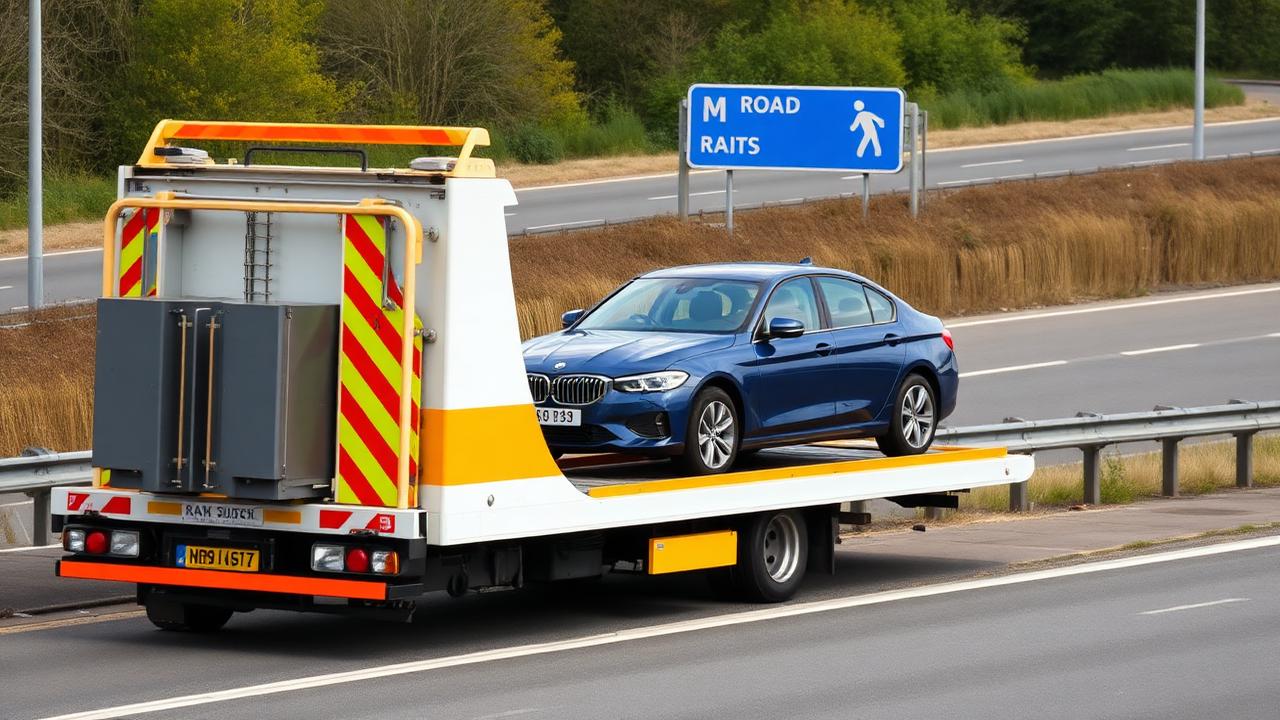
A vehicle exposed to motorway traffic needs immediate safety action. If you cannot get to relative safety and cannot leave safely, remain belted with hazard lights on and call 999 for the police. Do not attempt a repair, put a warning triangle on the motorway or wait for a quote while in immediate danger.
Where leaving is safe, keep away from the vehicle and moving traffic, using a safety barrier where available and safe. Follow the current National Highways motorway guidance and any directions given by emergency services or traffic officers. A recovery company cannot itself authorise entry to a closed lane.
Clockwise or anticlockwise matters
The M25 is orbital, so “towards London” does not identify a carriageway. State clockwise or anticlockwise if you know it, the last junction passed and any driver location information visible from a safe position. If uncertain, describe what you know rather than guessing the direction to make the request sound complete.
A map pin can support the report, but may land on the opposite carriageway, an adjacent road or a connecting slip. Explain whether the vehicle is on the main motorway, a slip road, at services or already off the road. This distinction affects the approach and whether road-authority coordination is required.
The Dartford Crossing and A282 distinction
Drivers often describe the entire orbital journey as “the M25”. If signs show the A282 or you are in the Dartford Crossing area, report that exact location rather than replacing it with the M25 name. For a tunnel or crossing incident, follow operator and emergency instructions first; do not assume that an independently booked recovery vehicle can access a controlled area immediately.
If an appointed operator moves the vehicle, obtain the next location, custody contact and release procedure. SYA Rescue can discuss an onward collection once those details are known. Do not arrange competing collections for a vehicle still subject to a controlled incident response.
An interchange is not a single pickup point
At a connection with another motorway, say which road and direction the vehicle has actually reached. “M1 junction” or “near the M4” can describe several carriageways and slips. Give the signs or marker information available from safety and explain the last movement you made without leaving a safe waiting place to investigate.
For a vehicle on the M1, see M1 recovery. For a car already moved to a local address, use the exact town or facility entrance and tell us who can release it. Do not retain a motorway pickup label after the vehicle is in a depot or parking area with a different access procedure.
London and surrounding-area destinations
The final destination might be a London workshop, a home outside the orbital route or a specialist much further away. Supply the full postcode and receiving contact. A place that looks nearby across the motorway is not necessarily a short or direct road journey for a loaded recovery vehicle.
For London delivery, check the workshop's vehicle entrance, acceptance window and any managed access. The London recovery hub, East London hub, Enfield, Hounslow and Bromley provide relevant local pickup and handover context. Applicable route charges and restrictions should be checked for the actual journey rather than assumed from a general “London” label.
Describe the load and movement restrictions
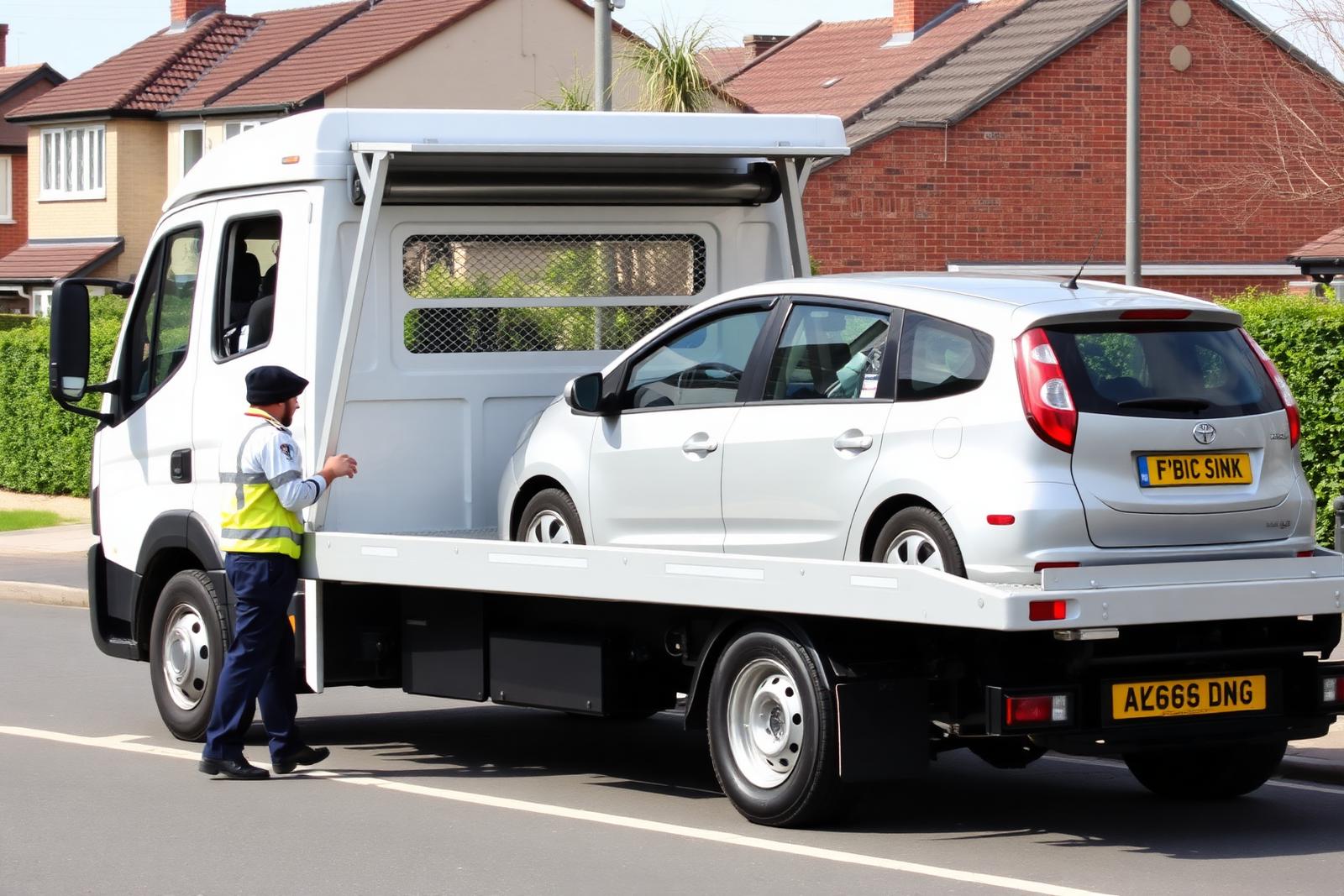
A quote needs more than the motorway number and registration. Tell us whether the vehicle rolls and steers, whether its wheels or brakes are locked, and whether there is collision damage or low ground clearance. Give what you already know safely; do not perform an inspection beside live traffic to fill in missing details.
For a van, describe the loaded condition and dimensions. For a car with an automatic gearbox or electric drive, report a selector or parking-brake problem and the exact model. The equipment decision must account for the vehicle as presented, including anything that changed during an initial emergency move.
Confirm the scope of the M25 quotation
Ask whether the quotation is for collection at the current position and complete delivery, or for an onward move after another operator relocates the vehicle. Confirm how changed access, waiting, destination changes and any agreed additional work would be handled. A simple mileage figure does not describe the whole collection.
Give the receiver's appointment and any closing time before accepting dispatch. If the garage cannot take the vehicle, discuss an alternative with permission and suitable unloading space. Do not assume a closed garage will accept a non-running vehicle simply because its postcode is convenient.
Keep passenger arrangements explicit
Provide the number of adults and children and any accessibility requirements. A vehicle recovery booking does not automatically supply appropriate passenger seating for a whole group. Tell emergency services if anyone cannot follow normal evacuation advice, and confirm onward travel separately once immediate safety is addressed.
Keep one booking contact reachable and update SYA Rescue if you or the vehicle are moved. If a road authority changes the planned collection point, that new instruction takes priority over a previously discussed approach. The team will need to reassess where and when the agreed vehicle can actually be collected.