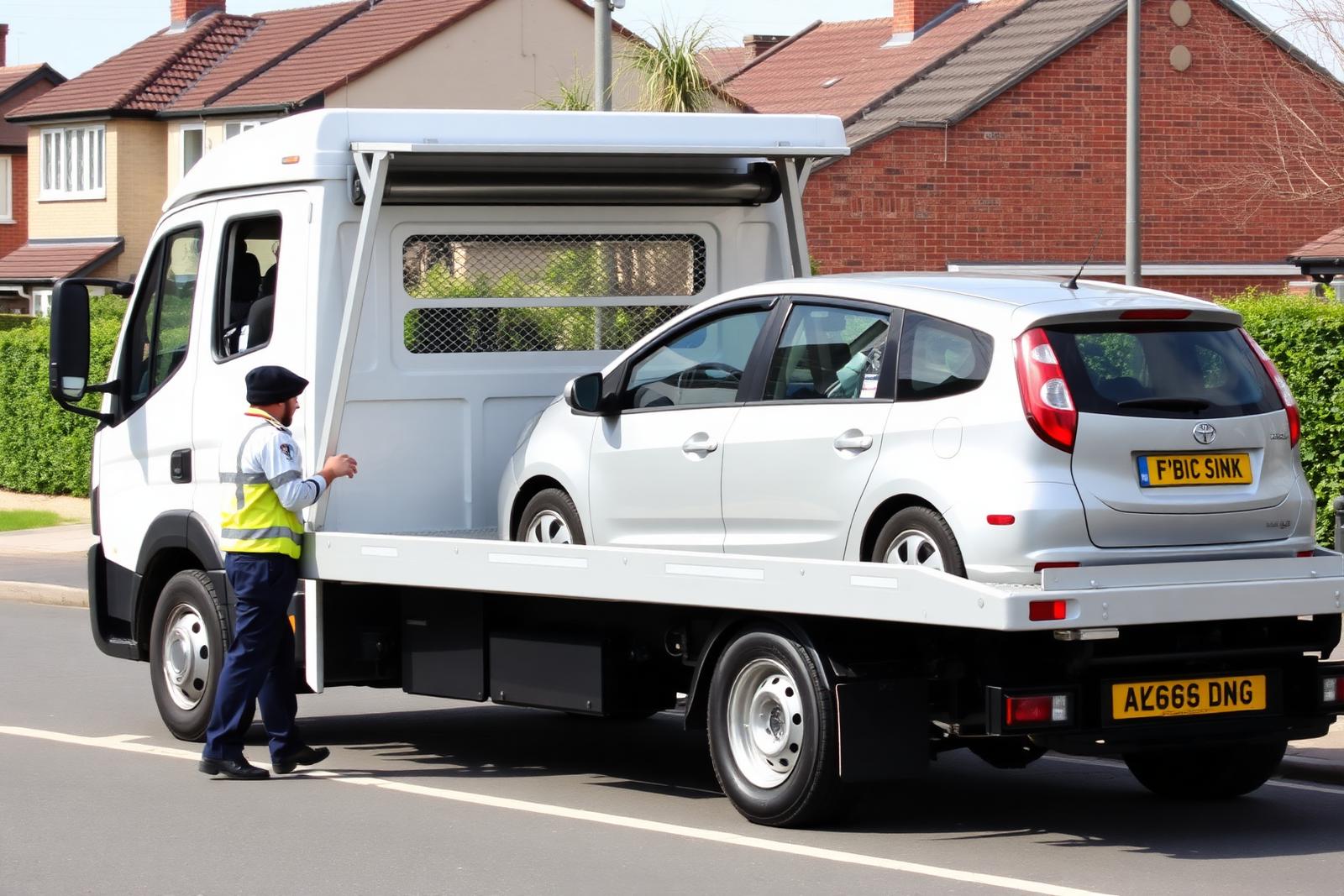
What does 24/7 vehicle recovery establish about availability?
It describes the service's operating offer, not an unconditional arrival or acceptance guarantee. Confirm current availability and suitability for the particular vehicle, position and requested movement.
Is a recovery call appropriate when someone faces immediate danger?
Emergency needs come first. Contact emergency services where appropriate and follow their instructions; a commercial collection enquiry must not replace an immediate response to danger or injury.
Should the caller's safe waiting place be used as the pickup?
Only if the car is actually there. Explain when the caller and vehicle are in different positions so the collection is assessed for the disabled vehicle's location.
Can a person without the keys make the initial enquiry?
They can explain the situation, but legitimate vehicle authority and key release must be established. Identify who can complete those parts of the arrangement.
Does a non-starting engine mean the car will load normally?
Not necessarily. Report wheel, steering, brake and control restrictions separately, including unknowns, so the collection is assessed beyond the engine symptom alone.
Is roadside repair included whenever recovery is requested?
Clarify the proposed service. Assessment or repair at the vehicle and transport to another address are different scopes and should not be assumed interchangeable within one quotation.
Can a car on private land be collected solely on the caller's instruction?
Establish lawful access and authority to release it. The caller's request does not automatically override the landowner's or custodian's legitimate requirements.
Does an urgent deadline create a guaranteed dispatch time?
No. Explain the constraint and ask what timing can be accepted. A caller's preferred deadline should not be presented as a service promise unless explicitly agreed.
What if an earlier operator already changed the vehicle's position?
Provide the new location, custodian and current condition. The next movement must be assessed from where the vehicle now stands rather than its original incident point.
Should I test locked controls before requesting help?
Do not undertake unsafe testing to complete the description. State the known restriction and uncertainty so a suitable response can be assessed without exposing yourself to risk.
Can a closed garage be named as a confirmed delivery destination?
Obtain its actual receiving permission first. An address or previous repair appointment does not necessarily allow an unattended out-of-hours drop.
Does overnight recovery include secure storage?
Only a specifically agreed storage arrangement establishes that scope. Ask what is available rather than assuming a compound, holding period or later delivery is included.
Are passengers automatically carried with the recovered vehicle?
Discuss passenger numbers and needs before booking. Do not infer seating, pet carriage or accessible travel from acceptance of the vehicle movement.
What if a family member and fleet manager give different instructions?
Identify the authorised decision-maker and reconcile the instructions. The job should not rely on the driver deciding between conflicting destinations or payment approvals.
Can the quote remain valid when the destination changes?
Ask for the revised movement to be assessed. A different journey, access arrangement or receiver may change the work and cannot be presumed covered by the earlier quote.
Is appearing in the areas directory a promise of immediate attendance?
No. A location page helps identify the service enquiry, but the precise pickup, available response and suitability still need confirmation for the individual request.
What should I do if the keyholder becomes unavailable?
Notify SYA Rescue and arrange an authorised alternative or revised time. Do not let the accepted job proceed on a handover that can no longer happen.
Does extraction from difficult ground count as a routine breakdown pickup?
Describe that requirement expressly. Access, ground, vehicle position and permissions can change the assessment; a normal collection description should not conceal an extraction task.
Can a transport booking settle an insurer's payment decision?
No. Keep insurer authorisation and reimbursement questions with the relevant insurer. An accepted recovery arrangement does not itself establish policy cover or claim approval.
What information turns an enquiry into a workable recovery booking?
Confirm the present vehicle position, known restrictions, legitimate release, accepting destination and authorised contact. Then obtain agreement on the actual service, quotation and timing available.