Vehicle Recovery Enquiries in London — call +44 7830 881805
London · Greater London
Book Breakdown Recovery in London
Request a quote to collect a broken-down vehicle in London and take it to an agreed garage, home address or other accepted destination. Call SYA Rescue on +44 7830 881805 with the car's position, condition and proposed delivery address. Explain any basement, barrier or restricted entrance before agreeing collection: the work needed to reach the vehicle can be as important as the road journey.
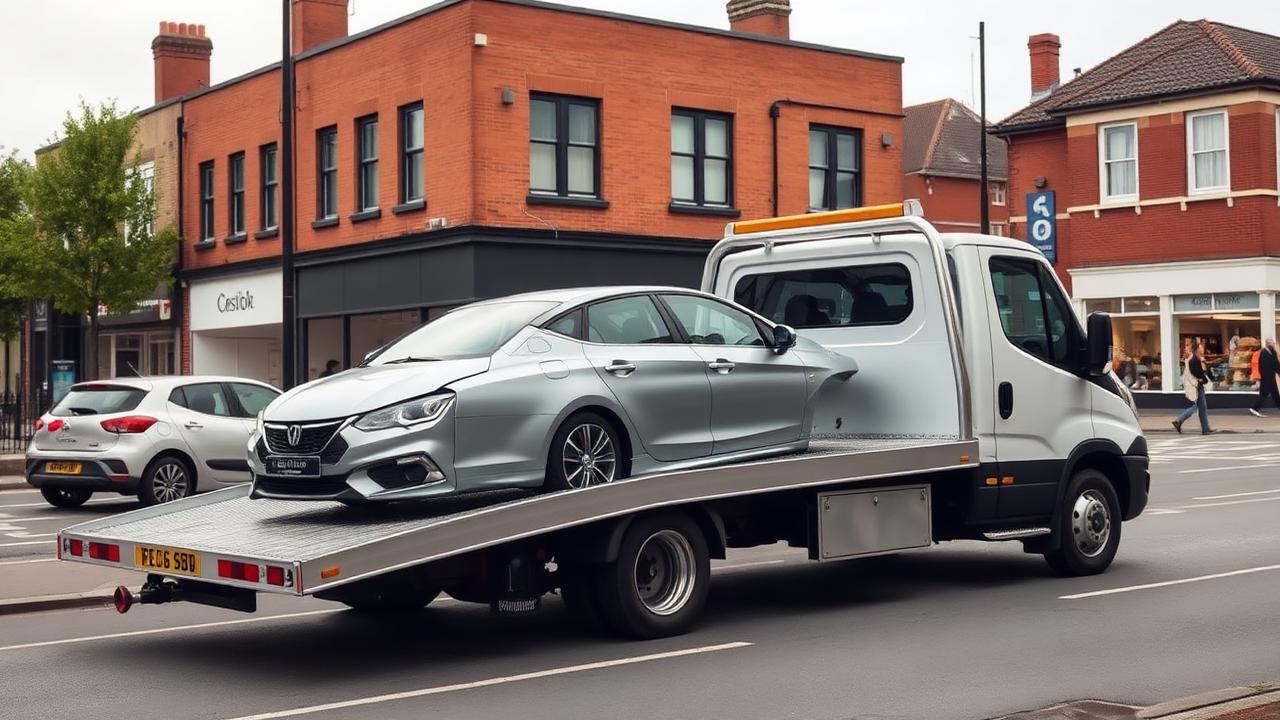
Representative breakdown recovery image for enquiries in London. Availability and suitability are confirmed for each request.
Get a London recovery quote for the vehicle where it stands
Start with the collection problem
A recovery enquiry should describe the car in its present position. A non-runner beside a clear entrance is a different job from an identical car three levels below street level. Tell SYA Rescue whether the vehicle is on a public road, in an open car park, inside a building or behind a controlled gate. That lets the conversation begin with access and loading, instead of a mileage price that may leave part of the job unconsidered.
You do not need to select the equipment. Describe what you can observe safely: which way the car faces, whether there are other vehicles around it, whether the keys are available and whether anybody has already attempted to move it. If wheel movement or brake release is unknown, say so. A mistaken assurance that the car rolls can be more disruptive than an honest statement that it has not been checked.
Separate an enquiry from an accepted booking
Ask for confirmation of the proposed work, current availability and quotation before treating a collection as booked. Sending a postcode or a photograph starts the assessment; it does not establish that a suitable vehicle is on its way. Make sure the person accepting the quotation understands any conditions attached to it, including site access and the receiving address.
For an urgent call, lead with the exact location and any immediate safety concern. For a planned garage collection, lead with the release time and the workshop that has agreed to receive the car. Both requests can involve breakdown recovery, but the order of decisions is different. Use the phone when a changing situation needs a prompt discussion; photographs can follow when they help clarify an access question.
Describe the fault without losing the loading details
What stopped the journey?
Explain what happened immediately before the car stopped: failure to start after parking, loss of drive during a journey, an overheating warning, a puncture combined with another fault, or a garage's instruction not to continue driving. Give the observations rather than a diagnosis you cannot verify. A dashboard message, recent repair invoice or workshop instruction may help describe the request, but it does not replace a loading assessment.
Recovery transports a vehicle; the booking should not imply that the mechanical problem will be repaired at the collection point. If your main aim is to find out whether a limited on-site action is suitable, the London roadside assistance page explains that separate enquiry. If a workshop has already said the car needs transport, share that instruction so time is not spent arranging the wrong kind of attendance.
What affects physical movement?
Report any known flat or damaged wheel, steering restriction, low bodywork, missing wheel, locked transmission or detached part. Mention whether the car is loaded with tools, luggage or equipment. These details concern how it can be handled, even when the engine fault is already understood. Do not crawl beneath the vehicle or try a release procedure to answer a booking question.
A car at a repairer may have changed since it was driven in. Ask the workshop whether all wheels are fitted, whether the steering is connected and whether loose components need separate handling. Give the operator the workshop's description rather than assuming that a vehicle described as “ready for collection” is ready to drive. A transport arrangement should reflect the condition at release.
Arrange recovery from a London basement or multi-storey car park
Obtain the entrance information before dispatch
Send the car park name, entrance street, level and parking bay. A building's postal address may lead to a reception desk or pedestrian door rather than the vehicle entrance. Where there are separate entry and exit ramps, identify which route the site permits a recovery operator to use. Any exception to the normal traffic arrangement needs the site's agreement.
Ask the car park manager for the posted clearance, gate arrangements and available access contact. A height figure alone does not establish that a recovery vehicle can reach the car: turns, gradients, width and working space also matter. Photographs taken from a safe pedestrian position can explain the approach, but the operator must decide whether the proposed movement is suitable.
Quote extraction and onward transport explicitly
Moving a disabled car out of a parking structure and carrying it to a garage are two parts of the overall problem. Ask whether the quotation includes both and what facts the assessment relies on. If access has not been confirmed, keep that limitation visible in the booking rather than assuming that a road transport quote includes any work below ground.
The parking garage recovery page covers access-led enquiries in more detail. Keep the present London breakdown request focused on the complete outcome: where the vehicle starts, how access will be arranged and where it can be delivered. Do not move it to a ramp, exit lane or public road yourself merely to make the collection appear simpler.
Plan a residential pickup without blocking the street
Driveways and shared courtyards
For a car at home, describe the driveway entrance and the car's orientation. State whether it is nose-in, behind another vehicle or inside a garage. If a neighbour's vehicle needs moving, arrange permission with that owner before collection. Recovery staff cannot rely on a neighbour being present or willing to move a car simply because the booking has been accepted.
Shared courtyards may have a managing agent, concierge or residents' access system. Establish who can open the gate and how long access remains available. Tell the operator if the person who owns the car is different from the person meeting the driver. Access authority, vehicle release and payment can belong to three different people; a clear contact arrangement prevents them being confused.
Apartment buildings and remote owners
A remote owner can help by arranging a named local contact who knows the bay, has the keys and understands what is being collected. Give that contact the booking details and the operator's expected communication method. Do not leave keys in an unagreed place or publish a building access code in a general message thread.
If the car is in Camden, Islington or another London neighbourhood, use the precise street and entrance rather than the district alone. The district helps identify the enquiry; it does not tell a driver which gate opens or which end of a shared access road reaches the vehicle. Resolve those small access details while the collection is being assessed.
Check the loading position on a controlled London street
Street signs and site instructions matter
A breakdown does not make every nearby space a suitable place for a recovery truck. Tell the operator about the vehicle's actual position and any signs or markings visible from a safe location. Do not promise that a bay can be used, that a restriction has been suspended or that another vehicle will be moved unless the relevant arrangement has been confirmed.
TfL's loading guidance for red routes explains that loading bays have restrictions and may be suspended. Check the current signs and ask the relevant authority when permission is unclear. A recovery enquiry does not itself grant an exemption.
Avoid an address that describes only the destination building
Some London premises have a customer entrance on one street and service access on another. For a collection outside a shop, office or managed estate, name the entrance beside the vehicle. For Canary Wharf and Stratford enquiries, identify any estate security or parking operator involved instead of assuming that a general building postcode gives unrestricted access.
If the position changes while you wait, update the booking immediately. A car moved by an authorised person into a side street or holding area needs a new pickup pin and access description. The recovery driver should not arrive at the original location and discover that the car, keys and person meeting them are now somewhere else.
Choose a garage that can receive an immobilised vehicle
Confirm unloading, not just a repair appointment
A workshop may agree to diagnose a car without having agreed how an immobile vehicle will arrive. Tell the receiver that the car is being transported and describe any restrictions affecting unloading. Ask for the correct vehicle entrance, a receiving contact and the available handover period. An appointment confirmation for a drive-in customer is not enough information for every recovered vehicle.
Discuss whether the car can be left if the workshop is temporarily busy. The receiver should identify an accepted position rather than leave the decision to the transport driver on arrival. Where access is shared with neighbouring businesses, do not assume that an empty-looking space belongs to the garage or can accommodate an immobilised vehicle.
Keep the receiver involved when the job changes
If the car's condition is different from the original description, tell the receiver before loading. A car that cannot be rolled into the workshop may need a different unloading arrangement from one with only an engine fault. This is particularly relevant after work has started at one garage and the vehicle is transferring to another.
Use a single delivery address in the accepted instruction. If you are still comparing garages, keep the enquiry open until a receiver is selected. A quote for one destination should not be treated as permission to choose among several after the car has been collected. Changes can affect distance, access, availability and the price of the movement.
Compare recovery quotations on the same London job
Describe what the price is intended to cover
When comparing quotations, provide each operator with the same pickup position, vehicle condition and destination. A low price for an accessible, freely rolling car is not directly comparable with a price that includes a difficult extraction. Ask whether the quotation is for transport only or also includes any agreed work to reach and load the vehicle.
Useful points to clarify include the collection address, delivery address, access assumptions, agreed timing, vehicle details and treatment of waiting. Ask whether the total includes any applicable taxes and whether there are circumstances in which another charge would need your approval. Do not rely on a general advertised starting price to describe a complicated London collection.
Keep authorisation practical
Identify who can approve a changed arrangement if the driver encounters an undisclosed barrier, a closed destination or a car that cannot move as described. The person with that authority should be reachable during the job. If approval rests with a business or vehicle owner elsewhere, agree how they will be contacted before collection begins.
This page does not publish a flat citywide recovery tariff. The purpose of the call is to establish a quote for the actual movement. Ask for the accepted details in a form you can refer back to, particularly when a building manager, workshop and owner are coordinating remotely. Written clarity is more useful than an expectation based on a brief postcode-only message.
Book an out-of-hours London breakdown collection
A collection time needs a receiving plan
When a car breaks down after garages close, identify a destination that has actually agreed to receive it. A familiar workshop's forecourt is not automatically an authorised overnight delivery point. Ask about the vehicle position, key handover and who accepts responsibility for receipt. If nobody can confirm those arrangements, discuss another accepted destination before booking transport.
If a gate or car park closes at a particular time, state that deadline at the start of the enquiry. Distinguish a real access deadline from a preferred collection time. An operator can assess the request more usefully when it is clear that a keyholder leaves at a set time, rather than simply being told the job is urgent.
Do not equate an open phone line with a guaranteed arrival
The 24/7 London recovery page concerns out-of-hours enquiries. Current attendance still needs confirming for the vehicle and location. Ask when the next update will be provided if a precise arrival estimate cannot yet be given. An estimate can change with the job in progress, access issues or traffic; it should not be presented as a guaranteed deadline.
Keep your phone available while the collection is active. If you need to leave the site, arrange the release contact first and tell SYA Rescue who has the keys. A late arrival cannot be completed simply because a car park remains open if the only person authorised to release the car has left and cannot be reached.
Arrange a second collection after an earlier recovery
Use the current storage or holding address
Sometimes the first movement takes a car away from an unsafe road position to a place where onward transport can be arranged. When requesting the next journey, give the current location, not the original breakdown road. Obtain the site's release procedure, collection contact and any reference required to identify the vehicle.
Explain what the first operator has already done. The vehicle may be in a different orientation, on different ground or subject to a release arrangement that did not exist at the roadside. Share any handling information passed to you, without converting it into a guarantee that another operator can use the same method. The second job still needs its own assessment.
Settle release questions before a driver attends
If a site says a release condition is outstanding, resolve it with that site or the party responsible for the vehicle. Booking onward transport does not remove the condition. Ask for clear confirmation that the car can be collected at the proposed time and that the person releasing it will be available.
Where an insurer or assistance provider organised the earlier movement, check who is now instructing and paying for the onward journey. Keep that separate from the mechanical repair decision. The recovery booking needs an authorised collection and accepted destination; it should not depend on a disagreement about an earlier job being settled after the truck reaches the gate.
Prepare a handover when the owner cannot attend
Give each person one clear responsibility
Name the person who can release the car, the person who can approve the charge and the person who will receive it. Supply the relevant contact details privately through the agreed booking channel. They may all be the same person, but where they differ the operator needs to know whom to call about access, changes and delivery.
Give the release contact the correct registration and destination. If several vehicles are parked at the address, a make and colour alone may not identify the right one. Ask how vehicle authority will be checked and what the operator requires from a representative. Do not assume that possession of a set of keys settles every release question.
Account for keys and loose items
Agree how many keys or fobs are being handed over and whether anything essential travels with the vehicle. Remove personal valuables if this can be done safely and without delaying an emergency response. If loose parts or tools need to remain inside, describe them and ask whether they affect the proposed transport arrangement.
At delivery, the receiver should know where the keys are going and whether anyone needs to sign or acknowledge receipt. A key drop is useful only when the receiver has agreed it. An improvised handover can leave a car at the correct postcode while the workshop has no reliable record of who delivered it or where its keys were left.
Tell us about passenger needs before accepting the job
Plan the people and the car separately
Vehicle recovery does not automatically resolve onward travel for everyone in the car. Tell SYA Rescue how many people are present and whether anyone has a mobility or accessibility requirement relevant to the arrangement. Ask what, if any, passenger accommodation is available for the proposed recovery. Do not assume that seats or suitable restraints can be provided.
If someone else will collect passengers, coordinate a safe meeting point separately from the loading area. Avoid asking a passenger to remain in an unsuitable position merely to watch the vehicle. Where official responders are involved, follow their directions about where people should wait and how they can leave the scene.
Keep essential information accessible
Before a safe handover, consider which belongings the occupants need immediately, such as a phone, house keys or necessary personal items. Ask about retrieving them without entering a hazardous area or interrupting loading. Once the vehicle is secured for transport, access to its cabin or luggage compartment may not be convenient.
If the person arranging recovery leaves with another driver, give the operator a reliable replacement contact. The collection should not depend on reaching a phone that is about to run out of power or travel out of signal. A short, agreed communication plan is especially useful when the vehicle owner is elsewhere and several family members are helping.
Use photographs to answer the right access questions
Show context as well as the vehicle
For a vehicle in a safe parking position, useful photographs may include the entrance, the space around the car and the obstacle that concerns you. A close photograph of a dashboard warning does not show whether the loading approach is obstructed. Likewise, a wide car park photograph may not show which vehicle is yours. Explain what each image is intended to clarify.
Only take photographs from a safe position. Do not stand in the carriageway, cross barriers, enter a closed site or move the car for a better angle. If a requested photograph cannot be taken safely, say so and describe the situation by phone. The purpose is to reduce uncertainty, not to create a new risk while arranging recovery.
Keep private details out of general messages
Provide an address and contact details needed for the job through the booking conversation. Avoid sending unrelated documents, payment card photographs or an access code in an image that will be circulated to several people. If a workshop document is relevant, ask which details are needed and cover information unrelated to the vehicle movement.
Photographs support a quotation but do not guarantee that every dimension or handling issue is visible. Tell the operator about anything outside the frame: a sharp turn, a second barrier, a low section of roof or a receiver who cannot attend until later. A concise explanation alongside the image often resolves more than a large collection of unlabelled pictures.
Know which recovery request fits the situation
Breakdown, collision or planned transport
Use this London breakdown page when a fault has prevented the vehicle continuing and the intended outcome is collection to a receiving address. If the problem follows a collision, use accident recovery in London and explain any scene instructions or damage. A planned movement of a car that is simply changing location belongs under London vehicle transport.
The labels help route an enquiry; they do not replace the facts. A car may have a mechanical fault and collision damage, or need collection from a garage after a roadside incident. Describe both circumstances so the operator can assess the actual handling and authorisation requirements instead of relying on the service name selected online.
Immediate danger comes first
For an immediate threat, contact emergency services before discussing a commercial collection. On a motorway, if you cannot reach a place of relative safety or safely leave the vehicle, keep seat belts and hazard lights on and call 999 for the police. Follow the Highway Code breakdown guidance and responder instructions.
If an authority controls the scene or has directed a particular movement, tell SYA Rescue about it. A private booking should be coordinated with that instruction. Once the vehicle is available for an authorised onward journey, the collection can be assessed using its new location and condition. Do not arrange competing movements without explaining what is already in progress.
Keep the London collection moving when circumstances change
Report a change before it becomes a failed handover
Call if the vehicle has moved, the keyholder has left, the receiving garage has closed or the car's condition has changed since the quotation. These are material changes to the job. A brief update can allow the plan to be reassessed before a recovery vehicle reaches an entrance it cannot use or a receiver who is no longer available.
Where the booking is being handled for somebody else, avoid separate unconnected instructions. Nominate one contact to relay agreed changes to the operator and then inform the other people involved. Conflicting destinations or collection times are difficult to resolve when each participant assumes their own message is the latest authorised version.
Agree the next step explicitly
If an unforeseen issue prevents the original plan, ask what is being proposed, what remains possible and whether the quote changes. Do not treat silence as approval for a different destination or additional work. The aim is a clear decision that the owner, operator and receiver all understand, especially when somebody is authorising remotely.
After delivery, keep the job reference, receipt or agreed handover record with the vehicle's repair information. Recovery and repair are separate stages. The workshop should receive the observations that explain why the car arrived, while any question about the transport booking can be raised against the correct movement rather than a different garage appointment.
Send a complete London breakdown enquiry
A short message that can be assessed
Start with the registration or make and model, exact pickup position and reason the car cannot continue. Add whether the keys are present and any known restriction on rolling or steering. Then give the destination and receiver's availability. Finish with the access issue that could affect collection: basement level, gate, parked vehicles, restricted entrance or a deadline for release.
You can leave unknown fields unresolved rather than guess. For example, say that brake release has not been checked or that the car park manager has not yet confirmed access. That gives the operator a useful next question. A message that appears complete but contains assumptions can lead to an unsuitable plan and avoidable changes later.
Confirm the agreed movement
Call +44 7830 881805 or use the page's WhatsApp button to discuss the request. Before accepting, confirm the vehicle, collection entrance, proposed work, destination, price and current attendance arrangement. If the garage still needs to approve unloading, make that visible. The enquiry is ready for a decision when those practical details have an agreed answer.
For wider coverage information, browse London recovery areas. Area pages help you choose relevant collection guidance; they do not represent a separate depot in every neighbourhood. The useful commitment is the one confirmed for your vehicle and its actual pickup position, with a receiver who is ready for it at the other end.
London recovery network
Explore London pickup areas and related services. Give the exact location and vehicle details when checking availability for London.
Can I request collection while I am still choosing a London garage?
Yes, you can discuss the pickup and vehicle condition first. Explain that the destination is undecided so a provisional enquiry is not mistaken for a complete transport instruction. Before accepting a journey to a particular garage, obtain its agreement to receive the car and confirm the delivery address with SYA Rescue. A different receiver can change the distance and unloading arrangements.
Does a garage appointment mean its forecourt is available for recovery delivery?
No assumption should be made about that. Ask the garage where an immobilised vehicle can be unloaded and whether somebody will meet the driver. A repair slot may only describe when the workshop expects to examine the car. Share the car's movement restrictions so the receiver can decide whether its usual customer entrance and parking position are suitable.
What should I send for a car stuck beneath an apartment building?
Provide the vehicle entrance, parking level, bay and the building contact responsible for access. Include the posted clearance and any known turns, gates or ramps. Explain what stops the car moving. The operator needs to assess whether extraction is possible before treating the job as ordinary street-level transport; a building postcode or dashboard photograph alone will not answer that question.
Can the quote include moving my car out of the basement?
Ask for that work to be considered explicitly. Describe the starting position and check whether the accepted price includes extraction as well as the onward journey. If the access assessment is outstanding, the quotation should reflect that limitation. Do not assume equipment will fit merely because the road transport part of the job has an available price.
Must I prove that every wheel turns before calling?
No. Report what you already know and make clear what has not been checked. You should not attempt a movement test on a slope, beside traffic or in another unsafe position. The recovery operator can ask further questions and assess the handling requirements. “Wheel movement unknown” is a usable fact; an unsupported assurance that the car rolls normally may misdescribe the collection.
Can a concierge release the vehicle if I am outside London?
Discuss the arrangement with both the concierge and SYA Rescue. The representative must be willing and authorised to help, know which vehicle is involved and have access to the required keys. Ask what release confirmation is needed. Keep yourself reachable if you remain responsible for accepting costs or a change to the delivery address.
Is a loading bay automatically suitable for the recovery truck?
No. Give the operator the actual position and any visible restrictions, and let the proposed loading arrangement be assessed. Check signs and any suspension information from a safe location. If permission is uncertain, obtain guidance from the responsible authority or site. An empty bay is not enough evidence that a particular collection can take place there.
What if the car is moved by an earlier recovery operator?
Update the pickup immediately and obtain the new site's release details. The onward booking should identify where the car is now, who holds the keys and whether collection has been authorised. Also pass on any useful handling observations from the earlier movement. A driver sent to the original breakdown point cannot complete a collection from a different holding address without revised instructions.
Should I tell you that a workshop has removed parts?
Yes. Ask the workshop for a current description before booking. Removed wheels, disconnected steering, loose components or changed clearance can alter handling even if the car arrived there under its own power. Explain which items must travel with it and whether the receiving garage knows about them. “Ready to leave the workshop” does not establish that the vehicle is readily loadable.
Can the driver collect keys from a different London address?
Raise this during the enquiry. A separate key collection changes the proposed movement and cannot be assumed to be included. Describe where the keys are, who will release them and their available times. Where practical, arranging an authorised keyholder at the vehicle may simplify the collection, but the final arrangement needs agreement from everyone involved.
What if the car park gate closes before the estimated arrival?
Tell SYA Rescue as soon as you know. Contact the site to establish whether authorised access can be arranged later, and explain any response to the operator. A closing gate is a real collection constraint, not just a preference. Do not assume the driver can bypass it or that a general arrival estimate guarantees attendance before closure.
Can my vehicle go home instead of to a workshop?
Propose the home address and describe where the disabled car would be placed. The operator needs to assess the destination as well as the pickup, including access and space for unloading. Make sure the owner or occupier accepts the arrangement. A home delivery may be workable, but it should not be assumed suitable for every immobile vehicle or driveway.
Can I book for a company car without being the payer?
Explain who authorises the movement and who approves the quote. If your employer or another party requires a purchase reference, obtain it before collection and provide the relevant contact. Ask how the proposed payment arrangement will work rather than assuming business account terms. The driver at the car should know whether they have authority to approve a changed plan.
Is passenger transport included in the recovery enquiry?
It needs a separate answer for the actual job. Tell SYA Rescue the number of people and any accommodation needs, then confirm what can be offered before relying on it. Organise alternative travel if needed. The vehicle collection plan should remain clear even when passengers leave independently and a different authorised person stays for handover.
Will a successful restart remove the need for recovery?
That depends on the fault and an appropriate assessment, not solely on whether the engine starts once. Tell the operator what has changed and obtain suitable advice about the next step. Do not continue a journey merely to avoid transport when the car may remain unsafe. If recovery is cancelled or changed, confirm the booking position directly rather than leaving the driver uninformed.
How do I distinguish the correct entrance in a large development?
Give the street used by vehicles, the gate or ramp name and a precise pin for that entrance. Identify the car's level or bay separately. A development name can cover several buildings and pedestrian access points. If security controls entry, obtain a contact who understands the collection and can explain the approved approach to the operator.
Can I ask the receiving garage to change after loading?
Contact SYA Rescue before treating the change as accepted. The proposed new receiver must agree to take the vehicle, and the operator needs to assess the revised journey and price. Keep the person authorising the change available. A conversation with the second garage alone does not update the recovery booking or establish that the driver can deliver there.
What record should I retain from an unattended delivery?
Agree the handover method before the journey, including where the car and keys will be placed and who acknowledges receipt. Keep the accepted destination, job reference and any delivery confirmation supplied. Do not plan an unattended drop simply because a forecourt looks accessible; the receiver's consent and the operator's acceptance should be established first.
Does listing London neighbourhoods mean a truck is based in each one?
No. The area links describe locations from which enquiries can be discussed; they are not evidence of a depot, dedicated vehicle or guaranteed arrival in every neighbourhood. Give the precise pickup and ask about current availability. That provides a useful answer for the actual collection rather than relying on the presence of a place name on the website.
What is the fastest useful way to start my enquiry?
Call with the pickup position and the reason the car cannot continue, then mention the access issue most likely to affect loading. Have the vehicle details and intended receiver available if possible. If some information is missing, explain that openly. The next useful step is an agreed assessment and quote for your car, rather than a promise based on the district name alone.
Need Breakdown Recovery in London?
Call to confirm current coverage, availability and the appropriate recovery option for London and Greater London.