Find the London guide that matches your parked vehicle
London is a broad service area, not a single dispatch point. Start with the district and postcode, then identify the actual vehicle entrance. A car in a Westminster hotel basement, a Wembley event car park and a private driveway in Richmond need different access discussions even when all three are described as London recovery.
For central and north London, use Westminster, Camden or Islington. In the west and northwest, see Wembley, Ealing, Harrow, Hounslow and Richmond. These guides explain practical collection questions; they do not represent separate local depots or guaranteed attendance times.
East and southeast London collections
The East London hub connects district-specific guidance for Stratford, Canary Wharf, Hackney, Barking, Dagenham, Ilford and Romford. Managed estate parking and event facilities need an entrance and operator contact, not just a famous landmark.
For southeast and south London, see Greenwich, Bromley, Croydon and Kingston upon Thames. Enfield covers another important north London pickup area. Give the actual address if you are near a boundary; the collection assessment should follow the vehicle, not force it into the wrong neighbourhood label.
Choose the service by what has happened
Use London roadside assistance to discuss available assessment for a safely parked vehicle. London breakdown recovery concerns a disabled vehicle needing collection and transport. London accident recovery addresses a damaged vehicle, including movement restrictions and release after an incident.
For timing enquiries outside ordinary working hours, see 24/7 vehicle recovery in London and confirm actual attendance availability. A planned move to another location belongs under London long-distance vehicle transport. You do not need to book several services to describe one problem; explain the symptoms, access and desired outcome so one scope can be agreed.
London access can matter more than straight-line distance
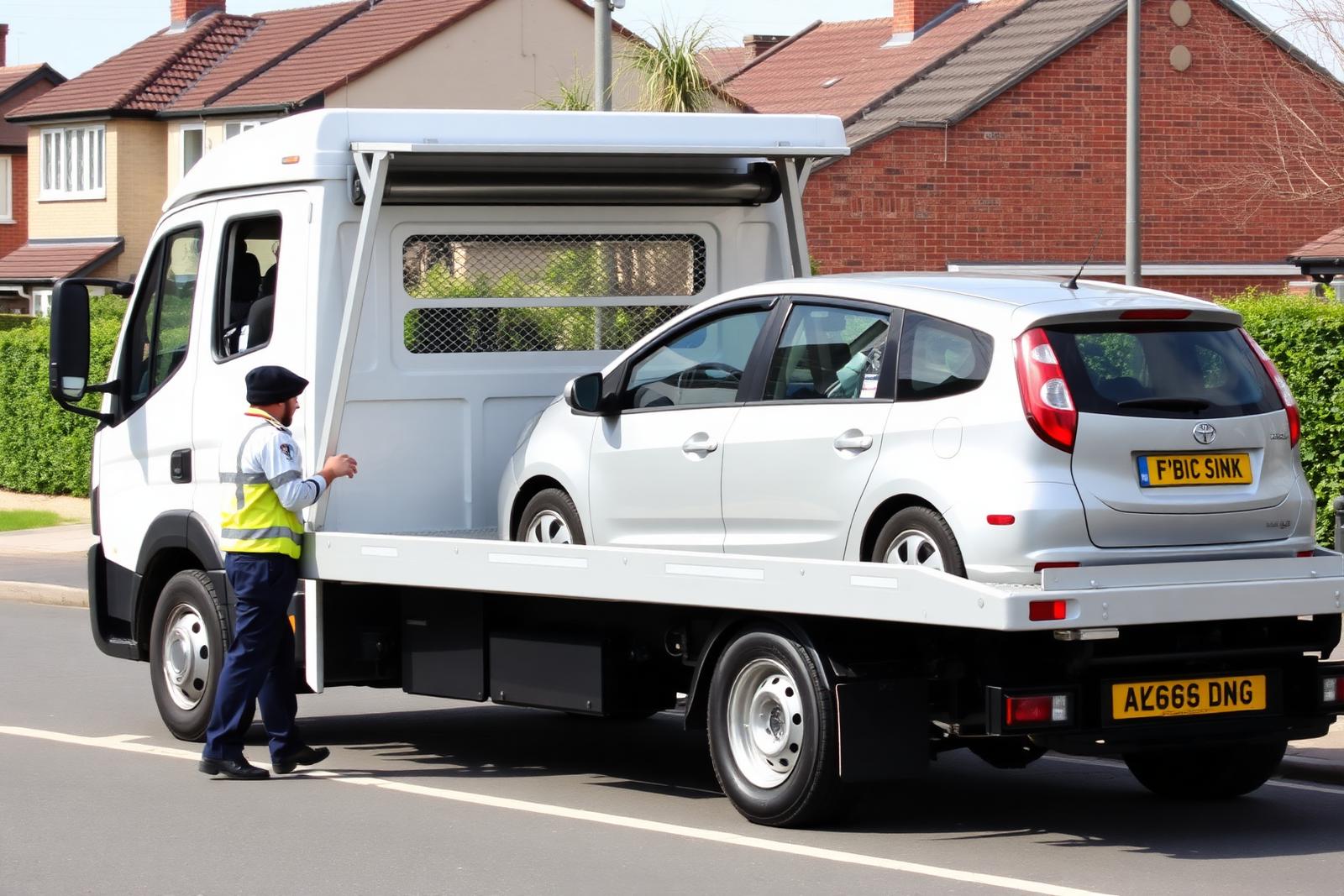
At a building or car park, report height clearance, ramps, gates and the vehicle's level or bay. At a business, identify the service entrance and authorising contact. On a residential street, explain the parked position and any known access control. A road that admits a passenger car may not provide space for recovery loading.
Check applicable TfL vehicle schemes and local road controls using current official information. Do not assume every recovery-related movement is exempt or that a quotation covers every charge. Ask what is included for the agreed journey, while keeping any obligations relating to the car's earlier driven journey separate.
M1 and M25 journeys have their own location requirements
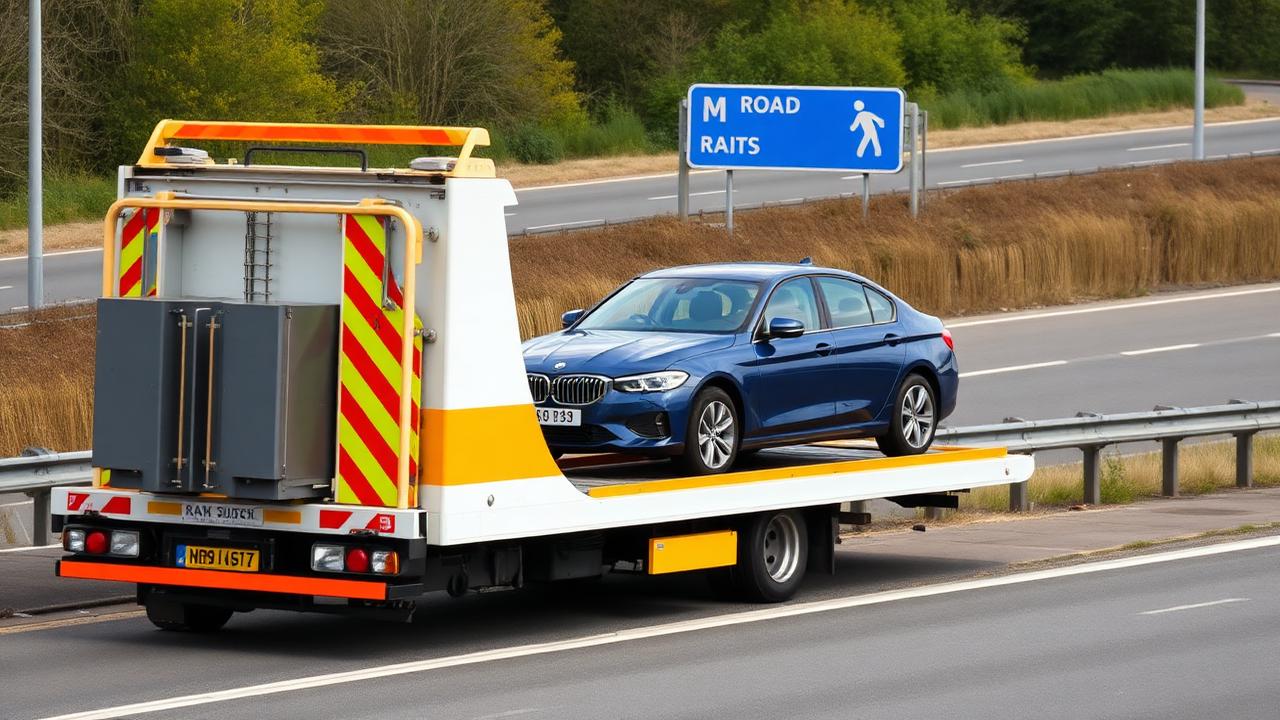
If the car is on a motorway, the London destination or nearest suburb is not the pickup address. Use M1 recovery or M25 recovery, with the road, direction and exact stopped position. Immediate danger needs emergency assistance before a commercial booking discussion.
If another operator moves the car off the motorway, obtain its new location, release contact and key arrangements. An onward collection can then be assessed using that address. Tell the team about the earlier move and any change in vehicle condition, rather than continuing to use the original motorway position.
Confirm both ends of the London job
A useful quote has an exact pickup, vehicle condition and accepted receiving address. Tell the team about locked wheels, low clearance, missing keys, a loaded van or collision damage before dispatch. Ask the receiver whether it can unload and accept the car in that state, including outside normal workshop hours.
Keep one person authorised to approve changes and one reliable contact at each end. Clarify passenger travel separately, particularly for children or anyone with mobility needs. A message starts an enquiry; the booking is confirmed when the team accepts the scope and agrees the price, access, destination and timing.