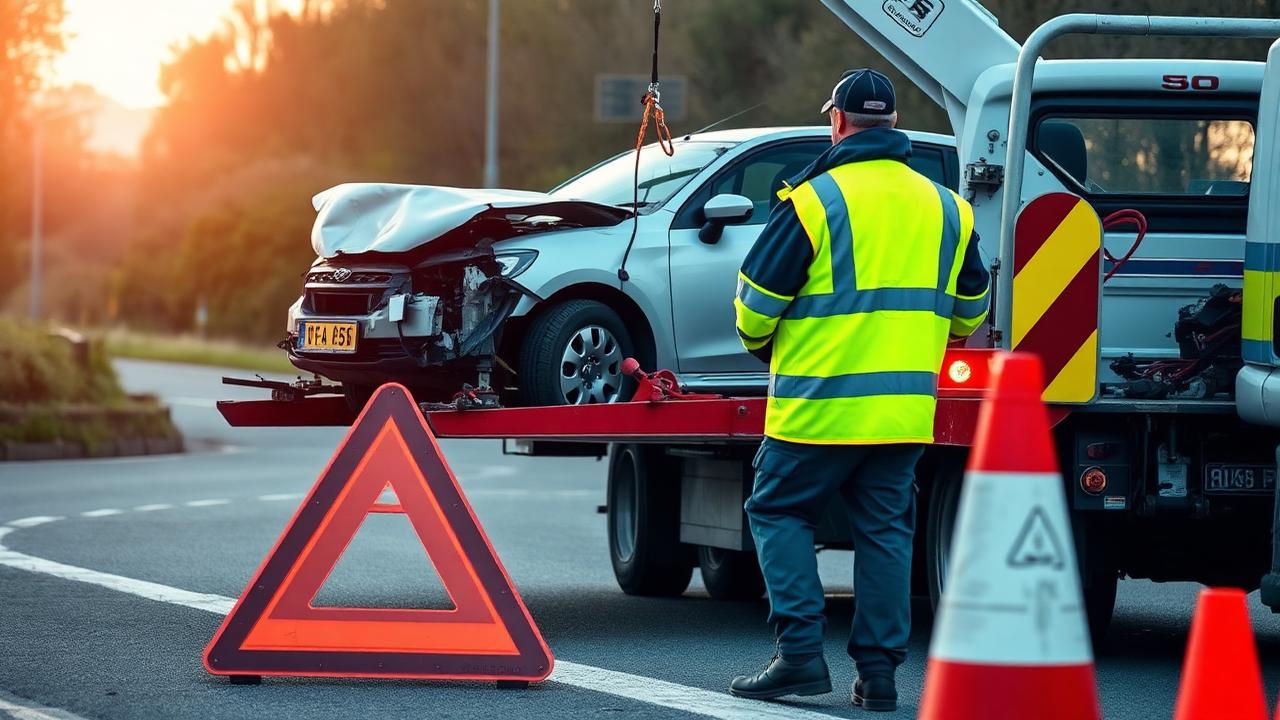
Collision Damage and Recovery Requirements — Ilford
Accident recovery in Ilford may be requested for several different situations, but each one needs its own condition and access description. The following examples explain what changes the response:
**Minor-looking impacts where the vehicle's roadworthiness is uncertain.** Report an exact map pin plus the direction of travel, car-park level, entrance or gate. The planning point is that a live or hazardous scene may require emergency-service control before recovery begins. Do not take it for granted that the same method used for an accessible, freely rolling car will suit this situation.
**Electric or hybrid vehicles with visible underbody or battery-area damage.** Report registration, make, model and approximate overall dimensions of the vehicle. The planning point is that heavy vehicles or complex extraction can require specialist capability not assumed without an individual assessment. Do not take it for granted that the same method used for an accessible, freely rolling car will suit this situation.
**Collisions in car parks, gated sites, depots or restricted-access premises.** Report clear details of visible damage and whether each wheel appears free to move. The planning point is that locked or structurally restricted sites may need permission or alternative access. Avoid assuming the same method used for an accessible, freely rolling car will suit this situation.
**Front, rear or side impact damage.** Report whether the steering works, airbags have deployed or fluids are leaking. The planning point is that an operator cannot determine fault or legal responsibility or guarantee insurer payment. Do not treat it as automatic that the same method used for an accessible, freely rolling car will suit this situation.
**Damaged tyres, wheels, steering or suspension.** Report police, insurer, fleet or bodyshop instructions and any case identifier. The planning point is that a precise attendance time cannot be promised before distance, traffic, access and equipment are assessed. Avoid assuming the same method used for an accessible, freely rolling car will suit this situation.
**Vehicles resting in an awkward position.** Report passenger needs, keys, destination particulars and a contact who can authorise handover. The planning point is that a live or hazardous scene may require emergency-service control before recovery begins. Avoid assuming the same method used for an accessible, freely rolling car will suit this situation.
**Airbag deployment or shattered glass.** Report an exact map pin plus the carriageway direction, car-park level, entrance or gate. The planning point is that heavy vehicles or complex extraction can require specialist capability not assumed without an individual assessment. Do not take it for granted that the same method used for an accessible, freely rolling car will suit this situation.
**Police-managed scenes after the road has been released.** Report registration, make, model and approximate vehicle dimensions. The planning point is that locked or structurally restricted sites may need permission or alternative access. Never presume the same method used for an accessible, freely rolling car will suit this situation.