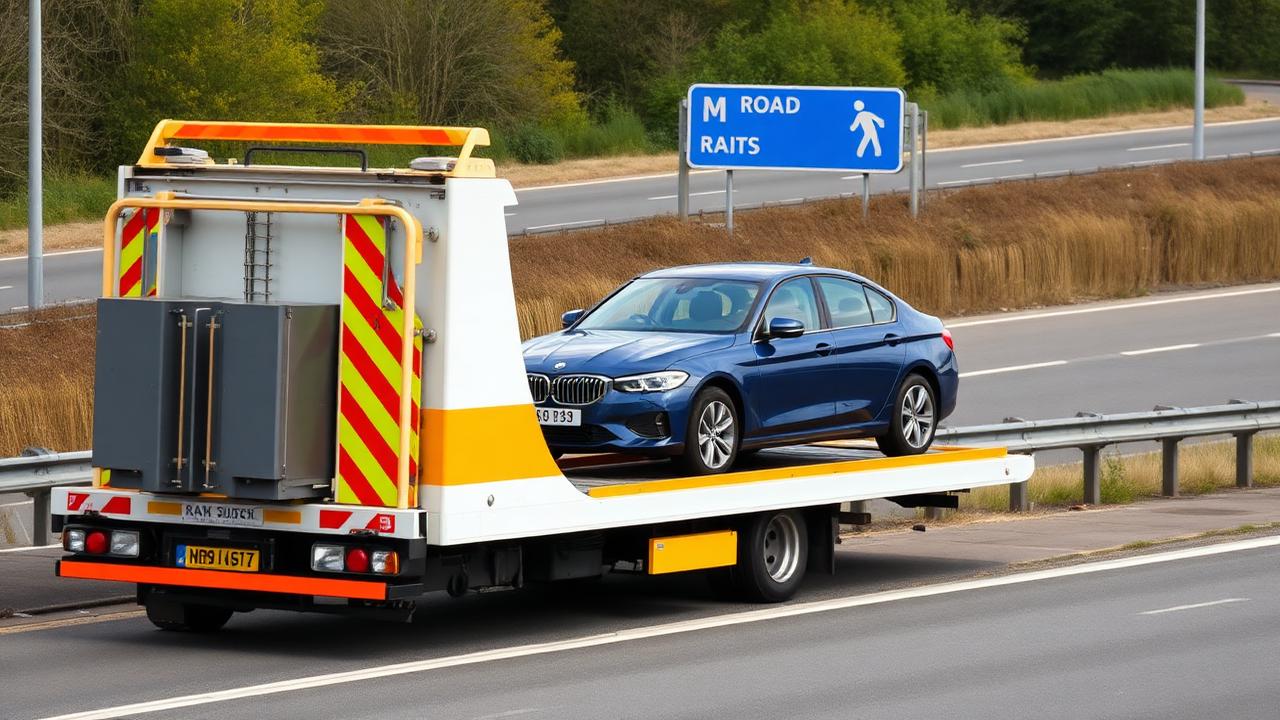
Arrange recovery from the vehicle's actual position
A recovery area is the starting point for a conversation, not the full collection address. A driver who says “London” might be in a residential street, at a workshop, inside a controlled car park or on an approach road. Each setting creates a different collection task. Use the area directory to find the relevant locality, then give the precise vehicle position by postcode, map pin or a clear description of the site entrance.
SYA Rescue's priority coverage includes East London, Kent, Essex, Hertfordshire, Slough and Staines, Manchester and Bradford. The wider directory preserves other places for which a recovery enquiry can be discussed. We assess attendance for the individual job; a place appearing on this page does not show a local depot, available truck or guaranteed arrival time.
Start with where the vehicle is now, even if you live elsewhere or want it taken to your usual garage in another county. Tell us if it has already been moved after a breakdown or collision. Recovery should be quoted from the current collection point, not an earlier incident location. A complete request joins the pickup and destination with the vehicle's condition and the permissions needed at each end. That allows the team to assess a workable movement rather than quote against a town name alone.
East London: identify the district, entrance and side of the journey
Our East London recovery page connects the district pages for Stratford, East Ham, West Ham, Canning Town, Plaistow, Beckton, Forest Gate, Leyton, Leytonstone, Walthamstow, Hackney, Bethnal Green, Bow and Canary Wharf. Existing pages for Barking, Dagenham, Ilford and Romford remain linked in the same service-area group.
For a pickup inside a larger building, estate or managed development, give the vehicle entrance rather than assuming the postal entrance is suitable. Explain the parking level, barrier arrangement and any height restriction you can read safely. A vehicle at street level and one beneath a building can require very different handling, even when they share a postcode.
If the intended journey crosses the Thames, give both endpoints. Do not choose a tunnel or crossing solely because a passenger-car route planner suggests it. The accepted recovery vehicle and load affect the route assessment. Transport for London publishes Blackwall and Silvertown tunnel information; ask how any applicable route requirements are treated in the quotation rather than assuming a charge or exemption.
The district page helps establish context, but the current access conditions still come from you or the person at the vehicle. Send one accurate location pin and explain whether the vehicle is on the street, behind a gate or within a car park. Do not rely on an office reception address to describe a separate loading entrance.
Kent: distinguish the collection town from the onward destination
Use the Kent recovery hub for the county-wide overview, then select the actual collection town. The directory includes Dartford, Gravesend, Rochester, Chatham, Gillingham, Sevenoaks, Tonbridge and Tunbridge Wells, alongside the established Maidstone, Canterbury, Ashford and Dover pages.
Do not treat “Kent recovery” as one standard-distance job. A pickup and delivery in the same town, an inter-town garage transfer and a journey out of the county need separate assessments. Give both addresses and any opening-hour limitation. If the car is being collected from a business, confirm its release contact; a postcode covering several units may not identify the correct workshop or yard.
For a journey involving the Dartford Crossing, identify which side the vehicle is currently on and where it must finish. The crossing links Dartford in Kent with Thurrock in Essex; a vehicle near it should not be located using the destination county by mistake. Check current charging information through the official Dart Charge service and ask how relevant route charges are addressed in the job quotation.
A ferry-related or time-limited journey also needs its own clear brief. Tell the team about a terminal or site access requirement and a genuine collection deadline, but do not assume private recovery has permission to enter a controlled area. A travel booking does not guarantee recovery attendance at a particular time.
Essex: give the locality rather than a county label alone
The Essex coverage page links requests in Chelmsford, Colchester, Basildon, Brentwood, Harlow, Grays, Braintree and Southend-on-Sea. These names help organise the directory, but the operator needs the vehicle's exact address and position before assessing a collection.
If you describe your location using a familiar postal or commercial label, add a map pin when there is any ambiguity. The recovery question is where a vehicle can actually be reached, not which regional name appears in an address book. This is particularly useful when a business has several entrances or when a driver's stated town is the nearest recognisable place rather than the pickup itself.
For a move between Essex and Kent, make the crossing requirement clear by supplying both addresses. For a delivery towards London, tell us whether the destination is a workshop, residence or managed parking facility. Do not assume that the same access arrangements apply at both ends merely because the vehicle was originally driven there.
At a commercial collection point, ask the person releasing the vehicle to confirm wheel movement, steering and keys. If the car has been standing for some time, old information from when it arrived may no longer describe its condition. A current account of the vehicle and a precise gate location make the enquiry more useful than a list of nearby towns.
Hertfordshire: plan the handover around the correct town and site
Our Hertfordshire hub connects Watford, St Albans, Hemel Hempstead, Stevenage, Hatfield, Welwyn Garden City, Hertford and Bishop's Stortford. Choose the place where the vehicle stands; your home town or the address of the business arranging payment may be different.
For a pickup associated with a major road, distinguish a vehicle on the road from one at a nearby premises. A service-road entrance, workshop yard and road shoulder should not be described interchangeably. Give direction-of-travel or junction information when it is relevant and can be identified safely. Do not move to a junction simply to make the address easier to explain.
For planned collections, check whether the receiving workshop accepts a non-running vehicle and whether a named person will be there. If the garage appointment and pickup window are separated, discuss the timing as one arrangement rather than assuming either party can wait indefinitely. The county name does not determine a collection duration.
Local road access can change. Hertfordshire County Council provides roadworks and closure information, while the operator should assess the actual journey at booking. Explain any closure or entrance restriction you know about; do not present a usual route as proof that today's access is available.
Slough and Staines: treat them as separate pickup locations
The client coverage group includes both Slough and Staines-upon-Thames. They have separate pages because a collection request needs the actual town and postcode, not the combined phrase “Slough/Staines”. Select the location where the vehicle is parked, then provide the destination independently. A delivery between the two should include both endpoints from the beginning.
When a vehicle is at a hotel, business premises, car park or collection site, give the site's full name and vehicle entrance. A reception desk may be able to confirm permissions, but do not assume it controls access to every parking area. Tell us if the keys are held by someone other than the driver or if the vehicle must be released before a particular time.
If airport, rental, depot or other managed-site arrangements are involved, state the operator's release instructions. Do not use a nearby landmark as if it were permission to collect from a restricted area. A recovery team needs an accepted entry and handover arrangement before a job inside such a site can be confirmed.
A vehicle whose owner has continued their journey still needs an authorised release contact. Explain whether anybody remains with it and how changes will be approved. These details are particularly important when the destination is a home address in another region and neither the owner nor the driver will be present at collection.
Manchester and Greater Manchester: specify the borough or district
Use Manchester recovery as the regional starting point, then identify the actual locality. The coverage group includes existing pages for Salford, Bolton, Bury, Oldham, Rochdale, Stockport and Wigan, together with Trafford, Tameside, Altrincham, Sale, Stretford, Ashton-under-Lyne, Didsbury and Wythenshawe.
“Manchester” is often used in a broad sense when arranging travel or business work. For recovery, the collection address must be narrower. Give the district, postcode and exact entrance. A request involving the city centre should identify a street-level bay, private yard or parking level rather than only the name of a nearby building. A request elsewhere in Greater Manchester should not default to a central Manchester pickup.
For a vehicle going to a workshop in another borough, check both handovers and include any closing-time constraint. Do not compare that movement with a price for transport within a single neighbourhood. If the journey is intended to continue towards another region, describe the full route requirement at the outset so local attendance and onward transport can be assessed together.
Availability is confirmed for the specific request. The regional links do not assert that a separate operator or depot exists in every listed district, and they should not be read as a travel-time map. They help you give an unambiguous location and reach the most relevant existing page.
Bradford: separate the city pickup from wider onward transport
Start with the Bradford recovery page when that is where the vehicle needs collecting. Give the actual street, postcode and access point, particularly if the familiar location name refers to a wider district rather than the exact position. Explain whether the vehicle is outside, in a parking area, at a workshop or within private premises.
For a vehicle on a sloping approach or in a confined yard, describe the position and whether the wheels and steering can move. Do not attempt to reposition it yourself to simplify collection. A clear account of the access is more valuable than assuming that a small vehicle can be recovered from any parking space. Where a gate, barrier or other vehicle obstructs the route, arrange access with the site contact before booking.
If the intended destination is Manchester or another area outside Bradford, request the complete movement. The fact that both places appear in our priority coverage does not mean a single fixed price or travel time applies between them. Workshop acceptance, collection timing and handling requirements still need checking.
For a family or business arranging recovery remotely, establish who is with the vehicle and who is receiving it. Keep those operational contacts distinct from the payer if necessary. That makes it possible to resolve an access question at collection without sending the operator through several people who only know the billing address.
A precise pickup brief is more useful than a radius claim
A quoted service radius says little about whether a particular vehicle can be collected. Two addresses equally far from a reference point can have very different access. One may be an open yard with a running car; the other may be a basement with a locked-wheel non-runner. We therefore ask for the position, condition and intended movement rather than treating distance alone as confirmation.
Use a full postcode together with a map pin or site name when the address covers multiple entrances. Indicate the correct gate and where the vehicle sits after entering. If the pin marks your phone rather than the car, explain that. For a large premises, the public mailing address may lead to a reception building that a recovery vehicle cannot use.
Make access descriptions factual: displayed clearance, parking floor, width restrictions you know, surface condition you can see, and whether someone can open the gate. You do not need to measure an unsafe location or walk into traffic. State what you cannot verify so the operator can ask follow-up questions. The aim is a realistic collection assessment, not a perfectly formatted address with important physical details missing.
Roadside position and private-site access require different handling
For a vehicle beside a road, location information may include road name, direction, carriageway and a nearby junction or marker. Report only what you can establish safely. For a vehicle inside private premises, the important information may instead be a gate, parking level, release contact and permission to enter. A postcode alone cannot replace either description.
Where there is immediate danger, deal with that before routine recovery arrangements. Follow emergency-service and road-authority instructions. National Highways publishes motorway breakdown guidance; the correct action depends on the situation, including whether it is safe to leave the vehicle. Do not enter traffic or attempt a roadside repair merely to make a collection easier.
If the road authority or another operator has moved the vehicle to a different place, update the collection location before dispatch. The new site may have its own release process or costs to clarify. Likewise, if a private car park is about to close, discuss permission and access with its operator. A recovery booking cannot override a barrier, a scene restriction or a third party's control of the vehicle.
Plan cross-region recovery as one complete movement
A breakdown away from home often creates a choice between a nearby destination and a longer return journey. Give the team both possibilities if you have not yet decided, but obtain a clear quotation for the option you actually accept. Transport to a local garage and transport to another region are different scopes, even when both begin with the same collection.
For a longer journey, confirm the receiving address, contact and opening time before the vehicle is loaded. Explain if the destination has a booking reference, a delivery window or restrictions on accepting a non-running vehicle. A transport plan should not depend on an assumption that a closed garage will permit unattended delivery.
If the route might involve a ferry, controlled crossing or another special access arrangement, identify that requirement early. Do not assume it is included merely because a destination exists in the directory. The operator needs to confirm whether the full movement can be accepted and how relevant costs or third-party arrangements are handled.
Use long-distance vehicle transport for the service details. The area pages help locate the endpoints; the transport conversation resolves the actual journey. One complete booking brief is preferable to separate regional enquiries that leave responsibility for the middle of the journey unclear.
Connect your local request to the correct recovery service
Location does not determine the type of help needed. A car at home with a suspected battery problem presents a different request from a collision-damaged car at a roadside scene in the same town. After identifying the pickup, choose the service by the vehicle's condition and the intended outcome.
Use breakdown recovery when a fault has prevented the journey from continuing and onward movement needs arranging. Use accident recovery for collision-related collection, making clear any scene control or release requirement. Use jump start or roadside assistance to discuss whether attendance for the reported symptom is suitable. Use wrong fuel recovery when a fuelling mistake affects the next step, and explain whether the engine has been run.
You do not need a separate local page for every possible symptom before contacting us. Existing service and location links provide context, while the team assesses the combination you describe. Avoid selecting a service solely because it sounds cheaper than recovery; the vehicle's condition and the working location determine what is practical. The services hub explains the distinctions and the questions to ask before accepting a quotation.
Collection from homes, garages and sellers
The person arranging the movement may not control the pickup site. For a home collection, establish where the vehicle is parked and whether other vehicles, gates or building access affect the approach. For a garage, confirm the release contact and any instructions about keys or collection hours. For a private seller, agree who can authorise handover and provide current vehicle-condition information.
Do not rely entirely on a vehicle listing or an old workshop note. A car advertised as running may now have a flat battery or an access problem. Ask the person physically present to confirm whether it can roll and steer and whether all keys are available. Tell the recovery team when any detail remains unverified.
An unattended pickup should be expressly agreed. A message saying “the keys are there” is not a complete release arrangement. Establish how the operator will identify the vehicle, reach the correct position and contact an authorised person if the description differs. Keep sensitive key or access details out of public messages and share only what is needed through the agreed channel.
The destination should be equally prepared. Confirm that the receiving person knows a recovery vehicle is expected and can accept a non-runner if that is the condition. Coordinating these two handovers is often the most useful preparation a customer can make.
Availability depends on the job, not the number of nearby links
A page for your town confirms that there is a relevant route through the website. It does not display live vehicle availability. The team must assess the requested time, vehicle handling, pickup access and delivery before accepting attendance. Do not infer a shorter wait because several nearby places appear together in the directory.
If you have a genuine deadline, state it clearly: a gate closes at a given time, a receiving garage has an appointment, or the releasing party is only available within a window. The team can consider a specific constraint. It cannot act on an assumed deadline that is mentioned only after dispatch. Be equally clear when the vehicle is secure and a scheduled collection is acceptable.
Ask for a current estimate after the request has been assessed. Traffic, previous work and the equipment needed can affect timing. Use official road information for current disruptions rather than treating an old journey estimate as live traffic advice. If the proposed timing does not meet your needs, resolve that before accepting the booking. A map or directory should help explain the request, not create a response-time promise the business has not made.
Price factors for local and regional vehicle movements
The distance between towns is only part of the quotation. Loading a running vehicle from an open area differs from collecting one with damaged wheels behind a restricted entrance. Waiting for a release contact, a changed destination or an additional movement can also affect the agreed scope. Describe these conditions before requesting a price comparison.
For a local collection, do not assume a short journey means a standard minimum charge or a particular loading method. For an inter-region movement, do not assume the quoted transport price includes overnight storage, passenger travel or an unrestricted choice of delivery time. Ask which items are included and which depend on further agreement.
Where route charges or a controlled crossing may be relevant, ask how they are handled. Do not add speculative charges yourself or assume that an exemption applies to the specific vehicle or journey. The quotation should reflect the actual proposed route and service.
Keep the agreed pickup and delivery addresses with the quotation. If either changes, provide the revision promptly and ask whether the original arrangement still applies. A price based on one pair of addresses should not be treated as a transferable ticket between any two locations in the same counties.
Use the directory without losing the important pickup details
The searchable directory below includes regional hubs, towns and districts. You can search by a place name or region and open the corresponding area page. If you already know the pickup, use the closest accurate label; do not choose a better-known city merely because it appears nearer the top of a list.
A regional page is useful when you are comparing several possible endpoints or arranging a journey between towns. A district page is more useful when the vehicle's location is known. Neither replaces the exact postcode, entrance and vehicle condition required for a quote. If you cannot find your locality, contact us with the full details instead of selecting a false address to fit the directory.
Some older pages cover locations outside the client's priority regions. They remain available so existing links continue to work, but suitability and attendance must still be confirmed for each request. We do not present every directory entry as a staffed branch. Use the regional grouping for navigation and the actual conversation for operational confirmation.
The directory remains readable without using the search box. All listed area links are present in the page HTML, so visitors can browse them or use their browser's find function. You can also return to the main region links above when the exact town is not yet known.
Confirm the pickup plan through Call or WhatsApp
Once you have identified the location, contact SYA Rescue with a concise movement brief. Include the vehicle, current position, observed problem, key availability, access restrictions and intended delivery. State whether the person contacting us is at the vehicle or coordinating remotely. Add a receiving contact when a garage or business is involved.
Call when the circumstances need a conversation. WhatsApp is useful for a map pin, safe photographs and written confirmation. There is no enquiry form on this site to complete first. A message still needs acceptance; opening a conversation or sending a location does not automatically reserve attendance.
Before dispatch, confirm that the agreed pickup describes where the vehicle actually stands. Check the destination, the quotation scope and who can authorise changes. If the vehicle is moved, the receiving site closes or the key holder leaves, update the team immediately. These changes can affect whether the original plan remains workable.
At handover, keep the collection and delivery details with the job record. That is particularly useful when the owner, driver, payer and receiving garage are different people. The aim is an accepted movement between two clear points, with the vehicle and access understood, rather than a booking that only records a broad service area.