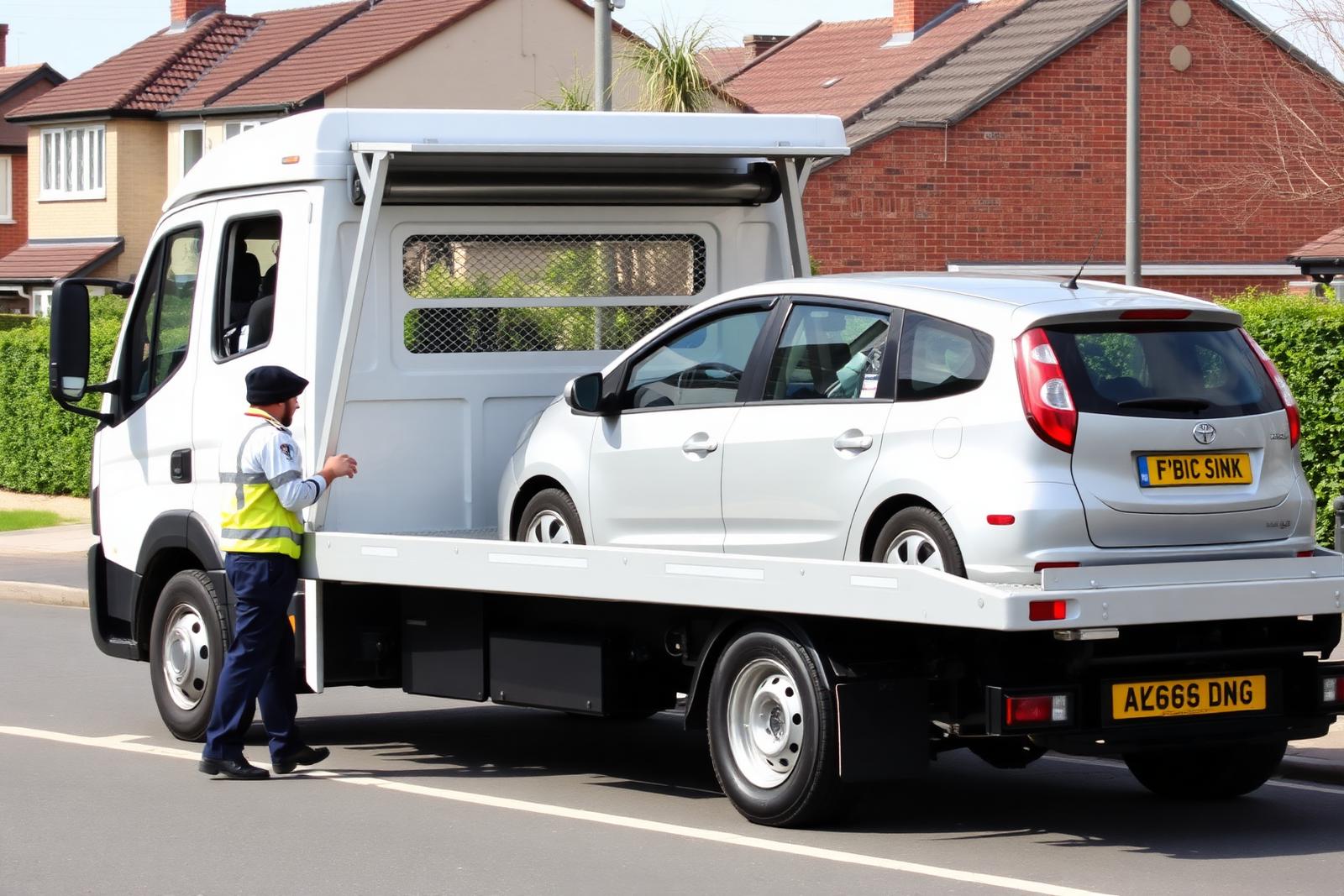
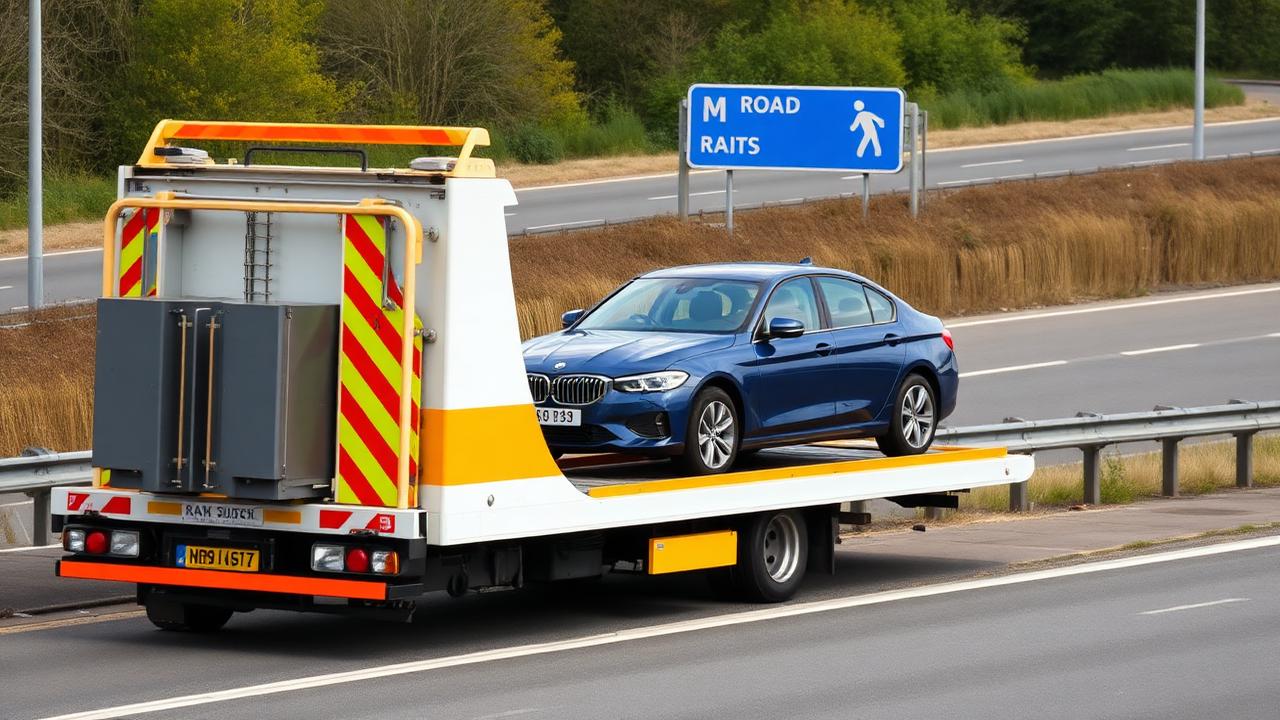
Deal with immediate danger before requesting a quote
If you cannot reach relative safety and cannot safely leave the vehicle, keep seat belts and hazard lights on and call 999 for the police. Do not wait for a WhatsApp reply. Follow emergency-service or traffic-officer directions; a commercial recovery booking does not close a lane or make a live carriageway safe.
Where it is safe to leave, move away from the vehicle and traffic, behind a barrier if available and safe. Do not attempt repairs or place a warning triangle on a motorway. Read the current Highway Code breakdown guidance for the complete safety instructions.
Identify northbound or southbound before naming a town
The M1 is a long route, so a request described as “near Nottingham” or “towards London” needs more detail. State northbound or southbound if known, the last junction passed and any driver location sign or marker information you can read from safety. Repeat the letters and numbers accurately rather than translating them into an assumed town location.
Do not walk along the carriageway to find a sign. If you do not know the junction, say so and use information already available from your safe position. A map pin can support the description, but check whether it identifies the correct carriageway or an adjacent road. The recovery approach may be quite different from the closest town shown on the phone.
Main carriageway, slip road, services or a later collection point?
These are different jobs. A vehicle in motorway services may have an identifiable parking bay and operator contact. A slip-road or carriageway stop requires its exact road position and any road-authority involvement to be understood. Do not describe an emergency area as an ordinary car park, or a services car park as a live-lane incident.
If police, traffic officers or an appointed provider have already arranged a move, tell SYA Rescue before accepting another booking. Ask where the vehicle is going, who will hold the keys and when it can be released. An onward collection from an agreed location is separate from the initial emergency movement and should use the new address.
Nottingham-related M1 journeys
For a journey involving Nottingham, the motorway location remains the pickup until the vehicle has actually left it. The name of the garage, home or nearby town is the destination or a landmark, not proof of a usable collection approach. Provide the exact M1 position first, then explain whether the requested destination is Nottingham, Beeston, Hucknall, Stapleford or elsewhere.
The Nottingham recovery hub helps plan a town or workshop handover. Beeston, Hucknall and Stapleford have local pickup guidance if the vehicle has already been moved off the motorway. Do not change the booking location merely because one of those places appears close on a map.
London-bound journeys and the M25 connection
If a journey changes between the M1 and M25, state which road the vehicle is actually on. The route you intended to take is not necessarily the road on which it stopped. At a connecting slip road, report the signs and direction information available from safety and follow instructions from the road authority.
Use M25 recovery for a vehicle on that route and the London hub for an agreed off-motorway destination or collection. No fixed arrival time is inferred from either city name. Equipment availability, the correct approach, traffic conditions and authority instructions all affect what can be confirmed.
Vehicle details for a motorway collection
Give the registration, make, model and whether it is a car, van, motorcycle or another vehicle. Explain what happened before it stopped and whether there is collision damage. Mention flat tyres, locked wheels, steering problems, low clearance and an automatic selector or electronic brake that will not release. Do not attempt a roadside inspection in traffic to answer these questions; state what you safely know.
For a loaded van, report its dimensions and actual loaded condition. For an electric vehicle, identify the model and whether it has a fault or physical damage; collection must account for the manufacturer's handling requirements. The motorway name alone does not establish that a particular truck or loading method is suitable.
Choose a receiving address before agreeing onward transport
A long motorway journey can leave the vehicle far from its usual garage. Decide whether you want a nearby accepted workshop, home delivery or transport to a specialist. Obtain the receiver's agreement and describe the car's condition, especially if it cannot roll or steer. Its normal customer parking entrance may not suit unloading an immobile vehicle.
Ask what the quotation includes, how waiting or changed access would be handled, and whether any onward leg is separate from an initial safety move. Keep the agreed destination and receiving contact in the booking confirmation. A change from a nearby garage to a distant home address can materially change both the journey and the collection arrangement.
Passengers, mobility needs and communication
State the number of people travelling, including children and anyone whose mobility affects safe evacuation or onward travel. Do not assume a recovery vehicle has enough suitable seats or child restraints for everyone. Agree the passenger arrangements separately from moving the car and tell emergency services about any immediate vulnerability.
Once you are safe, keep one contact number available for the collection. If your phone battery is low, say so and provide an alternative contact if possible. Update the team if an authority moves you or changes the collection point. A quotation based on an earlier position should not be treated as confirmation for a different pickup.