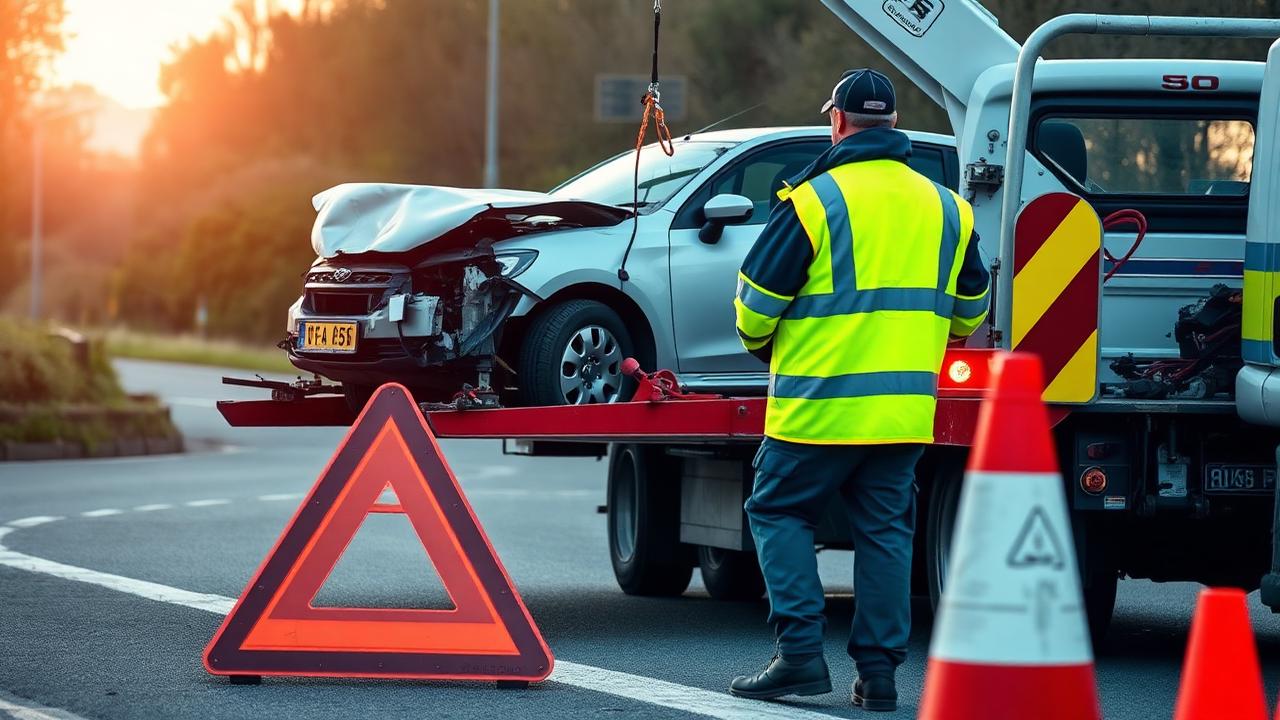
Collision-Damage Situations This Page Must Explain — Nottingham
Accident recovery in Nottingham may be requested for several different situations, but each one needs its own condition and access description. The following examples explain what changes the response:
**Vehicles resting in an awkward position.** Report an exact map pin plus the travel direction, car-park level, entrance or gate. The planning point is that a live or hazardous scene may require emergency-service control before recovery begins. Avoid assuming the same method used for an accessible, freely rolling car will suit this situation.
**Airbag deployment or shattered glass.** Report registration, make, model and approximate size of the vehicle. The planning point is that heavy vehicles or complex extraction can require specialist capability not assumed without an individual assessment. Avoid assuming the same method used for an accessible, freely rolling car will suit this situation.
**Police-managed scenes after the road has been released.** Report clear details of visible damage and whether each wheel appears free to move. The planning point is that locked or structurally restricted sites may need permission or alternative access. Never presume the same method used for an accessible, freely rolling car will suit this situation.
**Minor-looking impacts where the vehicle's roadworthiness is uncertain.** Report whether the steering works, airbags have deployed or fluids are leaking. The planning point is that an operator cannot determine fault or legal responsibility or guarantee whether an insurer will pay. Do not treat it as automatic that the same method used for an accessible, freely rolling car will suit this situation.
**Electric or hybrid vehicles with visible underbody or battery-area damage.** Report police, insurer, fleet or bodyshop instructions and any recovery reference. The planning point is that a fixed response time cannot be promised before distance, traffic, access and equipment are assessed. Avoid assuming the same method used for an accessible, freely rolling car will suit this situation.
**Collisions in car parks, gated sites, depots or restricted-access premises.** Report passenger needs, keys, delivery and recipient details and a contact who can authorise handover. The planning point is that a live or hazardous scene may require emergency-service control before recovery begins. Avoid assuming the same method used for an accessible, freely rolling car will suit this situation.
**Front, rear or side impact damage.** Report an exact map pin plus the approach direction, car-park level, entrance or gate. The planning point is that heavy vehicles or complex extraction can require specialist capability not assumed without an individual assessment. Avoid assuming the same method used for an accessible, freely rolling car will suit this situation.
**Damaged tyres, wheels, steering or suspension.** Report registration, make, model and approximate overall dimensions of the vehicle. The planning point is that locked or structurally restricted sites may need permission or alternative access. Never presume the same method used for an accessible, freely rolling car will suit this situation.