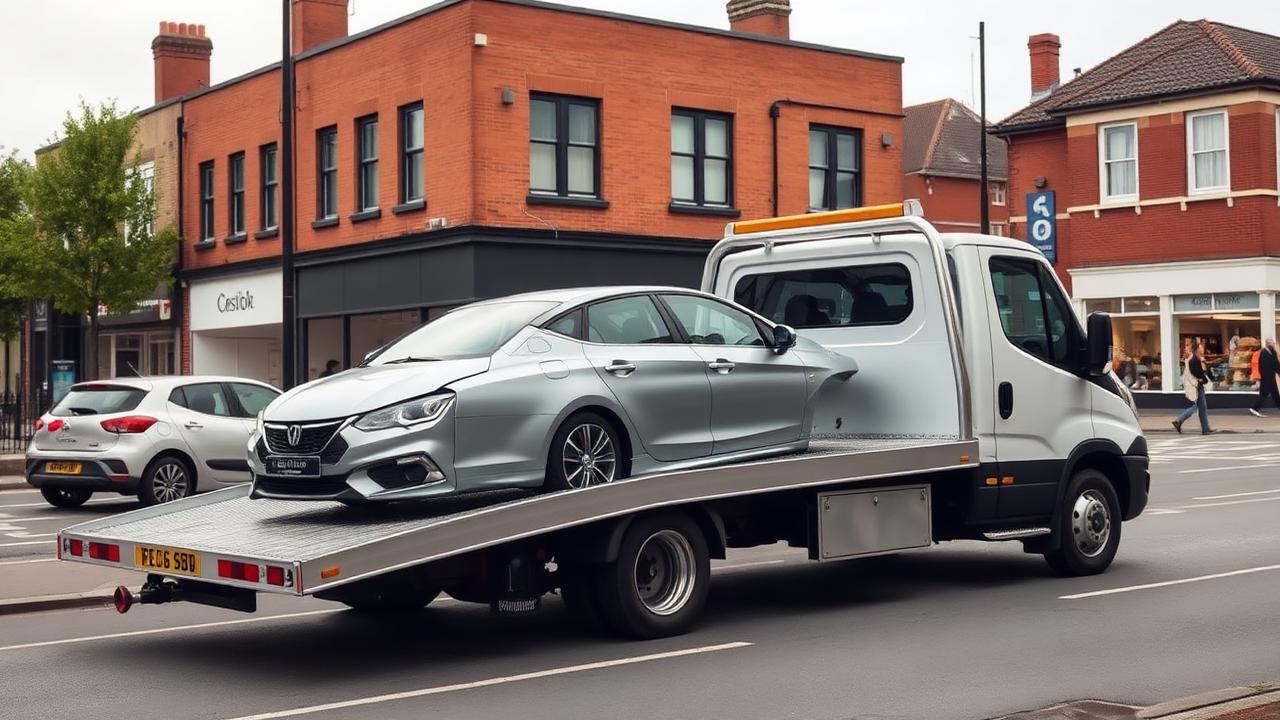
Request vehicle recovery in Wakefield by phone or WhatsApp. Share the exact pickup, observed problem and desired destination, then confirm which service can be provided and the quotation for your vehicle.
Provide a postcode or map pin and explain the vehicle entrance.
Describe the vehicle, what has happened and whether it rolls and steers.
Confirm the destination and who can accept delivery.
Mention gates, parking levels, missing keys or time restrictions.
Attendance, equipment and an arrival estimate are confirmed for the individual job.
Recovery guidance for Wakefield
Arrange the right service for Wakefield
Use this Wakefield guide to prepare a collection enquiry and choose between assistance at the vehicle and transport to another address. The pickup and destination can have different access and receiving requirements; give both before accepting a booking.
Location references include M1, M62, A1(M) for the wider Wakefield area. These are location references, not live traffic information or a suggested recovery route. Report the road where the vehicle actually is, its direction and a precise pin or postcode. A vehicle on a nearby route should not be described as a town-centre pickup merely because Wakefield is the nearest familiar place name.
Location details that prevent dispatch errors
Provide the vehicle’s actual position in or around Wakefield, not just the town name. For a controlled car park, include the entrance, level and person who can open a barrier. If it is on a road, provide the direction and a safe landmark where known.
Vehicle information needed before a quotation
Tell dispatch the make, model, registration and drivetrain, and describe the problem without guessing a diagnosis. Mention missing keys, damaged wheels or locked steering if already known; do not test the car in an unsafe place.
How a quotation for vehicle recovery in Wakefield is formed
Give the pickup, receiving address and known loading restrictions for a job-specific quote. Check what attendance, loading and transport include and how a change of destination or waiting would be charged.
Arrival estimates and current availability
Ask for a current estimate once the vehicle and location have been described. Tell the team if an authority has given a removal deadline or access to the site ends at a particular time.
Planning the destination before collection
Confirm that the receiving workshop or other authorised site can take the car in its present condition. Provide a named contact and receiving window, especially if the vehicle will be delivered outside normal hours.
Collections from A1(M), M1 and M62
If the car is on the M1, M62 or A1(M) near Wakefield, distinguish the road, direction and nearest known junction or safe landmark. Follow road-operator and police instructions; never walk along a high-speed road to collect further details.
Private roads, car parks and controlled sites in Wakefield
For a gated site or residential car park, check who can authorise the vehicle’s release and open the barrier. Provide the entrance, parking level and signed clearance where known so the operator can assess access.
Non-running, locked-wheel and damaged vehicles
The loading plan depends on more than the reason the car stopped. Explain whether wheels roll and steering moves if known, and mention damage or missing keys. The attending operator must assess the appropriate method.
Documents, keys and authority to move the vehicle
Keep the keys and registration available where safe and identify the person who has authority to release the vehicle. Check any insurer, lease or employer process before commissioning the movement.
Questions to settle before accepting dispatch
Before confirming the booking, check the Wakefield pickup, vehicle condition, destination, recipient and quote. Tell dispatch about any hard access or garage deadline that could change the plan.
Payment, receipts and booking records
Agree the payment terms and ask for a receipt identifying the recovery. If a third party is expected to pay, establish its authorisation requirements before the operator is sent.
Preparing for the operator's arrival
Give dispatch a contact who can receive updates and arrange safe key access. If the vehicle is moved by an authority or another provider attends, inform the team promptly.
Handover and condition recording
Where safe, agree a record of visible condition and which keys or documents accompany the vehicle. Confirm the receiver and any authorised out-of-hours drop-off before collection.
Nearby service enquiries around Wakefield
Enquiries may also come from Leeds, Pontefract, Castleford and Dewsbury. Each pickup still requires an individual coverage and access check. Listing these places is navigational context, not a claim that SYA Rescue has an office, stored vehicle or permanently stationed operator in each one. Use the Wakefield area page to review the geographic hub and the Vehicle Recovery page for the service overview.
When comparing nearby options, keep the same decision standard: precise location, suitable equipment, clear price basis, realistic arrival estimate and confirmed destination. Distance alone does not determine suitability. A provider farther away with the correct equipment may be more appropriate than a closer provider that has not understood the vehicle condition.
Choose the service that matches the problem
For a vehicle that needs workshop transport, see breakdown recovery. For damage after a collision, see accident recovery and explain any authority already managing removal. If you are asking what can be attempted at the vehicle, use roadside assistance.
A planned address-to-address journey belongs under vehicle transport; an out-of-hours removal needs an agreed receiver as explained in 24/7 vehicle recovery. These are different booking decisions, not a guarantee that every option is available at the same place and time.
Call or message with the exact pickup point, vehicle registration, make and model, observed problem, rolling and steering condition, access restrictions and intended destination. For Wakefield, identify whether you are on A1(M), M1, a private site or a residential street. The enquiry is assessed before coverage, suitability, current availability, quotation and an arrival estimate are confirmed. Sending a message does not by itself create a booking.
How do I check current recovery availability in Wakefield?
Call with your precise pickup location, vehicle condition, access and destination. The team will check current availability and suitable equipment, then explain whether the job can be accepted. Wait for confirmation before relying on attendance.
What location information is needed near A1(M)?
Share a map pin or postcode, road name, direction of travel, nearest junction and whether the vehicle is in a live lane, refuge, lay-by, service area or private site. Follow police or road-authority instructions and never walk along a high-speed road to improve the description. A precise location prevents carriageway and junction errors and allows safe access to be considered.
How is the price for vehicle recovery in Wakefield calculated?
The quotation may reflect pickup and destination, distance, vehicle size and weight, whether it rolls and steers, loading difficulty, access, waiting, timing and specialist equipment. Ask what is included, whether VAT or road charges apply and what circumstances could change the amount. Obtain the scope and price basis before dispatch rather than relying on a general price seen elsewhere.
Will I receive an arrival estimate for Wakefield?
Request a current estimate after the job details have been assessed. Timing can change with operator position, equipment availability, traffic on A1(M) and M1, weather, incidents and earlier work. A responsible estimate is specific to the accepted booking and is not a guarantee. Ask how updates will be communicated if conditions change.
Can I choose delivery to Leeds, Pontefract or another destination?
State the proposed destination when requesting the quote and confirm it can receive the vehicle. Provide the full address, contact, opening window and access restrictions. Delivery may be possible to a home, garage, dealership, bodyshop or storage site when that destination and journey are accepted, but listing Leeds or Pontefract does not guarantee a particular route or service.
What vehicle details should I provide before dispatch?
Give the registration, make, model, body type, fuel or electric drivetrain, approximate weight, modifications and key availability. Explain whether the vehicle starts, selects neutral, steers and rolls and whether wheels, suspension, brakes or bodywork are damaged. These facts help determine whether the proposed equipment and loading method are suitable for vehicle recovery.
Can an electric or hybrid vehicle be recovered?
Suitability must be confirmed for the exact model and condition. Provide the charge level, warning messages, ability to select neutral and any collision or flood damage. If there is heat, smoke, hissing, chemical smell or visible battery damage, move away and contact emergency services. Ask how the proposed method follows the manufacturer's transport guidance before accepting the booking.
What should I do if the vehicle is in a dangerous position?
Follow the current official road-safety guidance and instructions from emergency services for the actual situation. Use the official sources linked in our motorway breakdown guide. Do not approach traffic to obtain details for a commercial recovery enquiry.
Does a WhatsApp message confirm the booking?
No. A message can begin the enquiry and provide a location pin or safe photographs, but dispatch is confirmed only after the service scope, vehicle, pickup, destination, access, availability, quotation and arrival estimate have been agreed. Keep the written confirmation and update the dispatcher if the vehicle is moved, the condition changes or another provider is arranged.
How can I check insurance or specialist credentials?
Ask for current documentary evidence relevant to the attending operator, proposed vehicle and work if those details matter to the booking. Do not assume an unsupported website badge applies to every job. Fleet, insurer, lease and high-value vehicle requirements should be shared before dispatch.
What if the vehicle has locked wheels or no keys?
Disclose that before dispatch. Missing keys, electronic parking brakes, locked steering, seized wheels or transmission restrictions can prevent ordinary loading and may require different equipment or preparation. Do not drag the vehicle or force controls. Provide photographs from a safe position and the exact model so the provider can decide whether the request is suitable and quote accordingly.
Should I contact the receiving garage first?
Yes. Confirm the garage, dealership, bodyshop or storage site is open, expects the vehicle and can accommodate delivery. Ask for a contact name, booking reference and access instructions. A closed or unsuitable destination can cause waiting, redirection or additional charges. Supply the complete destination information when arranging vehicle recovery, not after loading.
What records should I keep after the job?
Keep the quotation, booking confirmation, payment receipt, itemised invoice and any condition photographs taken safely before loading and at delivery. Record keys and documents handed over and the receiving contact. If an insurer, employer or fleet manager may reimburse the cost, obtain approval and ask what evidence they require before dispatch.
Are nearby places such as Leeds and Pontefract automatically covered?
No location is automatically covered merely because it appears on the page. Leeds and Pontefract are nearby navigational context for Wakefield. The exact pickup, access, vehicle, requested service and current availability must be checked. Ask for explicit acceptance and an arrival estimate for the individual job rather than inferring coverage from a town list.
Can roadside assistance avoid a full recovery?
Sometimes a limited roadside action may be appropriate, but only when the scene is safe and the fault, vehicle and available equipment make it suitable. A temporary start or inflation does not prove the underlying issue is repaired. Ask what was checked and whether continued driving is recommended. If a safe roadside outcome is not available, agree an onward recovery destination.
What could cause the quotation to change?
A materially different vehicle condition, inaccurate weight or access details, a changed destination, extra waiting, additional labour, specialist equipment, storage or charges outside the agreed scope may affect the final amount. Ask the dispatcher to list likely exceptions before dispatch and require an explanation before authorising additional work. Clear initial information reduces avoidable changes.
What is the fastest way to obtain a useful decision for vehicle recovery in Wakefield?
Prepare one complete message or call: precise pickup, safety situation, vehicle registration and model, observed fault or damage, whether it rolls and steers, access restrictions, destination and timing constraints. Add a safe map pin and relevant photographs. Then ask for five confirmations: coverage, equipment suitability, current availability, quotation basis and arrival estimate. This avoids repeated questions and supports a clear booking decision.
How should I update a pickup location after the first message?
Send the current precise location and state clearly that it replaces the earlier pickup information. Confirm that SYA Rescue has accepted the revised position and any resulting change to access, timing or quotation.
Who should I nominate if I cannot meet the operator?
Identify an authorised person with access to the vehicle, keys and agreed instructions. Provide their contact number and confirm who can approve any change to the work or destination before dispatch.