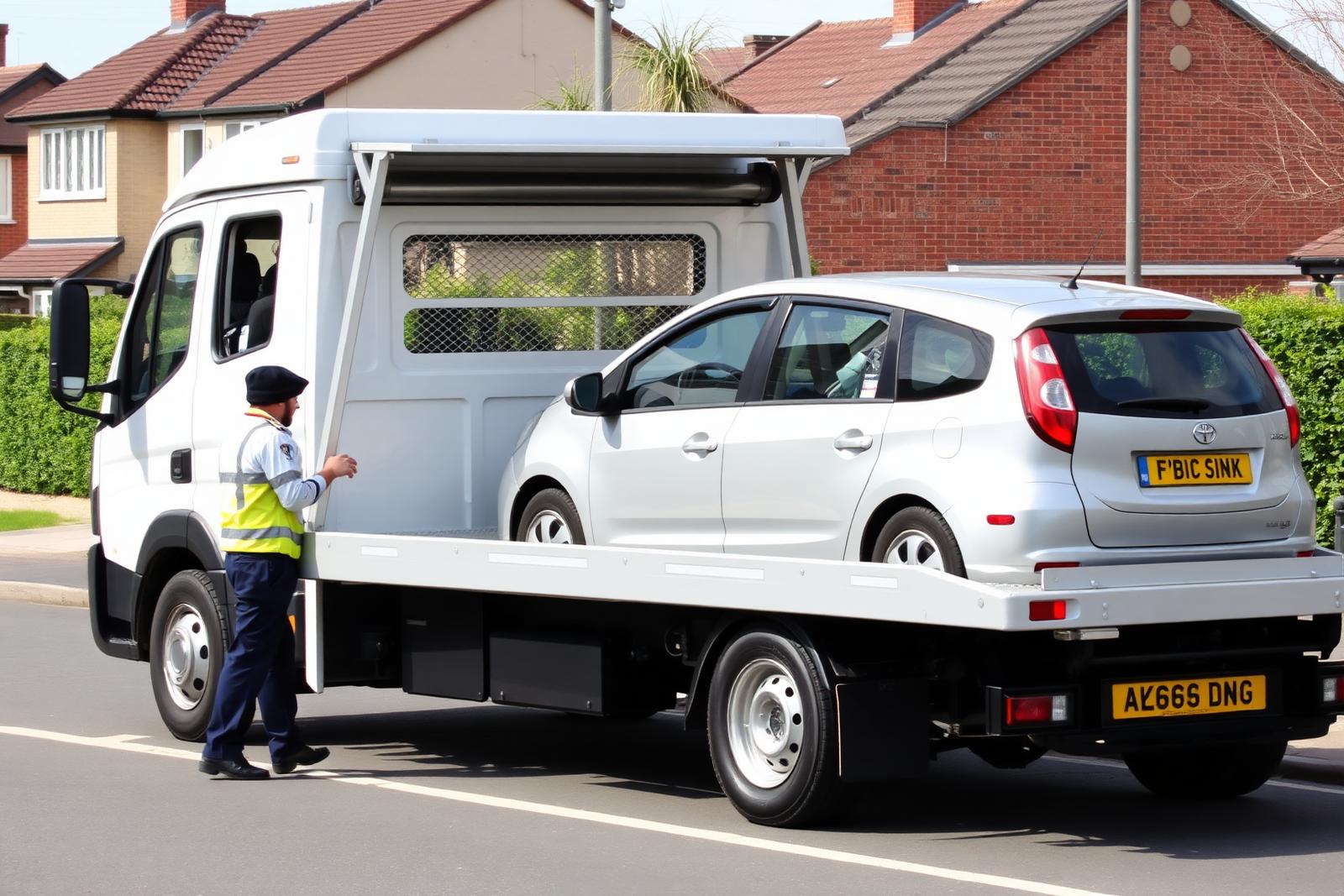
Arrange recovery in Romford for a non-running car, damaged vehicle or planned move. SYA Rescue checks parking access, keys and vehicle movement before agreeing the journey to a garage or another accepted address.
Provide a postcode or map pin and explain the vehicle entrance.
Describe the vehicle, what has happened and whether it rolls and steers.
Confirm the destination and who can accept delivery.
Mention gates, parking levels, missing keys or time restrictions.
Attendance, equipment and an arrival estimate are confirmed for the individual job.
Recovery guidance for Romford
Visitor parking and after-hours Romford collections
If a car fails to start after shopping or an evening visit, establish whether the parking operator is still available and how recovery access works. Give the facility, vehicle entrance, level and bay. A nearby station or shop is a landmark, not a complete loading address.
If the parking session is expiring, contact the operator about the breakdown and retain its instructions. Do not assume a recovery booking extends parking or keeps a gate open. Share any closing-time restriction at the start of the enquiry.
Choose the destination before late transport
A garage that normally services the car may not accept it outside its receiving hours. Ask about a specific handover arrangement or agree an alternative destination with suitable unloading space. Keys, loose parts and the vehicle's condition should be clear to the receiver.
If parking staff are no longer available, check the operator's published contact or the instructions on your parking confirmation. Do not promise recovery access based only on the entrance having been open earlier. A closed gate and a low barrier are practical limits that must be resolved before a collection can be accepted.
Keep the vehicle location separate from where you are waiting. A nearby shop, station or home address can be a contact point, but the driver needs the facility and bay holding the car. If the vehicle has been moved by someone else, obtain its new position and release procedure.
Planned transport from a Romford workshop
For a scheduled transfer, confirm the releasing garage's authority and the vehicle's present condition. Ask whether it rolls and steers and whether removed parts will be travelling separately. The receiving workshop needs that information before allocating an unloading position.
Give both sites' time windows and an authoriser who can approve changes. A long-distance destination should be included from the first quote; adding it later changes the job. Clarify passenger travel, additional stops and any waiting rather than assuming they are part of vehicle transport.