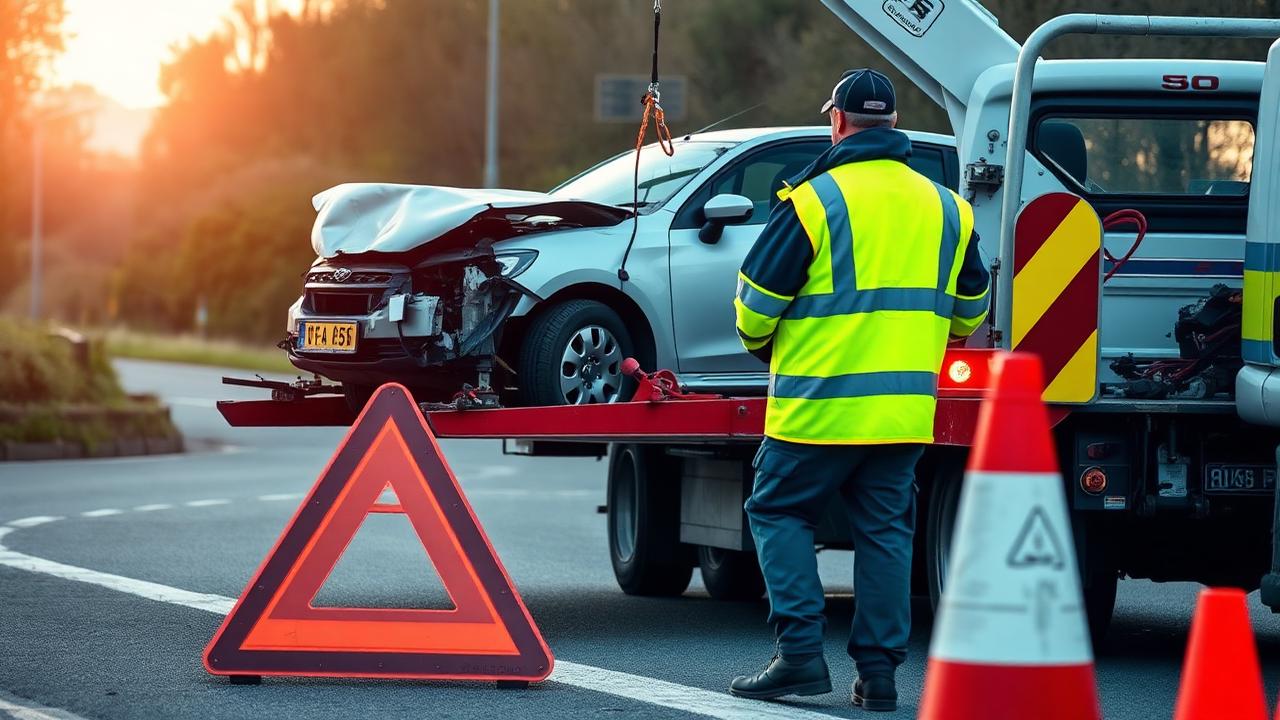

Establish who controls the vehicle now
A vehicle may still be at the incident location or may already have been moved to another site. Explain which is true. If police or another appointed party control the scene or holding location, follow their instructions and establish whether an independent collection is permitted. Do not create a second recovery arrangement without understanding the first one.
Use the Northern Ireland Highway Code breakdown and incident guidance for the relevant safety context. If there is immediate danger or injury, contact emergency services. Do not approach an unsafe vehicle, enter moving traffic or attempt to inspect damage for a commercial quotation.
Pass on the present damage and handling restrictions
Describe visible damage from information safely available. Distinguish a damaged panel from a wheel, steering or brake restriction, and identify anything unconfirmed. State if parts have been detached or the vehicle's position has changed since the incident. An early photograph may no longer represent the condition in which it will be collected.
If the vehicle is electric or hybrid, identify that fact and any known damage or concern. Do not investigate a battery system or damaged cabling yourself. Suitability and the required response need assessment; no specialist equipment or safe handling method should be assumed simply from an online service description.
Separate claims approval from collection permission
An insurer's claim reference can help identify the matter, but it is not necessarily an instruction to a recovery provider or an agreement to pay. Ask the insurer what has been authorised and whether an operator has already been appointed. Keep that information separate from the holding site's permission to release the vehicle.
Agree who accepts the commercial transport arrangement and who is responsible for payment. Do not present an anticipated reimbursement as confirmed cover. If the receiving bodyshop or insurer changes its instruction, obtain agreement to the revised movement before assuming the original quotation still applies.
Confirm a recipient prepared for a damaged vehicle
The destination must know the current condition and be able to accept the proposed handover. A bodyshop appointment does not automatically settle storage, access or unloading. Give the receiving contact and any agreed reference, and explain whether keys, loose items or relevant documents accompany the vehicle.
For onward movement beyond the originally discussed destination, request a separate assessment. Do not assume that a Belfast collection includes a sea crossing, cross-border movement or additional transport leg. The Belfast area page provides the wider service context without changing the specific job that has been accepted.