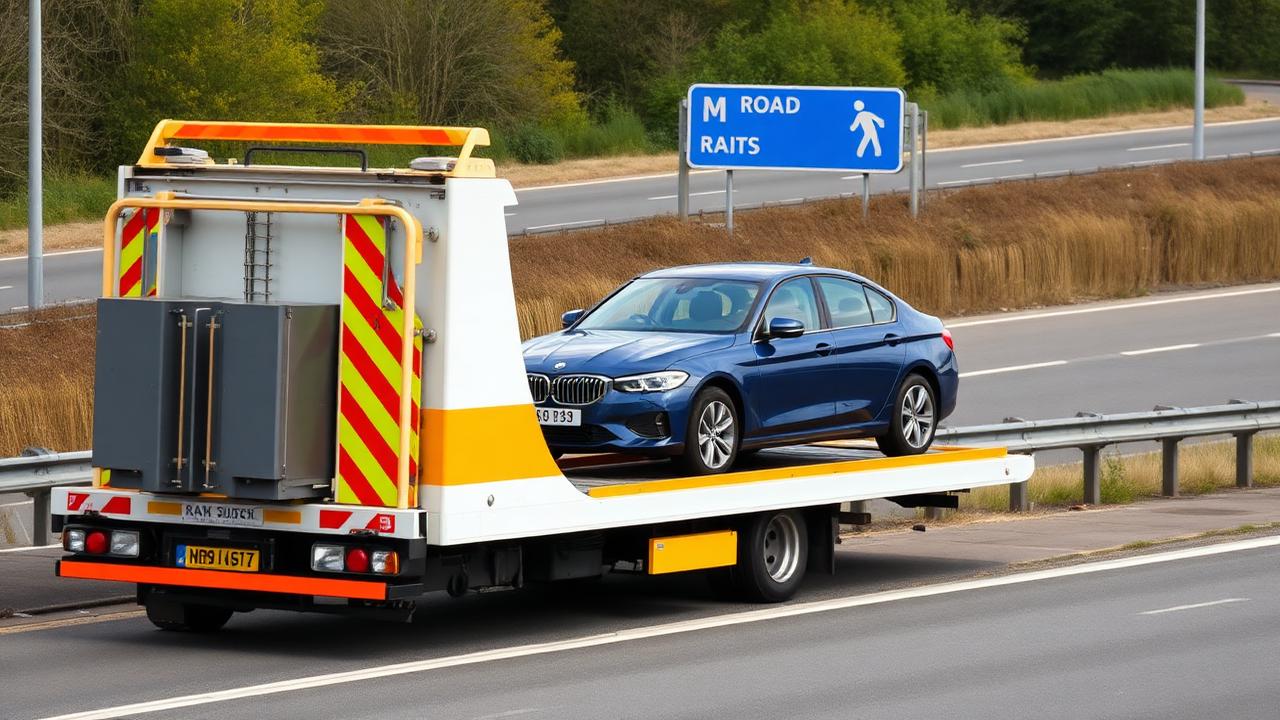

Verify the property entrance before the journey is arranged
Describe the approach serving the vehicle, including any restriction you know about. A postal address may identify a house while the car is kept elsewhere on the property. Provide directions from the authorised occupier and distinguish a usable vehicle entrance from a pedestrian gate. Do not assume permission to enter neighbouring land or to use another property's access.
If the approach changes with weather or building work, report its current state. A photograph taken months earlier may no longer describe the collection position. Give reliable measurements where available and say when clearance, surface condition or turning space is unknown. Suitability needs assessment; a property owner's willingness to admit a vehicle is not proof that the approach is workable.
Describe a stored vehicle before calling it ready
A car left unused may differ from how it behaved on its last journey. Report the condition you actually know, including access to keys, tyres, controls and wheels. Do not run an unsafe test to establish whether it moves. If another person has checked it, explain what they checked and when rather than simply calling it a runner.
Identify loose parts or other items proposed for transport, and ask whether they can be included. The movement should be assessed for one defined vehicle and its agreed contents. An adjacent pile of spares or household belongings is not automatically included because it belongs to the same owner.
Arrange two handovers with different responsibilities
At collection, someone must be authorised to release the vehicle and provide legitimate access. At delivery, the recipient must accept the car in its stated condition. These may be different people with different availability. Give both contacts and settle who can approve a necessary change while the vehicle is in transit.
If delivery is to a repairer, ask about receiving a vehicle that may not move under its own power. If it is to a home, identify the permitted placement and access. Neither type of destination should be assumed to include storage or an unattended key drop. Agree the actual receiving arrangement before the movement is accepted.
Confirm what the transport agreement covers
Ask which collection, destination and vehicle description the quotation uses. Explain requested stops or appointment restrictions before agreeing the job. A change from a prepared accessible car to one still behind an obstruction can change the work required, even when the postcode and journey distance stay the same.
Record the accepted arrangements in the booking conversation and update them when facts change. A vehicle movement does not establish ownership, mechanical condition or insurance cover for every circumstance; ask specific questions about any requirement that matters to you. The Hereford area page helps distinguish this planned transfer from other local requests.