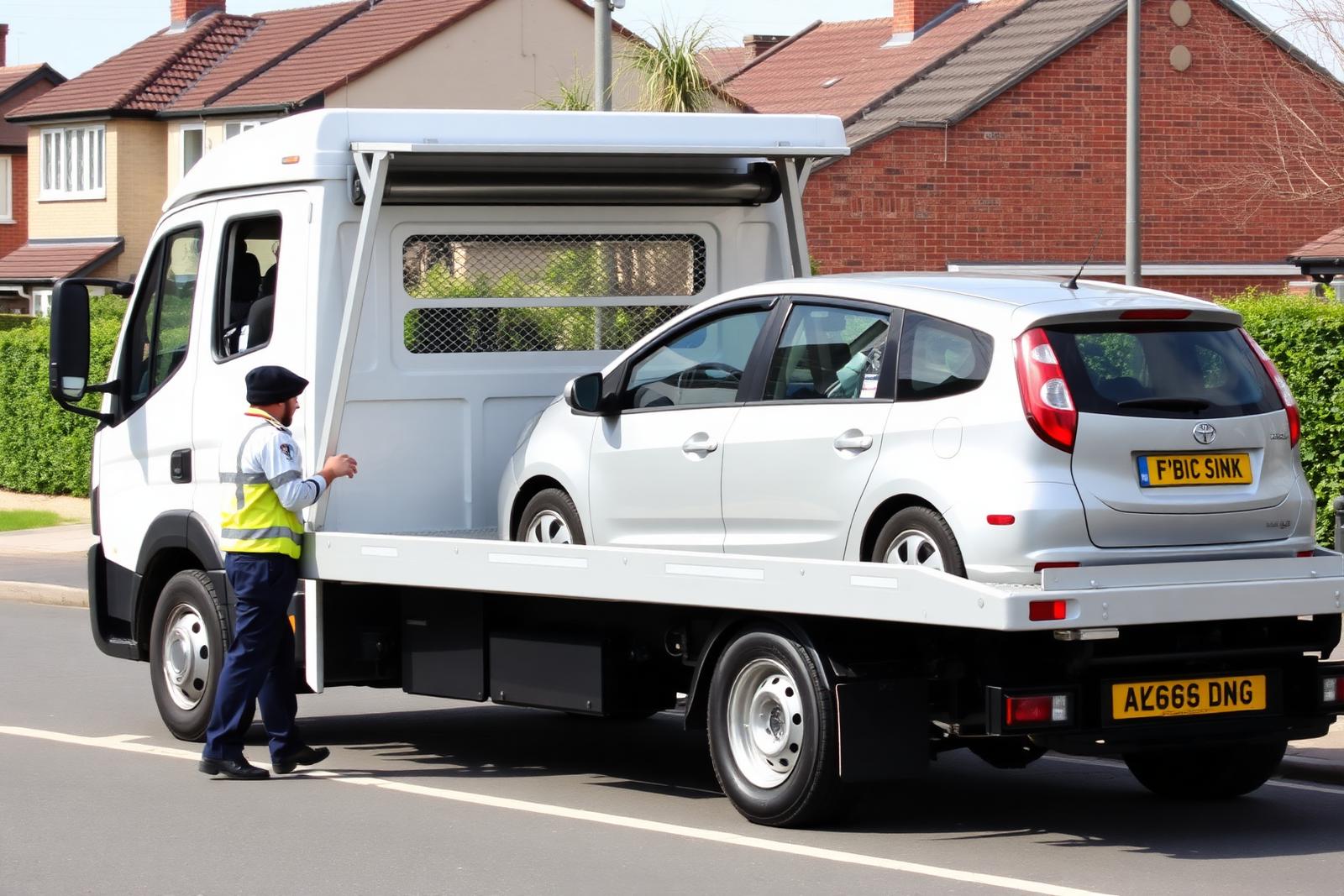
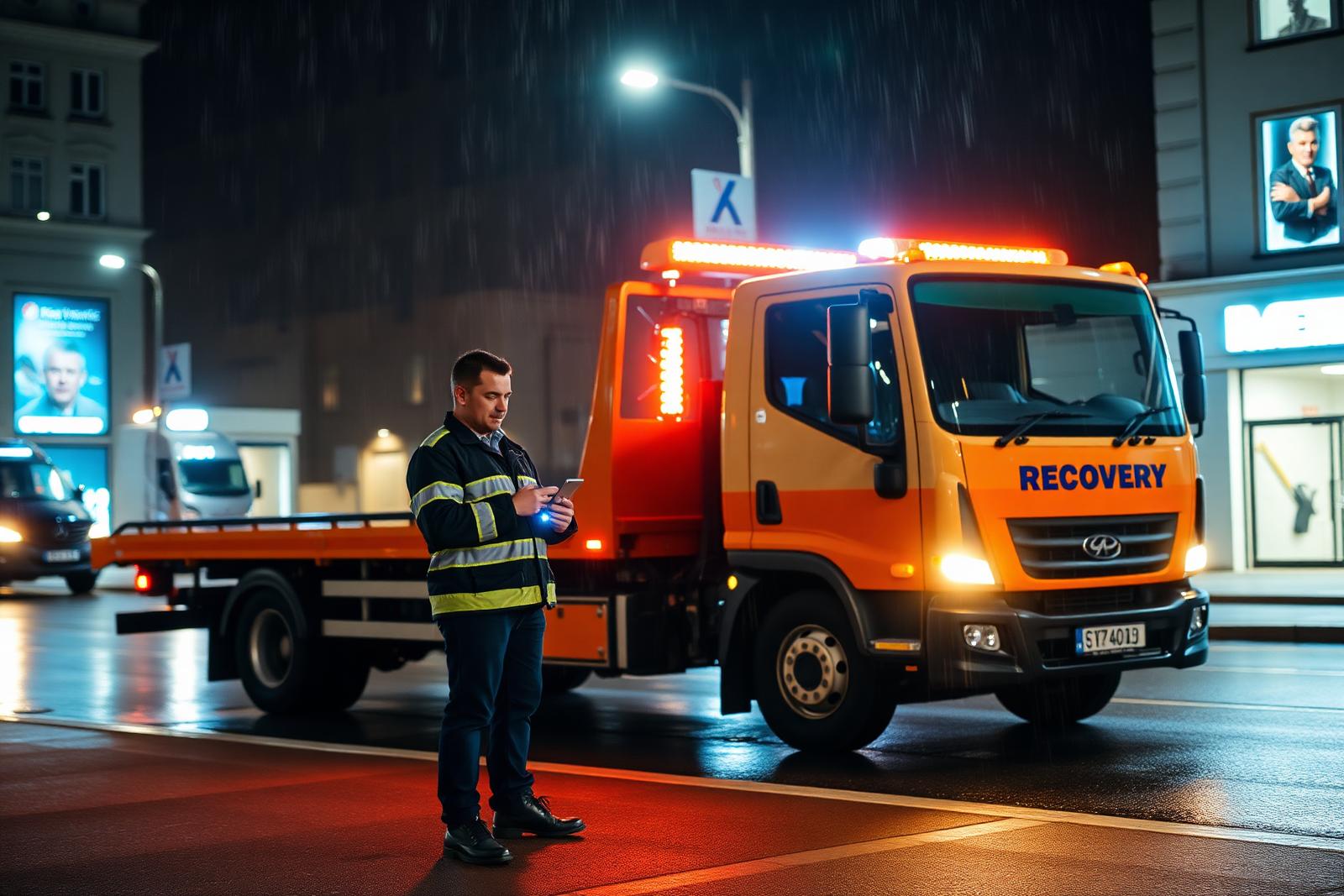
Commercial Breakdown Recovery in Bangor: Fleet and Trade Support
This Bangor guide explains how to arrange commercial breakdown recovery when the immediate need is clear: a fleet, trade, dealership or business vehicle that has broken down and needs authorised, documented recovery. It focuses on safe decisions, accurate dispatch information and an authorised handover.
The opening request should not be used to guess a specific arrival time or promise equipment before the facts are known. Estimated arrivals depend on real-time availability, distance, access and vehicle requirements. Contact SYA Rescue with the vehicle identifier, named site representative, purchase-order requirements and workshop instructions.
Identify which Bangor site is releasing the vehicle
Use the complete postcode, site name and collection entrance. Bangor is not a sufficient address for a commercial instruction; it can refer to different places, and a business may have several sites. Match the pin to the driver’s actual position before arranging attendance.
The release contact and the billing contact may be different people. Record both, along with the approval or purchase-order reference, and state who can approve waiting, a changed destination or additional handling. Confirm that the receiving workshop has the same job reference. This keeps the vehicle movement traceable through authorisation, collection and delivery.
Safety before arranging collection
If there is immediate danger or injury, contact emergency services and follow their instructions. Do not enter traffic to inspect the vehicle. Use the official breakdown guidance; for Northern Ireland use the nidirect guidance.
Who the Commercial Bangor Service Is Designed For
Commercial breakdown recovery is the right starting point in Bangor when the main problem matches the purpose of the service and the intended outcome is to protect vehicle uptime, maintain a clear audit trail and deliver the vehicle to an approved workshop, depot or receiving site. The service name matters less than the facts, so use the following decision guide.
Choose this service when: • A commercial vehicle requires a workshop or depot transfer after breakdown. • A fleet manager or assistance provider needs a traceable recovery handover. • A dealer or garage has authorised collection. • A company car, van or light commercial vehicle cannot continue. • The job needs references, contacts and documented release rather than a consumer-only process.
Choose another route or obtain further advice when: • Collision damage requires accident-recovery arrangementning. • A consumer driver without business coordination should use the ordinary Bangor breakdown page. • Contractual service levels cannot be assumed unless agreed in writing. • Heavy goods vehicles outside confirmed capability require specialist arrangements.
A practical test is to ask, “What must happen to the vehicle next?” If the answer is consistent with the outcome above, this service is likely to fit. If the answer is only “find out whether a small fault can be dealt with on site,” a related service may be better. If the answer is “deal with injury, fire or a live hazard,” vehicle recovery is secondary.
What a B2B Recovery Instruction Can Include — Bangor
The scope of commercial breakdown recovery in Bangor should be understood as a sequence of assessed actions rather than a blanket promise to solve every vehicle problem. Depending on the confirmed circumstances, the service can involve:
• Identifying downtime, opening-hour and operational constraints. • Keeping cost and timing expectations tied to the confirmed job. • Capturing booking references, authorisation and accountable contacts. • Confirming the vehicle, driver, load and access particulars. • Coordinating workshop, dealership, depot or fleet handover. • Recording collection and delivery information.
These activities are connected. Accurate location and condition information influences the recovery method; the method influences working room for loading and timing; the destination influences route, access and handover. A request is therefore incomplete if it gives only the town and registration while omitting the condition of the vehicle or where it should be delivered.
The service does not automatically include mechanical repair, legal advice, insurer approval, storage, passenger transport, specialist extraction or a particular item of equipment. Those matters require verification where relevant. The access and handover considerations—temporary roadworks, diversions and event-day closures and bodyshop, garage and secure-handover options—should be treated as questions to answer about the real job, not as assumptions. For the commercial breakdown recovery assessment in Bangor, record receiving-site contact, hours and handover instructions and say whether bodyshop, garage and secure-handover options create a different approach.
Commercial Recovery vs the Consumer Bangor Breakdown Page
Different recovery services solve different problems. For a request in Bangor, use this comparison to decide whether commercial breakdown recovery is the closest match:
• Roadside Assistance: use it when a safe on-site assessment may avoid towing. • Long-Distance Transport: use it for scheduled fleet or dealer movements. • Consumer Breakdown Recovery: use it for an individual motorist arranging their own non-commercial recovery. • Accident Recovery: use it when collision damage or an incident scene is involved.
The dividing line is often the intended outcome. This service is designed to protect vehicle uptime, maintain a clear audit trail and deliver the vehicle to an approved workshop, depot or receiving site. That differs from a service whose main purpose is roadside assessment, collision-scene handling, urgent out-of-hours dispatch or a pre-booked transfer.
Related guides include: Bangor; Breakdown Recovery; Breakdown Recovery Bangor.
Do not choose a service merely because its title sounds broader or more urgent. Explain the event, mobility and damage information, access and destination, and ask for the request to be placed under the most appropriate service. This reduces delay and helps the assigned team prepare for what is happening on site. For the commercial breakdown recovery assessment in Bangor, record authorising contact and driver contact and say whether bodyshop, garage and secure-handover options create a different approach.
From Job Authorisation to Workshop Handover — Bangor
1. Establish driver safety and any official scene instructions. 2. Confirm the authorising business contact, approval reference and on-site driver. 3. Describe the loaded vehicle, fault, mobility and pickup access. 4. Agree the accepted scope, price and who may approve changes. 5. Confirm the authorised workshop or depot can receive the vehicle. 6. Coordinate collection and updates with the driver and business contact. 7. Record condition, keys, delivery and the reference needed for billing.
Fleet, Dealership, Garage and Assistance-Network Situations — Bangor
Commercial breakdown recovery in Bangor may be requested for several different situations, but each one needs its own condition and access description. The following examples explain what changes the response:
**A loaded van with an immobilising fault.** Report company and job or case reference. The planning point is that account terms, SLAs and credit arrangements exist only where separately agreed. Do not treat it as automatic that the same method used for an accessible, freely rolling car will suit this situation.
**A company car requiring dealer recovery.** Report authorising contact and driver contact. The planning point is that heavy or specialist commercial vehicles may be outside standard capability. Do not treat it as automatic that the same method used for an accessible, freely rolling car will suit this situation.
**A fleet vehicle stranded outside depot hours.** Report registration, fleet number, vehicle class and load status. The planning point is that loads, dangerous goods or site rules can require additional approval. Do not treat it as automatic that the same method used for an accessible, freely rolling car will suit this situation.
**A garage-authorised collection.** Report fault symptoms and vehicle mobility. The planning point is that the recovery operator cannot authorise repairs or business expenditure without instruction. Never presume the same method used for an accessible, freely rolling car will suit this situation.
**A dealership or workshop transfer.** Report site access, gates, dimensions and operational restrictions. The planning point is that estimated arrivals depend on real-time availability, distance, access and vehicle requirements. Avoid assuming the same method used for an accessible, freely rolling car will suit this situation.
**A vehicle with tools or business property on board.** Report receiving-site contact, hours and handover instructions. The planning point is that account terms, SLAs and credit arrangements exist only where separately agreed. Never presume the same method used for an accessible, freely rolling car will suit this situation.
**A job requiring purchase-order or case-reference handling.** Report company and job or case reference. The planning point is that heavy or specialist commercial vehicles may be outside standard capability. Do not take it for granted that the same method used for an accessible, freely rolling car will suit this situation.
**A recovery involving a driver, fleet controller and receiving site.** Report authorising contact and driver contact. The planning point is that loads, dangerous goods or site rules can require additional approval. Do not take it for granted that the same method used for an accessible, freely rolling car will suit this situation.
Company Cars, Vans, EVs and Loaded-Vehicle Considerations — Bangor
Vehicle category matters for commercial breakdown recovery in Bangor because transmission, driveline, weight, clearance, wheel condition and power system can affect how the vehicle is assessed and moved. Supply the exact make and model rather than relying on a broad description such as “car” or “van.”
Vehicle categories that may require different planning include: • Vans and light commercial vehicles within confirmed limits. • Classic, modified, low-clearance or performance vehicles. • Vehicles with locked transmission, steering or wheel movement. • Manual and automatic cars. • Front-, rear-, four- and all-wheel-drive vehicles. • Electric and hybrid vehicles.
For automatic, four-wheel-drive and all-wheel-drive vehicles, explain whether the transmission can be placed in neutral and whether the wheels turn freely; do not force controls or tow in a manner that conflicts with manufacturer requirements. For electric or hybrid vehicles, disclose battery warnings, underbody impact, unusual heat, smoke or charging-related circumstances. A recovery operator should not ask an unqualified person to touch exposed high-voltage components. For the commercial breakdown recovery assessment in Bangor, record site access, gates, dimensions and operational restrictions and say whether the presence of temporary roadworks, diversions and event-day closures creates a different approach.
Modified, classic, prestige and low-clearance vehicles need accurate dimensions and photographs where safe. Vans and commercial vehicles need load, weight and height information. A vehicle that cannot roll or steer may require a different loading approach, so describe the condition ahead of attendance rather than after access has been attempted.
Bangor Depot, Workshop and Commercial-Site Access for Collection
For commercial breakdown recovery in Bangor, the exact collection point matters more than the town name alone. Describe the road, car park, premises or controlled site so the attendance can be planned accurately.
Two local factors deserve particular attention: • Temporary roadworks, diversions and event-day closures. • Bodyshop, garage and secure-handover options.
Mention either factor only when it affects the real job; do not take it for granted that every collection in Bangor has the same conditions.
**High-speed and major-road positions.** A vehicle on a motorway, dual carriageway or fast road needs a safety-led response. Follow official signs and emergency instructions, do not walk in live lanes, and make the exact carriageway and direction clear. A broad reference such as “near Bangor” is not enough when two carriageways, slip roads or junction approaches lead to different access points.
**Car parks and restricted premises.** In a multi-storey, underground, gated or permit-controlled location, provide the clearance, ramp, turning space and exit arrangements. An operator who can reach an open roadside may not be able to enter a low or tightly controlled structure. Where safe, photographs of the entrance and vehicle position can help the assessment.
**Residential and city-centre access.** Narrow streets, parked vehicles, loading restrictions, pedestrian areas and controlled times can affect the collection plan. Do not reserve or block space unlawfully; instead, tell dispatch what space exists and whether a responsible site or property contact can assist.
**Commercial, institutional and managed sites.** Depots, business parks, hospitals, stations, universities, dealerships and workshops may have security, induction or opening-hour rules. Obtain the receiving or access contact before the vehicle moves. If the site will be closed, agree a lawful alternative rather than assuming keys can be left.
**Weather, visibility and temporary change.** Darkness, flooding, ice, event traffic, diversions or roadworks may alter an otherwise straightforward route. Report the conditions you can actually observe; do not rely on old directions or an earlier access promise. The recovery team can then reassess timing and approach.
The example of a company car with an authorised recovery destination is a useful test. Ask what the recovery professional needs to know before entering the area, where the vehicle can be handled safely, and how the destination will receive it. Those answers make the request more accurate without assuming a depot, route, response time or completed job.
Commercial Recovery Coverage Around Bangor
Coverage for commercial breakdown recovery in Bangor has to be checked against the exact collection point and live availability. Offering service in a location does not necessarily mean that SYA Rescue owns a depot, keeps a particular vehicle permanently stationed there, or can provide the same estimated arrival at every address. Each request is assessed using the vehicle position, access, condition and required destination.
A customer near the edge of Bangor, on a route between districts, at a rural approach, or inside a managed site should provide the full postcode and map pin. The assigned route may depend on which approach is open, whether the collection is time-sensitive, and where the vehicle must be delivered. Where temporary roadworks, diversions and event-day closures and bodyshop, garage and secure-handover options matter, give those details at the dispatch stage.
Nearby areas should be used as alternatives only when the relevant service is available and the route remains practical. A list of place names is less useful than a clear confirmation of whether the exact collection point and onward destination can be served, what timing is realistic, and what changes if the vehicle is outside the expected working area.
Related location or service guides include Bangor; Breakdown Recovery; Breakdown Recovery Bangor. Use the guide that matches the event and required outcome.
The final coverage confirmation belongs to the live assessment. Contact SYA Rescue with the vehicle identifier, responsible person at the site, purchase-order requirements and workshop instructions.
Account, Purchase-Order and Quotation Factors — Bangor
The price of commercial breakdown recovery in Bangor cannot be calculated responsibly from the service name alone. A useful quotation explains which facts were used and what would trigger a revision. Common factors include:
• Operator travel and total transport distance. • Vehicle class, size, weight and driveline. • Mobility, steering and braking condition. • Location access, height limits, gates and safe loading area. • Time of day, traffic and waiting. • Destination changes, storage or additional transfer. • Any specialist equipment or additional attendance confirmed before work.
To obtain an accurate figure, provide the exact collection point, vehicle information, condition, access and destination in one message where it can be done safely. Ask whether the quotation covers attendance, loading, mileage, waiting and handover, and whether storage, tolls, parking, additional labour or third-party site fees are separate. Do not rely on a starting price that does not describe the job.
A change in conditions can alter the quote. To illustrate, a loaded commercial vehicle with access or weight considerations may require different planning from a freely rolling vehicle at an open roadside. A site outside its receiving hours, missing key, inaccessible car park or inaccurate overall dimensions of the vehicle can also create extra time or a second movement.
Price transparency works both ways. The person arranging the job should disclose the facts; the service provider should explain the basis of the amount and seek approval before carrying out materially different work, unless an immediate safety instruction from the authorities takes priority. Keep receipts or case identifiers where they are needed for a fleet, insurer or personal record.
Workshop, Depot, Dealership and Secure-Site Handover — Bangor
The destination should be agreed before a vehicle is moved from Bangor, wherever circumstances allow. Possible destinations for commercial breakdown recovery include:
• An authorised fleet workshop. • A dealership or repairer. • The operating depot. • A protected storage option pending business-hours delivery. • Another site named by the fleet controller or assistance provider.
A destination is suitable only when the address is correct, access is possible, the site is open or has an agreed out-of-hours handover process, and a person or documented method can accept the vehicle and keys. Give the handover contact the registration, expected reason for delivery and any reference they require.
If the preferred garage, bodyshop, dealer, depot or private address cannot receive the vehicle, agree a backup. That may mean another authorised address, temporary secure holding where available, or a later transfer. Do not treat it as automatic that a vehicle can be left outside a closed premises or that a neighbour, security guard or unattended key box is authorised to accept it.
At handover, record the destination, recipient, time, key arrangement and any visible condition information that is relevant and lawful to document. Where the presence of temporary roadworks, diversions and event-day closures and bodyshop, garage and secure-handover options affects collection or delivery, confirm the relevant details at both ends rather than only after transport has begun.
Job References, Driver Details and Authorisation Data — Bangor
Prepare the following information when requesting commercial breakdown recovery in Bangor:
• Company and job or case reference. • Authorising contact and driver contact. • Registration, fleet number, vehicle category and load status. • Fault symptoms and vehicle mobility. • Site access, gates, dimensions and operational restrictions. • receiving-site contact, hours and handover instructions.
Use observations rather than an unsupported diagnosis. “The engine turns but does not start,” “the front-left wheel is not straight,” or “the vehicle shows a battery warning” is more useful than naming a failed component without evidence. Update the assigned team if the vehicle moves, the road is closed, the destination changes, or a police, insurer, fleet or named site representative gives new instructions.
A single clear message reduces repeated calls and helps the assessment of timing, price and equipment. Contact SYA Rescue with the vehicle identifier, on-site contact, purchase-order requirements and workshop instructions.
Vehicle Limits, Hazardous Loads and Restricted Sites — Bangor
Some commercial breakdown recovery jobs in Bangor are limited by safety, access, kind of vehicle, authority or destination arrangements. The important limitations are:
• Account terms, SLAs and credit arrangements exist only where separately agreed. • Heavy or specialist commercial vehicles may be outside standard capability. • Loads, dangerous goods or site rules can require additional approval. • The recovery operator cannot authorise repairs or business expenditure without instruction. • Attendance times depend on real-time availability, distance, access and vehicle requirements.
A difficult job is not necessarily impossible, but it needs to be described ahead of attendance. Send safe photographs where useful, measurements for restricted entrances, the vehicle's approximate weight or dimensions, and the name of the person controlling access. If the vehicle is in a ditch, behind a barrier, inside a low structure, carrying an unusual load or affected by a hazardous condition, state that clearly.
The plan may be revised to use a different access point, destination, time, method or specialist provider. That is better than pretending a standard response fits every situation. Where the risk is immediate, contact appropriate emergency responders or the responsible authority first. Where the issue is outside confirmed capability, seek the correctly equipped service rather than attempting unsafe movement.
Documented B2B Coordination and the Next Step — Bangor
Trust in commercial breakdown recovery in Bangor should come from clear questions, realistic expectations and a documented handover—not from unsupported claims about being the fastest, cheapest or permanently local. A useful service conversation confirms the vehicle, condition, exact position, access, proposed handover point, price basis and any assumptions that still need checking.
SYA Rescue should explain when police, fire or ambulance services take priority, when a related service is a better fit, what information is missing, what can vary the estimate, and what the person arranging the job should do while waiting. The vehicle owner or user also has a role: provide precise facts, remain reachable and disclose changes promptly.
Keep the booking reference, receipt or handover record when appropriate. Treat unverified promises about response time, equipment, local depots or completed jobs cautiously. The most credible service information is specific about the process and honest about limitations.
For a different vehicle situation, review the relevant service guide: Bangor; Breakdown Recovery.
Contact SYA Rescue with the vehicle identifier, named site representative, purchase-order requirements and workshop instructions. Explain the exact issue and location so the request can be assessed as commercial breakdown recovery, not as a generic recovery enquiry.