Vehicle Recovery Enquiries in Maidstone — call +44 7830 881805
Maidstone · Kent
Book Breakdown Recovery in Maidstone with an Agreed Garage Handover
Ask SYA Rescue to assess a failed vehicle collection in Maidstone when continuing the journey is no longer practical. Tell us where the car is parked, what prevents it moving and which garage or other receiver has agreed to take it. We will discuss the collection requirements, available assistance and quotation before a booking is accepted. For a town-centre car park, shared driveway or workshop transfer, the useful starting point is the actual vehicle entrance and handover arrangement. Call or WhatsApp with those details to request a job-specific response.
Name the entrance, parking level or shared driveway access the operator will find.
Describe its movement condition
Explain the fault separately from whether the wheels roll and the steering works.
Confirm the garage handover
Obtain the receiving entrance, contact and arrival window before accepting transport.
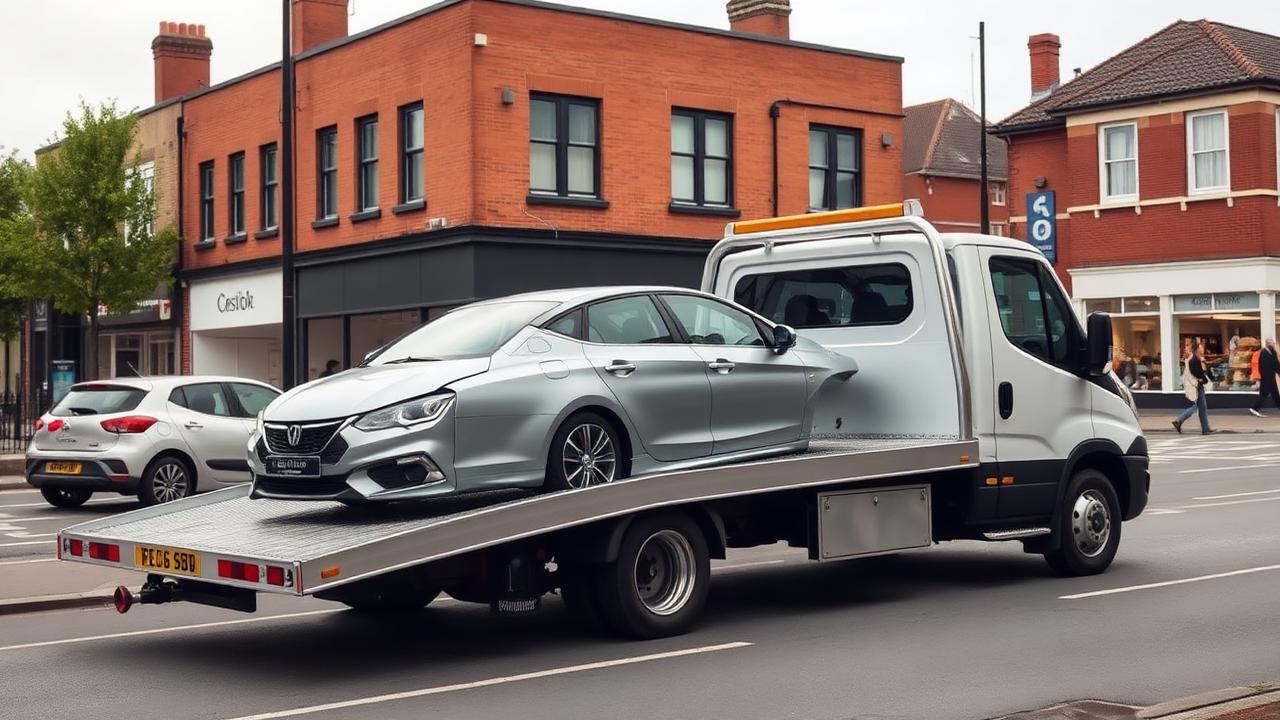
Representative breakdown recovery image for enquiries in Maidstone. Availability and suitability are confirmed for each request.
Make the Maidstone booking about the vehicle that needs moving
Separate the fault from the collection problem
A dashboard message may explain why a journey stopped, but it does not explain how a car can be collected. A vehicle with an electrical fault might still roll freely. Another car might start but have a locked wheel, damaged suspension or an obstruction behind it. Those situations can require different assessments even when the owner describes both as a breakdown. Send the make, model, registration and a plain description of what the car currently does. State whether you have tried to move it since the fault developed, without attempting further movement solely to test it for the booking.
For a Maidstone enquiry, distinguish a car already parked at home from one stopped during a journey. A safely parked non-runner may be suitable for a planned transfer to a booked repair appointment. A car in a hazardous road position needs the appropriate emergency response before a commercial collection is organised. If there is immediate danger, use the emergency services and follow their instructions. The operator accepting your collection must know about any authority already controlling the scene or any earlier movement to a different location.
State the outcome you need
Ask for a defined movement, such as collection from a named Maidstone address and delivery to an accepting repairer. Avoid a request that ends with an unspecified garage. If you have not chosen a destination, say that before a quotation is discussed. You can then establish whether the proposed job can be assessed with a destination still outstanding. A booking should make clear who is responsible for arranging the receiver, what has been accepted and what remains conditional. Our breakdown recovery service explains the wider service enquiry; this page focuses on organising a usable Maidstone collection.
Identify the entrance, not simply the town-centre landmark
Give directions that describe the parked car
An address associated with a shop, office or visitor attraction may have several vehicle approaches. The front pedestrian entrance may be a poor description of the car park, rear service access or private compound containing the vehicle. Give the street used to enter, the operator or business name and any bay or level identifier. A map pin is useful when it marks the vehicle position rather than a general town-centre search result. Add a separate note if the recovery vehicle must report to a different entrance or reception point.
Maidstone Borough Council publishes car park information. Check the actual location and contact the relevant operator where access needs arranging. A public parking listing is a way to identify a site, not evidence that recovery equipment may enter it. If you are unsure which organisation manages the parking area, establish that before a collection slot is agreed. The team assessing the job needs an access contact rather than an assumption that a barrier will be opened when the vehicle arrives.
Describe the final approach
Explain whether the car is outdoors, beneath a structure, against a wall or between occupied spaces. Report signed entrance restrictions and anything that prevents ordinary vehicle movement. Do not estimate clearances from the size of another car. Where a sign or layout can be photographed without entering danger or interfering with other traffic, an image can help the initial assessment. The attending operator still determines the workable approach. Never remove a barrier, move another person's vehicle or enter a closed area to simplify a recovery request without permission.
Arrange a collection from shared residential parking
Account for neighbours and restricted manoeuvring
A home address can hide the most important collection constraint. The vehicle may be beyond a narrow access, across an entrance used by several households or behind a second car whose owner is away. State those facts during the enquiry. Explain the car's direction, the space immediately around it and whether the driveway opens onto a road or a shared court. A collection discussed as an open roadside pickup may need reassessment if the actual location is inside a confined residential parking area.
For flats or managed developments, contact the person who can authorise access and confirm how the operator should arrive. A resident's ordinary parking permission does not automatically settle arrangements for a recovery vehicle working in shared space. Ask about entry procedures, any requirement to attend at the gate and whether temporary use of the approach needs coordinating. This is particularly important when the driver requesting the service is not the named resident or when the car belongs to a visitor.
Resolve blocked access before attendance
Where possible, organise lawful access before accepting a collection appointment. That might involve asking the relevant vehicle owner to leave a clear route or arranging for a managing agent to be available. Describe what has actually been agreed. Do not promise that a neighbour will move a car if you have not reached them. If access remains uncertain, the quotation and attendance decision should reflect that uncertainty. It is better to discuss a different collection window than to book on the expectation that an inaccessible vehicle will somehow be reachable on arrival.
Treat a multi-storey or basement enquiry as a separate assessment
Send the restrictions before requesting a truck
A non-starting car beneath a height barrier is not the same collection as a car on an open forecourt. Tell the team about the level, ramp arrangement, signed clearance and the distance between the entrance and the vehicle. Mention tight turns, raised thresholds and any gates beyond the main barrier. The information allows suitability to be discussed; it does not establish that a particular recovery method will work. We do not promise basement extraction or equipment availability from a town name or a photograph alone.
A shopping-centre parking area may also have its own operating arrangements. Fremlin Walk's visitor information can help identify that destination, but collection permission and equipment access must be checked with the current parking operator. Keep the names used on parking signs and booking messages consistent. A vehicle described only as being near Fremlin Walk could be in a different parking facility, and an entrance intended for ordinary shoppers may differ from the route authorised for vehicle collection.
Confirm an accepted plan before moving the car
Do not tow the car through a restricted structure using an improvised arrangement to make the main pickup easier. Give the operator a complete account of its starting position and wait for the proposed method to be assessed. If site staff arrange a movement within the premises, disclose who undertook it and where the vehicle is now. The agreed job may need updating when the level, access or movement condition changes. Our parking-garage recovery information offers a separate enquiry route for access-led cases.
Match the repair appointment to the delivery arrangement
Ask the workshop to accept a delivered non-runner
Booking diagnostic work does not always establish how a non-running car may be delivered. Call the repairer and describe its present condition. Ask which entrance should be used, whether the vehicle can be received without the owner and who should be contacted at arrival. Clarify whether a booking reference is needed and whether the appointment is an arrival time or the time work is expected to begin. This prevents a recovery quotation being based on an assumed delivery arrangement that the workshop has not accepted.
Some garage addresses lead to a business with several neighbouring units. Provide the exact unit or reception instruction, not only the estate or postcode. Explain if the receiver has asked for the vehicle to remain in a particular place or wants the driver to make contact before unloading. SYA Rescue can discuss the requested delivery, but the repairer's staff must agree what they can receive. A transport booking does not reserve workshop space, authorise unattended parking or confirm the availability of diagnostic equipment.
Make closing-time restrictions visible
Tell the recovery team about any receiving deadline before agreeing collection. A late pickup is not useful if there is nowhere authorised to leave the car. If the repairer may close before arrival, establish an alternative with them rather than assuming an after-hours drop will be possible. Where another destination is proposed, ask for the revised collection-to-delivery scope and price before changing the booking. You remain responsible for ensuring the person receiving the vehicle knows which car is coming and why.
Decide whether assistance at the vehicle is actually being requested
Avoid booking two different jobs under one description
An owner may call for a jump start while also wanting the car delivered to a garage. Another owner may need transport immediately and not want a roadside attempt. Explain the result you are seeking rather than choosing a service name because it sounds cheaper. An attendance to assess a starting fault and a collection to a repairer have different scopes. Ask which service is available for your circumstances, what it includes and what happens if the vehicle cannot be put into a suitable running condition.
If a car has failed repeatedly, tell the team what happened after previous assistance. Describe an earlier start followed by another failure, rather than declaring the battery defective without a diagnosis. The symptoms may affect whether a limited attendance or onward movement is the appropriate request. The Maidstone roadside assistance page concerns help at the vehicle; this breakdown recovery page concerns getting a failed vehicle to an agreed receiver. It is useful to establish that distinction before dispatch rather than after work has begun.
Choose the fallback before the first service starts
When you want an assessment first, ask how a later transport requirement would be quoted and accepted. Do not assume a roadside attendance fee includes loading and delivery. Likewise, do not assume a vehicle that starts once has been diagnosed or is suitable for completing the original journey. Follow the attending professional's assessment and the vehicle manufacturer's guidance. If the agreed outcome changes, make sure the updated instruction reaches the booking contact as well as anyone physically with the car.
Explain a collection near a main road without guessing its location
Distinguish the road journey from the stopped position
A driver who approached Maidstone using a major route may later stop in a retail car park, residential street or service premises. Give the vehicle's current position, not the road used earlier in the journey. If the vehicle is actually on a motorway or another hazardous road, emergency instructions take priority. The collection request should include any directions already given by the responsible authority. A reference to a familiar junction is not a substitute for the side, direction and exact location that the accepting operator needs.
For road conditions, Kent County Council provides roadworks information, including links to the relevant motorway information. Use current information when discussing a collection window. Do not infer that a mapped route is accessible for every vehicle or that it permits stopping for loading. A temporary restriction near a home or workshop may affect the final approach even when the longer journey is straightforward. Mention known works at either end instead of treating them only as a possible delay between the two addresses.
Update the request after an authority-led move
If your car has already been moved from its original stopping position, give the new pickup address and the contact controlling release. Make clear whether you are arranging the next stage only. The commercial job may begin from a secure yard or another holding location rather than the roadside location you first reported. Ask about any release reference or condition that applies before collection. The operator cannot assume that your authority to request the next movement settles obligations to another organisation holding the vehicle.
Plan a business vehicle handover without losing the authorisation trail
Identify the person who can approve the job
A Maidstone business may have a driver with the vehicle, a manager approving expenditure and a garage deciding when it can receive it. Name the contact responsible for the transport instruction. If those roles belong to different people, supply their relevant details and explain which decisions each can make. A driver sending a WhatsApp message may not be authorised to accept a revised charge or destination. Establishing that boundary early is more useful than relying on several people to pass messages between themselves during collection.
Describe the vehicle in its working condition, including fixed equipment or a carried load that could affect assessment. Give known dimensions and weight information where available instead of assuming that all vans of the same model can be handled alike. Tell the team if belongings, tools or cargo need removing before movement, and ask the business to arrange that responsibility. An ordinary recovery enquiry does not include managing goods, transferring stock or opening equipment compartments unless a specific service has been agreed.
Keep commercial terms attached to the correct vehicle
Use the registration or another unambiguous identifier in the accepted job details and invoice request. Where a company has several vehicles awaiting workshop work, confirm which one is being collected and which keys relate to it. State whether the business needs an invoice addressed to a particular legal entity and who will make payment. The fleet recovery page covers business coordination more widely, but the same need for one authorised instruction applies to a single vehicle collected from a Maidstone workplace.
Obtain a quote that follows the collection through to acceptance
Describe the complete movement in one message
A useful request connects the exact pickup, the car's movement condition and the receiving instruction. Include the details that could change the operator's assessment, even if they make the job sound less simple. A locked wheel, unavailable key, restricted exit or destination with a narrow receiving window is more important than describing the journey as a short local trip. If a different person supplied the garage address, check it yourself before asking for an agreed price. A postcode copied from an old invoice can point to an earlier business location.
Ask what work is included in the proposed amount. Relevant questions concern attendance, the assessed loading arrangement, the stated destination and circumstances in which the original instruction would need revising. If time at a site is chargeable, ask how it is measured and what situation would trigger it. If another person is paying, make sure they understand the same accepted scope. Do not compare two offers only by their headline totals when one ends at a different address or assumes the vehicle can be moved in a way it cannot.
Distinguish a quotation from dispatch confirmation
Sending photographs, discussing a possible time or receiving a price does not necessarily mean collection has been accepted. Ask for confirmation that the relevant vehicle, route and access conditions have been recorded and that the proposed slot remains available. Keep the accepted instruction in a form both parties can refer to. If the garage subsequently changes its receiving arrangements, tell the team before the vehicle is loaded. You can use the existing recovery quotation article to review the commercial questions without relying on an invented Maidstone tariff.
Account for a damaged or immobile wheel without attempting a repair
Explain the difference between a flat tyre and a non-rolling vehicle
When the wheel cannot rotate, the collection assessment needs more than a general statement that the car has broken down. Describe what you can observe from a safe position: a visibly damaged wheel, a tyre off the rim, a suspension concern or a vehicle that could not be moved by the person who previously attended it. Avoid repeating attempts to drive or drag it in order to produce a more detailed answer. Tell the accepting operator what is known, what has been assessed and what remains uncertain.
For a car parked close to a wall or another vehicle, explain whether access to the affected side is restricted. The location and orientation of the vehicle can be as relevant as the fault itself. If a tyre specialist or workshop has already given instructions, share their written assessment where available, while allowing the recovery operator to make their own loading decision. The Maidstone accident recovery page is appropriate when collision damage and scene-release arrangements form the main request. A mechanical breakdown with restricted wheel movement still needs those movement facts disclosed.
Ask about suitability rather than naming equipment
An owner does not need to prescribe a truck, attachment or loading method. Explain the outcome required and the conditions the operator will find. Equipment shown in a website image is representative and does not reserve that equipment for the job. If the vehicle has unusually low clearance, alterations or a substantial load, supply those details before acceptance. The attending professional must be able to reassess a situation that differs from the enquiry. A revised method should be discussed through the authorised booking contact rather than improvised to keep the original description unchanged.
Keep belongings, keys and personal travel in separate arrangements
Decide who will remain responsible for the vehicle
Where the owner cannot be present, name an adult authorised to release the car and explain how the key will reach them. Confirm whether that person can discuss changes to the movement or can only hand over the vehicle. Do not leave keys in an unsecured hiding place because a collection has been discussed. Agree a handover that the operator and the person at the address can actually carry out, and avoid sending access codes into a group conversation containing people who do not need them.
Remove necessary personal belongings when it is safe and permitted, particularly items you will need before the vehicle can be collected from the repairer. Do not enter a hazardous vehicle or road position to retrieve property. If you cannot obtain something, describe the issue to the person managing the scene. The recovery request should not depend on the assumption that the operator will inventory, store or deliver belongings separately. Where a business vehicle carries goods, the employer should confirm responsibility for those goods before agreeing movement.
Ask about passengers before the collection is accepted
Vehicle transport does not automatically provide travel for everyone who was in the car. Tell the booking team how many people are present and disclose any arrangements that affect safe onward travel. Ask what, if any, passenger provision is included in the accepted job. Do not assume space for a family, a wheelchair, animals or luggage on the basis of a photograph of a recovery cab. If separate transport is needed, arrange it in parallel with the vehicle booking and keep the person releasing the car available for the agreed handover.
Change the job in a way everyone can follow
A different receiver can change more than the distance
Imagine a safely parked Maidstone car booked for collection to a nearby workshop. The workshop then says it cannot receive the car until the following week, and the owner proposes a relative's property instead. This is a hypothetical booking decision, not a completed SYA Rescue job. The new address needs its own acceptance, entrance and placement instruction. A shorter journey could still create a different access problem. Send the revised details and wait for the team to confirm the updated scope rather than treating the change as a minor message for the driver.
Similarly, do not move a vehicle from an open bay into a garage while keeping the original pickup description. A gate that will close before collection, a key that is no longer available or a newly discovered wheel problem can all alter suitability. Report changes promptly, using the registration and booking reference where one has been provided. Ask whether the current arrangement can continue, whether a different slot is needed and whether the quotation remains applicable. Transparent updates allow a decision before the operator reaches a situation they were not asked to assess.
Keep cancellation and waiting questions specific
Ask for the applicable cancellation, missed-access and waiting terms when you accept the job. If a repairer changes its plans, contact the recovery booking team rather than assuming the cancellation is automatically transferred between businesses. Record when the change was communicated and who acknowledged it. You can ask how an unavoidable delay will be handled without being promised an exception that has not been agreed. The aim is a collection instruction that remains accurate from the first acceptance through to the receiver's confirmation.
Recognise when the movement is planned transport rather than breakdown recovery
A purchased non-runner has a different release decision
Buying a car in Maidstone and arranging its delivery involves a seller or holding site who must release it. That differs from collecting your own failed car for a repair appointment, even when both vehicles do not run. Supply the seller's collection instructions, the present key and movement condition, and an address that can accept delivery. A statement in an advertisement is not a reliable description of the vehicle's condition on collection day. Request current information from the person holding it and make sure the seller knows a transport operator may attend.
For this type of arrangement, use the Maidstone long-distance transport page if the central requirement is a planned movement between addresses. A car does not have to be travelling an exceptional distance for the booking to need planned release and delivery coordination. Tell us if the proposed journey extends outside the service being discussed, and avoid assuming a UK collection quotation includes any international paperwork, onward carrier or border-related responsibility. Each additional stage needs its own explicit acceptance.
A workshop-to-workshop move needs two permissions
If your car is already at a garage, ask whether it is ready for collection and what the recovery operator must present. Confirm keys, any removed components and the vehicle's current rolling condition. The second garage must separately accept arrival. Paying for one stage of repair does not establish that a vehicle can be released immediately or received by another business that afternoon. Our Maidstone area information helps you navigate related enquiries, while the actual transfer should be described as one agreed collection and one agreed delivery.
Review the completed handover before closing the transport request
Confirm that delivery reached the accepted endpoint
Ask how delivery completion will be communicated and who should receive that confirmation. Keep the collection and delivery details with the receipt or invoice, especially if someone else arranged the service for you. If the receiving garage has a reference number, retain it alongside the transport booking rather than treating the two records as interchangeable. This makes it easier to establish who should answer a later question about the car's location, keys or repair appointment.
If there is a concern about the collection or delivery, record the specific observation and contact the service provider promptly. Keep available photographs and messages without presenting an assumption as an established cause. A recovery service can explain the transport it undertook; the repairer must explain its own diagnosis and work. Clear responsibility at the end of the movement is as useful as clear instructions at the beginning. It allows the owner to proceed with repair decisions without repeatedly reconstructing which business last held the vehicle or which destination was accepted.
Request a Maidstone collection with the important decisions already visible
When contacting SYA Rescue, lead with the actual pickup and the confirmed receiver. Add the vehicle model, the reason it cannot continue, whether keys are available and any restriction on wheel movement or access. State a repair appointment or site deadline as a requirement to discuss, rather than assuming it can be met. Call or WhatsApp to ask whether the job can be accepted and to receive a quotation based on its real conditions. A useful booking ends with a workable handover plan, not simply an assurance that somebody will attend.
Kent recovery network
Explore Kent pickup areas and related services. Give the exact location and vehicle details when checking availability for Maidstone.
Can I book collection before my Maidstone garage confirms a space?
You can enquire about the movement, but make the unconfirmed receiving arrangement explicit. Ask the garage whether it accepts delivered non-runners and which entrance or contact should be used. A collection time should not depend on an assumed parking space at the destination. Tell SYA Rescue when acceptance is confirmed so the proposed movement and quotation can be reviewed with both endpoints known.
Is a town-centre shop name enough to identify my parked car?
A shop name may identify the area while leaving the vehicle entrance unclear. Give the parking facility or business name, entry street, level and bay where applicable. A map pin should mark the car rather than the shop's main pedestrian entrance. Include a contact who can explain site access, particularly if the facility is managed separately from the business you visited.
What if the car is parked behind my neighbour's vehicle?
Explain the obstruction before arranging attendance and establish whether the relevant owner can lawfully clear access. Do not report the route as available until that arrangement is actually confirmed. If the other vehicle will remain, tell the team its position relative to yours. The operator can then assess the disclosed situation instead of arriving for an open collection that cannot take place as described.
Can you collect from a parking level beneath a height barrier?
Ask for a restricted-access assessment with the signed clearance, level, ramp arrangement and exact position available. Suitability depends on the whole route to the car and its condition, not simply whether a normal passenger vehicle entered. Contact the parking operator about permission and access. No extraction method or specific equipment is promised until the collection requirements have been considered and accepted.
Should I ask for recovery if my car started after an earlier jump start?
Describe the sequence, including whether it stopped again, failed at the next start or remains running with warnings. A temporary start does not establish the underlying cause. Explain whether you want further assistance at the vehicle or movement to a repairer. The accepting team and attending professional need the actual symptoms to assess the request without relying on a battery diagnosis made from the earlier result.
How do I arrange a key handover if I cannot attend the pickup?
Name the person authorised to release the vehicle and confirm that they will have the correct key at the agreed time. Explain whether they may approve changes or must refer decisions back to you. Agree the arrangement directly with the booking team. A discussion about collection does not justify leaving keys unsecured or assuming that a receptionist or neighbour has accepted responsibility for them.
Can a repairer receive my car after its customer reception closes?
That decision belongs to the receiving business. Ask it to confirm any permitted after-hours arrangement, the exact placement instruction and how keys should be handled. Pass the accepted details to the recovery team before booking. If there is no authorised receiving plan, discuss another destination or collection window. A closed workshop address alone does not establish somewhere suitable to leave a delivered car.
What should a company driver provide for a workplace collection?
Supply the registration, actual parking position, access contact and present vehicle condition. Identify the manager or other person allowed to authorise the movement and payment. If the van carries goods or fixed equipment, disclose that information instead of describing only the base model. Agree who handles belongings and keys so the recovery request does not depend on a driver making decisions outside their authority.
Does the quoted amount automatically include a roadside repair attempt?
Ask which activity the amount covers. An assessment at the parked vehicle and a collection to an accepting garage are different instructions, even if both follow a non-start. Explain whether you want assistance first and what should happen if the car remains unusable. Obtain the agreed fallback and any further quotation rather than assuming repair work and transport are included together.
Can I change the destination from a garage to a family member's address?
Send the complete new address, receiving contact and access details before the change is acted on. The new location needs its own agreement to accept the vehicle and may require a different delivery arrangement. Ask the booking team to confirm the revised scope and price. A shorter route does not guarantee that the original quotation still describes the new job.
What if the vehicle is no longer where I first reported the breakdown?
Give the current position and explain who moved it. If it is held at a yard or workshop, ask that organisation about release, keys and any reference needed for collection. Make clear that SYA Rescue is being asked to arrange the next stage from that address. Directions to the original roadside incident can create confusion when the actual pickup is somewhere else.
Do I need to tell you that a wheel cannot turn?
Yes. Report observed wheel or suspension damage and any previous assessment that the vehicle does not roll. Include whether there is space around the affected side. Do not carry out repeated movement attempts to produce an answer for the enquiry. The condition at collection informs the suitability decision, and a general description such as a mechanical fault may omit the important loading constraint.
Will the transport operator also reserve my diagnostic appointment?
A vehicle movement and a garage appointment are separate arrangements unless a specific combined service has been agreed. You should obtain the repairer's acceptance, booking reference and receiving instruction. Provide those details with the recovery request. Delivery to a business does not guarantee when it will inspect the car, what repairs it will recommend or how long it will retain the vehicle.
Can everyone travelling in the car accompany the recovery vehicle?
Ask before accepting the job. Explain the number of passengers and anything relevant to their onward travel, including mobility requirements, animals and luggage. The accepted service may require separate personal transport. Do not rely on a generic recovery photograph as evidence of passenger capacity. Make sure an authorised person remains available for the car's release even when other passengers leave earlier.
What should I check when two recovery quotes look very different?
Compare the pickup, destination, vehicle condition and access assumptions used by each provider. Ask whether attendance, the assessed loading work and the complete stated delivery are included, and how changes or waiting are handled. Keep the written scope with the price. A lower headline amount is not a meaningful comparison if it describes a different endpoint or assumes that the vehicle rolls freely when it does not.
Can recovery be arranged around a road closure near my home?
Report what you know about the closure and the lawful access still available, including any instructions received from the organisation managing the works. The operator must assess the final approach, not only a map route through Maidstone. Check current official roadworks information and ask your site or property contact about access. Do not remove signs or barriers to make the collection possible.
Is a seller's non-running car collected under the same arrangements as my breakdown?
The vehicle condition may be similar, but release authority and delivery coordination differ. Tell us that the vehicle is being purchased, identify the seller or holding site and provide the current collection instructions. Confirm who has keys and what the car can actually do on the day. A transport booking does not replace the seller's agreement to release the vehicle or resolve a purchase dispute.
What happens if the access description proves inaccurate on arrival?
The attending operator needs to reassess the real situation before continuing. Contact the authorised booking person if the vehicle position, clearance or movement condition differs from the accepted instruction. Discuss whether the work can proceed, requires a revised quotation or needs another arrangement. Do not pressure the operator to use an unsuitable approach simply because the earlier description led to a price.
Which details belong in my first WhatsApp message about Maidstone recovery?
Start with the pickup address and entrance, registration or model, present fault and known movement condition. Add key availability and the accepting destination, including a receiving contact or appointment requirement. Mention a barrier or locked gate early. If photographs can be taken safely, send views that clarify access rather than images of unrelated nearby landmarks. Wait for acceptance before treating the enquiry as a dispatched job.
How will I know the car has reached the agreed receiver?
Ask at booking how completion will be reported and which person should receive the update. Keep the destination contact and any workshop reference with the transport record. If you are arranging collection for somebody else, agree who will speak with the garage afterwards. Delivery confirmation establishes the transport handover; any later diagnostic findings or repair decisions should be discussed with the receiving repairer.
Need Breakdown Recovery in Maidstone?
Call to confirm current coverage, availability and the appropriate recovery option for Maidstone and Kent.