Vehicle Recovery Enquiries in Dover — call +44 7830 881805
Dover · Kent
Arrange Breakdown Recovery in Dover with a Confirmed Collection Point
Contact SYA Rescue when a vehicle problem interrupts your journey in Dover and you need to arrange its next movement. Explain whether the car is on a town road, in public parking, at accommodation or inside premises controlled by another organisation. We can discuss a collection enquiry once the actual position, release arrangements and receiving destination are understood. Tell us about travel deadlines and any assistance already involved. A ferry booking, a vehicle fault and a recovery booking are separate decisions; the collection must be accepted on its own terms before you rely on it.
Distinguish the actual stopped vehicle from the departure or hotel you were travelling to.
Resolve controlled access
Tell the site controller about the fault and obtain its collection instructions.
Choose the accepted endpoint
Separate the vehicle movement from carrier rebooking and personal onward travel.
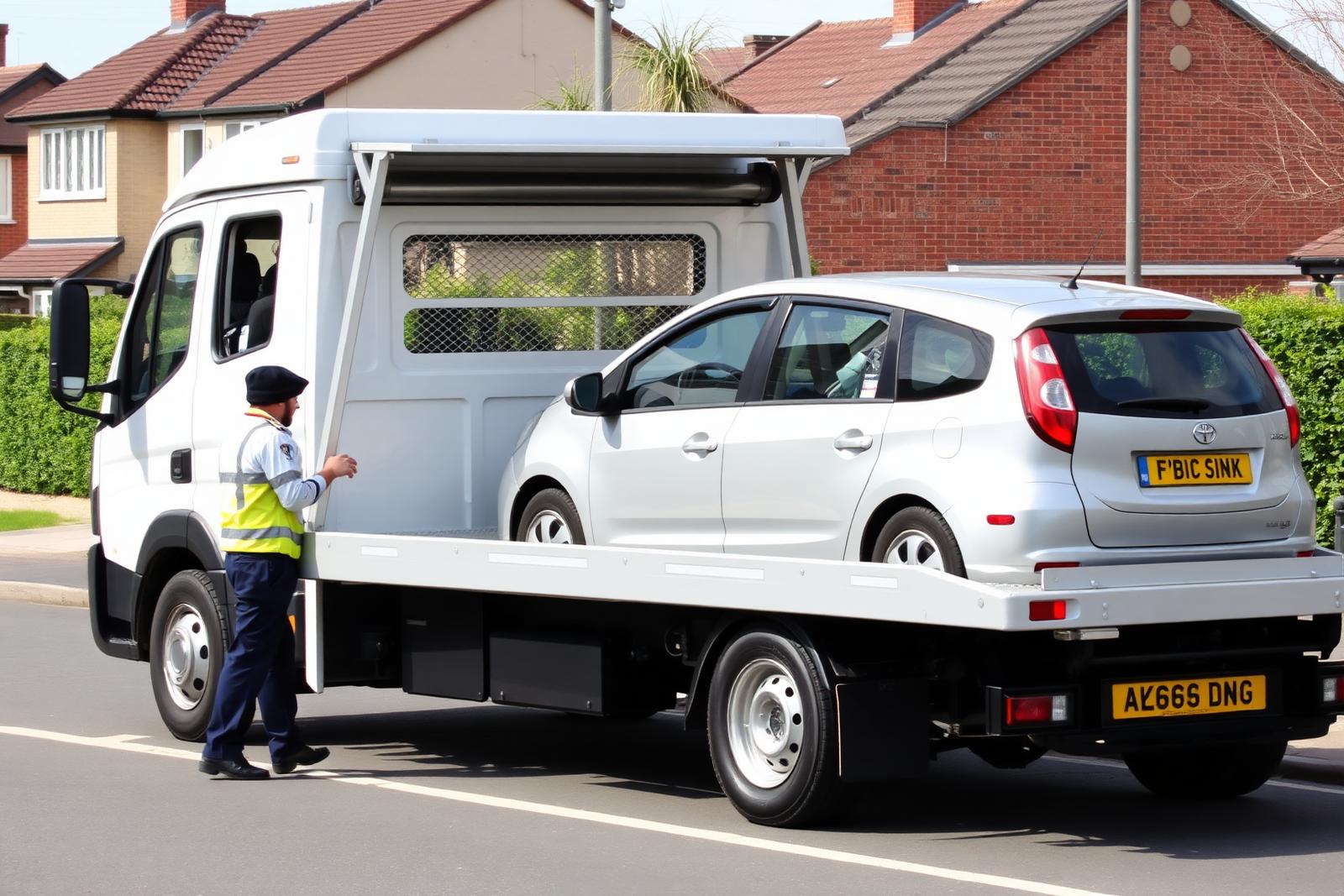
Representative breakdown recovery image for enquiries in Dover. Availability and suitability are confirmed for each request.
Start the recovery enquiry from the car's present position
Report where the journey has actually stopped
A Dover breakdown request may begin with a travel destination that does not identify the car's location. Saying that you were going to the ferry, returning from a crossing or approaching the coast leaves the pickup unclear. State where the vehicle is now and whether that location is accessible to the public. Include the road or site name, the relevant entrance and a useful identifier such as a parking bay. If somebody has already moved the car, give the position after that movement rather than the location where the warning first appeared.
An urgent traffic danger must be handled through the emergency services or responsible road authority before a commercial recovery booking. Follow the instructions of people controlling the incident, and describe their involvement when you contact us. Do not leave a secure waiting area or attempt to move the car merely to reach an easier place for a private collection. A location becomes a usable pickup through a lawful, assessed arrangement, not simply because it appears convenient on a map.
Identify which stage SYA Rescue is being asked to arrange
Explain whether the requested movement starts at the initial breakdown, at a temporary safe location or at a site where another operator has left the car. Each starting point creates a different enquiry. If the vehicle is being held by a business, include its release contact and instructions. If the next step has not yet been settled, say so rather than sending an old pickup pin with a new destination. Our Dover recovery area page links the local service options; this page deals with arranging transport after a fault has stopped the journey.
Separate port access from ordinary town recovery
A port-related journey does not establish collection permission
The Port of Dover's official website distinguishes its ferry, cruise, cargo and other activities. Name the part of the site relevant to your situation rather than using the port as one general pickup description. Tell the people managing the premises that your vehicle has a problem and ask what assistance or movement procedure applies. An enquiry to SYA Rescue does not override their directions or establish permission for an external recovery vehicle to enter. We do not claim unrestricted terminal access or an appointed-provider relationship.
If an external collection may be considered, obtain the contact and instructions needed for assessment. Explain whether the car is before an entrance, in a waiting area or somewhere that site staff must identify. Do not cross barriers, leave a queue without instructions or ask a recovery driver to follow a route intended for another class of traffic. The job should be discussed using an authorised collection position, with any remaining access conditions stated before acceptance.
Give travel information only when it affects the collection
The accepting team needs the facts that determine the vehicle movement. A booking reference may be relevant if the controlling organisation requires it for release, but travel documents should not be sent indiscriminately into a transport enquiry. Ask which reference is needed and which contact should receive it. Keep any carrier conversation about a crossing separate from the agreed recovery instruction. Changing a sailing or travel arrangement does not automatically change the place, price or acceptance of a vehicle collection discussed with SYA Rescue.
Manage a missed or uncertain departure without booking on an assumption
Tell the carrier about the vehicle issue separately
If a breakdown affects a planned crossing, contact your carrier through its own channels about the travel booking. Its decision on rebooking, check-in or assistance is not made by the recovery team. Give SYA Rescue the resulting collection facts: whether the vehicle may leave, where it must be collected and who has authority to explain access. Do not describe an unconfirmed extension or a hoped-for delay as an agreed deadline. A transport operator needs the actual constraint, even when the travel outcome remains unresolved.
The original destination may no longer be the sensible endpoint for the broken-down vehicle. You may need to discuss a local receiving garage, a return to an address elsewhere in the UK or another authorised location. Before choosing, establish that the proposed receiver will take the vehicle in its present condition. Transport can then be quoted against that instruction. It should not be accepted as a promise to preserve a travel itinerary that depends on several businesses making decisions outside the recovery booking.
Agree an achievable transport objective
A useful objective is an accepted pickup followed by delivery to a named receiver. Statements such as getting the car away before departure time omit access, loading and destination acceptance. Tell us the deadline and why it matters, then ask whether a suitable job can be accepted. Where no acceptance is possible within the requested window, discuss an alternative plan instead of treating an estimate as a guarantee. Accurate limits allow you to make separate decisions about passengers, accommodation and the interrupted journey.
Choose a Dover parking collection using the actual operator's information
Identify public parking precisely
Dover District Council's parking directory provides location-specific parking information. Use the current site listing and signs to identify where the vehicle stands, while checking collection access with the organisation responsible. A parking payment or permitted stay for your car does not settle whether a larger recovery vehicle can work there. If the site is privately operated, explain that distinction; the council's information should not be used to assume permission at a separately managed location.
When you send a location, include the entrance used to reach the car and anything separating the vehicle from that entrance. A barrier, locked gate, ramp or restricted turn can matter even if the parking space itself looks open. Mention whether the car faces into a wall, sits on a slope or cannot roll from its bay. Do not request that the operator arrive for an ordinary roadside lift when you already know the actual position will need a different assessment.
Deal with parking responsibility while the car remains there
Contact the parking operator about a vehicle that cannot leave as intended and keep any instruction it gives you. Explain that a breakdown has occurred without assuming that parking conditions or charges automatically stop applying. A recovery booking does not decide a parking dispute or suspend a site's terms. Give the team any collection restriction that the operator confirms. If the authority to release the car depends on a separate matter, resolve that with the controlling organisation before treating the transport appointment as unconditional.
Plan a pickup from a hotel, guesthouse or visitor address
Make the property contact part of the handover
A visitor may know the accommodation's booking name but not the vehicle entrance or the person who controls the car park. Ask the property to identify the collection access and a contact who will be available at the proposed time. Explain that the car cannot continue under its own power and disclose any obstruction caused by its position. If keys are held at reception, obtain an explicit agreement about who may release them and what identification or reference will be used.
Tell SYA Rescue if you are leaving the accommodation before collection. The enquiry then needs an authorised person or another agreed way to release the car. Do not assume an unattended front desk, another guest or a locked key box will be suitable. A checkout time also does not establish that a recovery vehicle can attend by then. Discuss the property deadline and whether the car may remain while a later accepted movement is organised.
Keep the vehicle address distinct from your onward address
You may be staying in Dover while the car is parked elsewhere, or you may continue travelling while the vehicle remains at the property. Provide the precise vehicle location and separately identify your own contact arrangements. If your phone number will stop working abroad or a different person will answer, organise an accessible booking contact in advance. Updates about the car's movement should reach somebody who can act on them, rather than an inbox that the owner may not see until after the proposed collection window.
Establish a receiving garage before agreeing onward movement
A nearby repairer still needs to accept the vehicle
Finding a garage on a map does not reserve its capacity to take a non-running car. Explain the fault symptoms, the car's movement condition and the type of arrival you are proposing. Ask whether the vehicle can be delivered without the owner, which entrance to use and who should be contacted. A business might offer a future diagnostic appointment while being unable to receive the vehicle immediately. Those are separate answers, both of which matter to your recovery request.
If you are unfamiliar with Dover, avoid choosing a receiver only because it appears closest to the breakdown. Check that it handles the relevant vehicle and has agreed to receive it. SYA Rescue can discuss the requested transport but cannot confirm an unarranged repair slot on behalf of another company. Supply any workshop reference along with its actual delivery instruction. If acceptance changes after the quotation, update the booking team before the car is collected.
Decide who will authorise later repair work
An owner continuing a journey may want a family member, business or insurer to coordinate the repair. Give the garage that instruction directly. Agree separately who can make decisions about the vehicle's transport, because the same person may not hold both roles. Delivery confirmation marks a handover to the receiver; it does not approve repairs, authorise storage indefinitely or settle future vehicle collection. Maintaining those boundaries helps you arrange the next step without assuming that one booking covers every later consequence of the breakdown.
Compare local delivery with a return to another UK address
Evaluate the whole destination decision
A local garage may reduce the immediate transport distance, while returning the car elsewhere may keep it with a repairer you already use. Consider the receiver's acceptance, access and opening window alongside the distance. Ask for a quotation based on the complete proposed movement. Avoid comparing a local drop with a return-home offer as though they provide the same result. They may create different repair, storage and later collection decisions that you should understand before choosing the endpoint.
If your intended destination is outside the UK, disclose that at the start and ask whether any part of the requested service can be considered. Do not assume a Dover collection includes cross-border transport, carrier arrangements or customs-related responsibilities. This page does not promise international vehicle recovery. Where you are arranging only a UK stage, identify its exact endpoint and the person taking responsibility there. The long-distance transport service provides the relevant enquiry route for a planned UK movement to an agreed address.
Avoid a handover with no receiving contact
A postcode alone is not an agreement to accept a broken-down car. If the destination is somebody else's home, establish where it may be placed and how keys will be received. If it is a workshop, use its receiving instructions rather than general customer parking. A journey ending at an inaccessible address can create further decisions and cost. Confirm the accepted endpoint before loading so the driver is not asked to choose somewhere to leave a vehicle whose owner has already continued travelling.
Supply the vehicle details that affect a long onward journey
Report present condition rather than a planned repair
Describe the car as it stands today: whether it starts, rolls, steers and has usable keys. A fault report saying a repairer expects to fit a part later does not describe its current loading condition. Mention any damage, modifications, missing components or carried equipment that could affect handling. Where the car has been assessed, share that assessment with the recovery operator without treating it as a substitute for the operator's own check. The collection must be suitable for the vehicle actually presented.
For electric or hybrid cars, provide the exact model and the relevant warnings or damage already reported. Do not assume that a method used for a different car is suitable. Make the manufacturer's handling information available where you have it and allow the team to assess the request. If there is smoke, heat, a fuel leak or another immediate danger, follow emergency instructions rather than continuing a normal booking conversation. A commercial quotation is not a safety clearance for an uncertain vehicle condition.
Explain access at both ends, even when the pickup is straightforward
A car standing in an open Dover parking area might be going to a steep private drive, a restricted workshop or an address where the receiver will not be present. Give those delivery constraints when requesting a price. The collection may be simple while the final handover needs additional planning. Ask what the operator has assumed about unloading and placement. A statement that the vehicle can be transported does not authorise it to be deposited wherever the owner later chooses.
Keep passenger travel separate from vehicle collection
Decide who needs to stay available in Dover
An interrupted journey can leave people making different choices: one passenger may continue travelling, another may remain with luggage and the owner may need to speak with a garage. Choose a person who can remain reachable about the car. Explain whether they will be physically present at release or will authorise somebody else. A recovery enquiry should not depend on a departing passenger retaining the only key or the only working phone number. Resolve those practical details before confirming collection arrangements.
Ask directly about passenger provision, if any, in the proposed service. The ability to transport the car does not establish seating for its occupants or permission to carry particular belongings. Disclose relevant requirements, including mobility equipment, children, animals and substantial luggage, without assuming that the recovery vehicle can accommodate them. If personal travel is arranged separately, make sure the vehicle is still left with an agreed release arrangement. Nobody should remain in an unsafe road position simply to preserve an informal booking plan.
Avoid treating the original itinerary as the recovery contract
A journey may have been planned around a departure, hotel reservation or appointment at home. Those pressures are relevant to your decisions but do not make every part of the itinerary an accepted recovery obligation. Tell the team which deadline matters most and ask what can actually be agreed. If the car's movement and the passengers' movement will happen at different times, keep both arrangements written down. This helps you choose a realistic endpoint for the vehicle while preserving clear responsibility for the people continuing the journey.
Make an out-of-hours enquiry with a usable receiving plan
Availability is a question about the whole job
SYA Rescue accepts recovery enquiries around the clock, but a Dover job still needs suitable availability, access and a destination. State when the vehicle can be released and when somebody can receive it. If a garage is closed, do not describe the street outside as an accepted delivery point unless its use has been agreed with the appropriate person. If the car is safe where it stands and may remain there, explain that so the discussion can include a planned collection rather than an assumed immediate movement.
Where a premises contact has a limited working window, provide a direct way to reach them and make the deadline visible in the booking. Check that somebody is responsible for opening the relevant entrance. A request made late in the evening can involve a straightforward vehicle but an impossible release arrangement if keys, gates and staff availability have not been settled. Ask whether the job is accepted, still awaiting information or needs a different slot; these are different outcomes.
Define what happens if the first destination becomes unavailable
Consider the fallback before a car is loaded for a receiving address with uncertain access. An alternative might be another garage or a home address that has separately agreed to receive it. Do not supply several possible endpoints and ask the driver to choose later. Each option can have different distance, access and payment implications. The final accepted instruction should identify the endpoint being quoted. If a new destination becomes necessary during the job, obtain the revised acceptance through the authorised contact rather than relying on an informal conversation between passengers.
Ask for a price based on your actual Dover movement
State what is being collected and where it is going
Send one complete description instead of asking for a Dover call-out price and adding the real destination afterwards. Include the controlling site, release status, vehicle model, movement restrictions and proposed endpoint. Disclose whether another organisation must be contacted before attendance. The operator should assess those circumstances when considering the request. A figure based on a car at an open public location may not describe an enquiry involving controlled access, waiting for release or a vehicle whose wheels cannot rotate.
Ask the provider to explain the quotation's assumptions and the stage at which the job is accepted. Clarify the stated delivery, assessed handling work and any separately applicable items. If the intended payer is an employer, rental provider, assistance company or family member, identify that arrangement early. Do not assume someone else's approval merely because they were notified of the breakdown. Their agreement to pay or authorise the movement should be established directly, including any reference the booking team needs.
Compare equivalent endpoints before comparing totals
Two quotations may describe different movements: one to a local receiving address, another to the owner's repairer elsewhere, or one covering an initial attendance with later transport unresolved. Compare the written result being offered. Ask about changes in access, destination or waiting and keep the response with the accepted price. Our recovery quote guide explains the comparison questions. It does not publish a fixed Dover tariff, because a price without the collection conditions can misrepresent the requested work.
Coordinate an employer, rental or assistance organisation
Confirm the approval boundary before arranging a second provider
If a vehicle is supplied by an employer, lease or rental arrangement, contact the organisation responsible for it. Ask whether its procedure requires a particular assistance channel or prior approval for another provider. Passing its name to SYA Rescue does not establish payment authority, and a private booking should not be made on the assumption that an unrelated company will reimburse it. Tell the team whether the enquiry is awaiting approval and who can give a definitive instruction.
An assistance organisation may already have arranged an attendance or movement. Explain what has actually been accepted and whether you are asking about an alternative or the next stage. Avoid two operators attending for the same vehicle under conflicting instructions. If you change providers, notify the people whose service you previously accepted and clarify any applicable terms with them. The recovery operator considering your Dover enquiry needs a clean account of who has control of the vehicle and who is authorising this particular movement.
Keep sensitive material relevant to the transport task
A release reference, vehicle identifier and contact details may be necessary, but the booking team does not need unrelated copies of personal travel documents simply because the breakdown occurred near an international departure. Share information through the agreed channel and ask what is required for collection. If an organisation requests documents for its own procedure, deal with it directly. A driver collecting a car should receive the information needed to carry out that accepted job, rather than a collection of paperwork whose purpose has not been established.
Handle an onward transfer after the first recovery stage
Check the holding site's version of the vehicle condition
A car previously assessed at the roadside may be in a different state when it is released from a workshop or holding location. Keys could be held separately, a component may have been removed for inspection or the way it rolls may have changed. Ask the holder for the current collection condition and give the information to SYA Rescue. A description from the original incident is insufficient if it no longer represents the vehicle that the next operator will find.
Find out who is allowed to release it, what reference is required and when collection may occur. Any outstanding matter with the holder must be addressed with that organisation; a transport booking cannot decide whether release should be granted. If your next request is a planned transfer from Dover to another UK receiver, the Dover vehicle transport page distinguishes that arrangement from initial roadside assistance. Preserve the handover instructions so the next movement begins from a clear accepted position.
Record each business's responsibility separately
Keep the first attendance record, any holding-site information and the new transport booking identifiable. A later garage may ask about the fault or work already attempted, while the transport operator needs the current loading and access conditions. Supply each party with the information relevant to its role. If a concern arises, describe the observation and the stage at which you noticed it. Separate records make it easier to ask the correct provider about its work without assuming that every business involved acted under one combined contract.
Use a complete message to request Dover breakdown recovery
Include the controlling contact in the first enquiry
A useful first message states: where the vehicle is now, who controls access, what fault or condition has stopped the journey and where the car can be received. Add the exact model, key position and any confirmed release reference. If a site is still deciding whether an external collection may take place, make that outstanding decision clear. You can then ask whether the request is suitable for assessment rather than presenting access as settled when it remains under discussion.
Include a reachable telephone number and explain who may approve the booking. If a map pin is available, label it as the actual car position or the authorised reporting entrance. These may be different locations. Safe images can help explain the surroundings, but do not enter controlled areas or move through traffic to obtain them. The team needs reliable facts that can support a collection decision. It does not need photographs taken at a cost to safety or permission.
Wait for a defined acceptance and keep it current
Before relying on the arrangement, confirm the pickup, endpoint, scope, available timing and payer. Tell the team if any controlling organisation changes its instruction. If your enquiry is instead about assistance at the vehicle, use the Dover roadside assistance page and explain the working location. For the wider service description, see breakdown recovery. Call or WhatsApp SYA Rescue to discuss a Dover job with its actual access and receiving arrangements available, rather than treating a travel destination as a complete collection instruction.
Kent recovery network
Explore Kent pickup areas and related services. Give the exact location and vehicle details when checking availability for Dover.
Does a Dover ferry booking allow an outside recovery operator into the terminal?
No assumption about access should be made from the existence of a travel booking. Explain the vehicle problem to the organisation controlling your current position and ask which procedure applies. Give SYA Rescue the resulting collection instructions if an external movement may be considered. A recovery enquiry does not make us an appointed terminal provider or authorise a driver to enter an area without the relevant permission.
Should I send the location where my car first developed the fault?
Send its present position and explain any earlier movement. The warning may have appeared on an approach road while the car is now at accommodation or a holding location. Mark the current car position and separately identify any reporting entrance. Using the original incident location after the vehicle has moved can cause an operator to assess the wrong pickup and miss an important release condition.
Can you guarantee collection before my sailing departs?
A travel deadline must be discussed as a requirement, not treated as a promised result. Availability depends on the vehicle, authorised access and the receiving plan for the particular enquiry. Ask whether a job can be accepted within your circumstances and confirm any stated estimate. Separately contact the carrier about the travel booking. The recovery team cannot decide a sailing arrangement or another organisation's acceptance procedure.
Who should approve recovery for a rental vehicle stranded in Dover?
Contact the rental organisation through its own procedure before assuming you can appoint another provider on its account. Ask who may authorise collection, where the vehicle should go and which reference is required. Explain that approval position when enquiring with SYA Rescue. A rental company's awareness of a breakdown does not automatically authorise a private booking or make it responsible for the quoted amount.
What if the car is behind a controlled entrance but I have the key?
Possession of the vehicle key does not settle access to the premises. Obtain instructions from the site controller about collection and identify the person who can explain them. Tell us where the car stands in relation to that entrance and whether another gate or restricted area is involved. Acceptance depends on the disclosed conditions; the operator should not be sent to an ordinary public pickup when permission remains unresolved.
Is it better to recover my car to a Dover garage or take it closer to home?
Compare the receiver's confirmed acceptance, the repair arrangements and the complete transport quotation. A nearby garage may be convenient but still unable to receive the car when needed. A home-area destination may suit your later decisions but involve a different movement. Establish the actual endpoint before accepting an offer. The shortest transport distance alone does not determine which arrangement will be most useful for you.
Can I continue my journey while somebody else releases the vehicle?
Discuss an authorised handover before leaving. The booking needs a reachable decision-maker, a person or organisation able to release the car and an agreed arrangement for its key. Explain who may approve changes if the collection conditions differ. Do not leave the only key with a departing passenger or assume that hotel staff have agreed to act because they know the car is parked outside.
Does a UK recovery quotation include returning the car from France?
Do not assume an international stage is included. Identify exactly where the vehicle is and which part of a proposed journey you want assessed. This page concerns a Dover recovery enquiry and does not promise cross-border transport, carrier booking or customs work. Any additional stage must be explicitly considered and accepted, with its endpoint and responsibility stated rather than inferred from a general reference to recovery.
What information is useful for a Dover car park pickup?
Provide the parking operator or facility name, entry street, level or bay and the car's orientation. Mention barriers, restrictions and whether the vehicle rolls. Check who can authorise recovery access and pass on any relevant instruction. A parking directory helps identify a place, but payment for your own parking space does not establish an access arrangement for equipment collecting a failed vehicle.
Will SYA Rescue arrange my carrier rebooking as part of the collection?
Carrier rebooking belongs to your agreement with the travel provider unless a separate service has explicitly been arranged. Contact it directly about the interrupted trip. Give the recovery team the practical outcome, such as the authorised collection position or a changed deadline. Keeping those conversations distinct prevents a transport request being mistaken for acceptance of a sailing change or responsibility for the rest of an itinerary.
Can a car be delivered to an unfamiliar garage without calling it first?
You should obtain the garage's acceptance before treating it as the destination. Describe the non-runner and ask about the vehicle entrance, receiving contact and timing. A published address does not reserve space or establish that it can handle the relevant vehicle. Supply its instructions to the recovery team so the quotation ends at a receiver who knows what is coming and has agreed to take it.
What happens when another assistance operator already has a booking for my car?
Explain the existing arrangement and whether you are seeking an alternative or a later transfer. Avoid accepting overlapping instructions without informing the providers involved. Clarify cancellation or change terms with the business whose service you accepted. SYA Rescue needs to know who is currently responsible for the vehicle and who may authorise the proposed new movement before treating the enquiry as a separate accepted job.
Do passengers automatically travel with the recovered vehicle?
Ask about the actual provision offered for your booking and give the number of people and relevant requirements. Vehicle movement does not itself establish passenger seating or suitable arrangements for mobility equipment, children, animals or luggage. You may need separate personal travel. Keep an authorised release arrangement in place even if passengers continue their journey before the vehicle is collected.
Can I use my hotel checkout time as a confirmed collection time?
Treat checkout as a deadline to discuss with both the property and the recovery team. Ask the accommodation what happens if the car cannot leave before then and who may authorise access afterwards. A quoted recovery estimate does not amend the hotel's arrangements. Confirm that the property can support the accepted handover rather than relying on staff to improvise it once you have departed.
What should I tell you about a car held at a yard after an earlier movement?
Supply the holding organisation, release contact, collection reference and current vehicle condition. Ask who has the key and whether anything has changed since the first incident, including work affecting wheel movement or loading. Make clear that the new enquiry starts at the holding site. Any separate release obligation must be resolved with that holder; booking transport does not override its control of the vehicle.
Are port delays included in an ordinary recovery arrival estimate?
An estimate should be discussed against the current job and the access information available. Explain any known queue, controlled approach or unresolved permission that could affect attendance. Ask how changes will be communicated and whether waiting is addressed in the offered terms. Do not treat a general Dover estimate as a guarantee of passage through a controlled site or of access during a disruption.
Can the price change if I choose a different UK destination after booking?
A new endpoint can change the journey, receiving window and unloading arrangements. Give the complete revised address and get the booking team's acceptance before relying on the change. Ask whether the quoted amount still applies and who may approve any revision. A destination mentioned casually to an attending driver should not replace the accepted instruction without the responsible contact knowing what has changed.
Should I send travel documents with a breakdown enquiry?
Send the vehicle and collection information first. If a controlling organisation requires a release or travel reference, ask which details are needed and where they should be provided. Do not circulate unrelated identity or booking documents merely because the car is near an international departure. Each business should receive information relevant to its own role, with clear authority for the vehicle movement.
Is a damaged electric car handled under the same assumptions as a petrol car?
The team must assess the exact model, reported damage and manufacturer handling requirements. Explain the warnings or concerns already observed and any professional assessment available. If there is heat, smoke, leakage or another immediate hazard, follow emergency instructions. A website enquiry or indicative quotation does not certify that ordinary movement is appropriate for a vehicle whose condition has not been established.
What confirms that my Dover recovery enquiry has become an accepted job?
Ask for clear confirmation of the pickup, authorised access, stated destination, service scope, timing and payment arrangement. A message sent, a photograph received or a price discussed may leave important conditions outstanding. Keep the accepted instruction and update the team if a site controller or receiver changes its requirements. The booking should describe a movement that can be carried out, with responsibility for both handovers understood.
Need Breakdown Recovery in Dover?
Call to confirm current coverage, availability and the appropriate recovery option for Dover and Kent.